CarTest – Cadillac STS-V vs Driver, Temp, WHP, Final Drive, Redline, TopSpeed

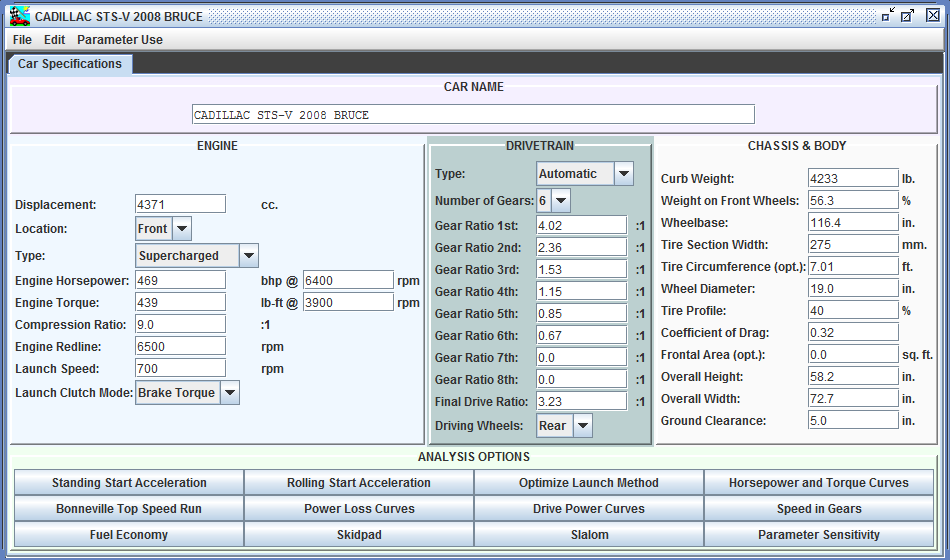
I enjoyed Cartest back in the day in the dos version, and picked up the latest JAVA stand-alone version of CarTest 2000.  CarTest is a simulation that makes it easy to compare a variety of parameters for your vehicle to determine likely effect if you change that parameter.
STS-V Cartest General parameters

One parameter that gave me pause is the redline.  I think of the redline for the STS-V as 6800 RPM, but I note that the ‘max shift speed’ for the 6L80E transmission is 6500 RPM, and the fuel shut-off for the LC3 is 6700 rpm, so I need to research where the V shifts further.

Cartest predicts a 2008 STS-V will go 0-60 mph in 4.68 sec with a 1 foot roll-out at 65F 29.9 baro 0% humidity and a 160 lb driver.

In my first test for my 08 STS-V at 87F and 29.69 baro humitity 64% I measured 5.39 sec 0-60 mph.  If I put these parameters into Cartest the prediction would be 4.92 sec for those conditions.  In the test I learned that I would need to launch my V carefully for the best times (no news there).

In my second test Conditions: Weather: 100F per the car, 96.5 at the weather station; baro 28.85 in I measured 5.29 sec; Cartest predicts 5.26 sec for 0-60 mph for those conditions.

I read these Cartest predictions as what I should have been able to do with the V on those days.

The car specific parameters are set by creating and modifying Car Specific parameters to be used in the place of the general parameters used below:
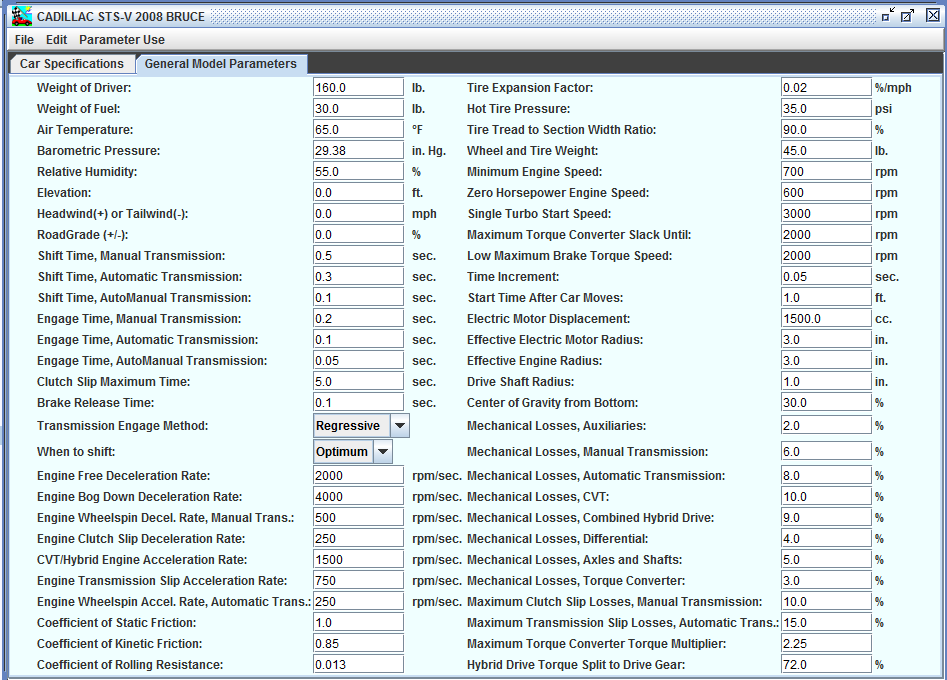
Car Test General Parameters that can be modified with Car Specific Files

The fun part of CarTest of course is predicting things we don’t know.  For example, I am hoping that my upcoming Spectre Intake will add 40 whp and 40 lb-ft of torque.  Here is a comparison back on the perfect 65F day with CarTest default standard conditions:

Selected Cars: 1. CADILLAC STS-V 2008 BRUCE 2. CADILLAC STS-V 2008 BRUCE SPECTRE
Time to Speed sec
0- 30 mph 1.75 1.61
0- 40 mph 2.75 2.18
0- 50 mph 3.75 3.68
0- 60 mph 4.75 4.66
0- 70 mph 6.41 6.20
0- 80 mph 8.00 7.65
0- 90 mph 9.71 9.20
0-100 mph 11.62 10.93

This resulted in the table above, predicting that the STS-V 0-60 time at 65F 29.9 baro 55% humidity with me driving with the new intake (hopefully) will drop from 4.75 sec to 4.66 sec.

The Quartermile time would have more effect — dropping from 13.35 sec @ 105.55 mph to 13.12 sec @ 107 mph.  Yes, I know that some people have done under 13 sec with modified STS-V’s, and good.  One has to consider the conditions stated, which makes a difference.

Wow you might think — add 40 hp and only get ~0.1 improvement 0-60?  How does that make sense?  The STS-V is not hp limited on the 0-60 run — it is traction limited.   Look at the whole table from 0-100 mph above and you can see a clear advantage predicted for the intake.

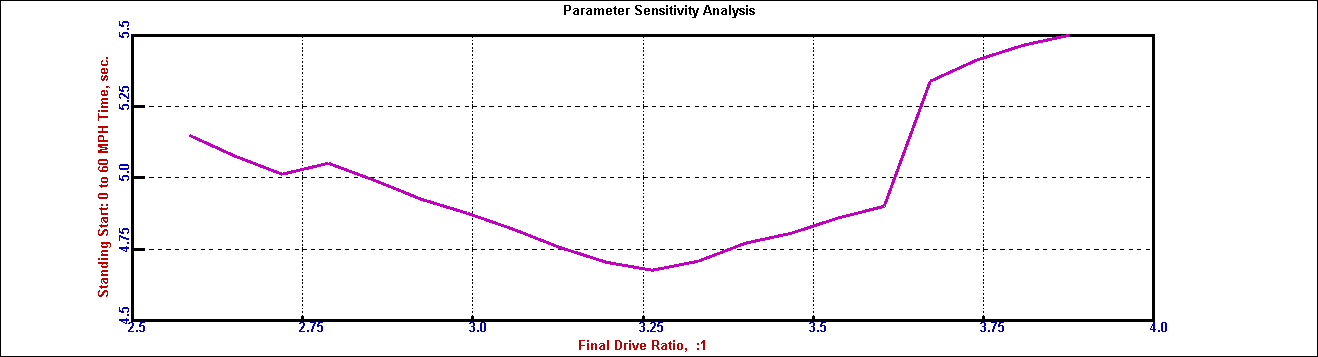
Another fun option to consider — what is the ideal final drive ratio for the STS-V to maximize 0-60 time:
Parameter Sensitivity - Final Drive Ratio

What this graph shows is the 0-60 time on the Y axis, using a variety of final drive ratios along the X axis.  The actual final drive in the STS-V is 3.23:1, which appears to be almost perfect for the car.

Remember my questions about the redline?  What WOULD the ideal redline be:

Parameter Sensitivity: Redline

This graph shows 0-60 mph time on the Y axis, and Redline on the X axis.  There is very little change from 6500-7500 rpm, which suggests that 6500 rpm is a good choice.

Another fun aspect of CarTest is the Top Speed Calculator.  A ‘stock’ STS-V is electronically limited to 155 mph.  CarTest estimates that on a perfect endless flat road it could do 172 mph.  The Spectre intake might raise this to 178 mph.  In a standing mile, the STS-V should hit around 149 mph at 34 seconds, so at the Texas Mile which measures from a rolling start it might do somewhat over 150 mph.  There is an overboost mode that kicks in over 150 mph after 150 seconds that drops the boost from 12 psi, but it would not come up in the time required for a mile.

I am glad I ‘refound’ CarTest, and that it is still available at all, and at a reasonable price.  Nothing replaces actually testing changes on your car, but I like to have some predicted results to use for trades: IF I do this for that much money what would happen?  Trades that one can work through without actually spending money are preferred.

I also should mention that when the Cadillac & GM Performance Division Engineers spent time getting the STS-V just right, they clearly made some good choices.
Intercoolant Overflow in, Happy Friday

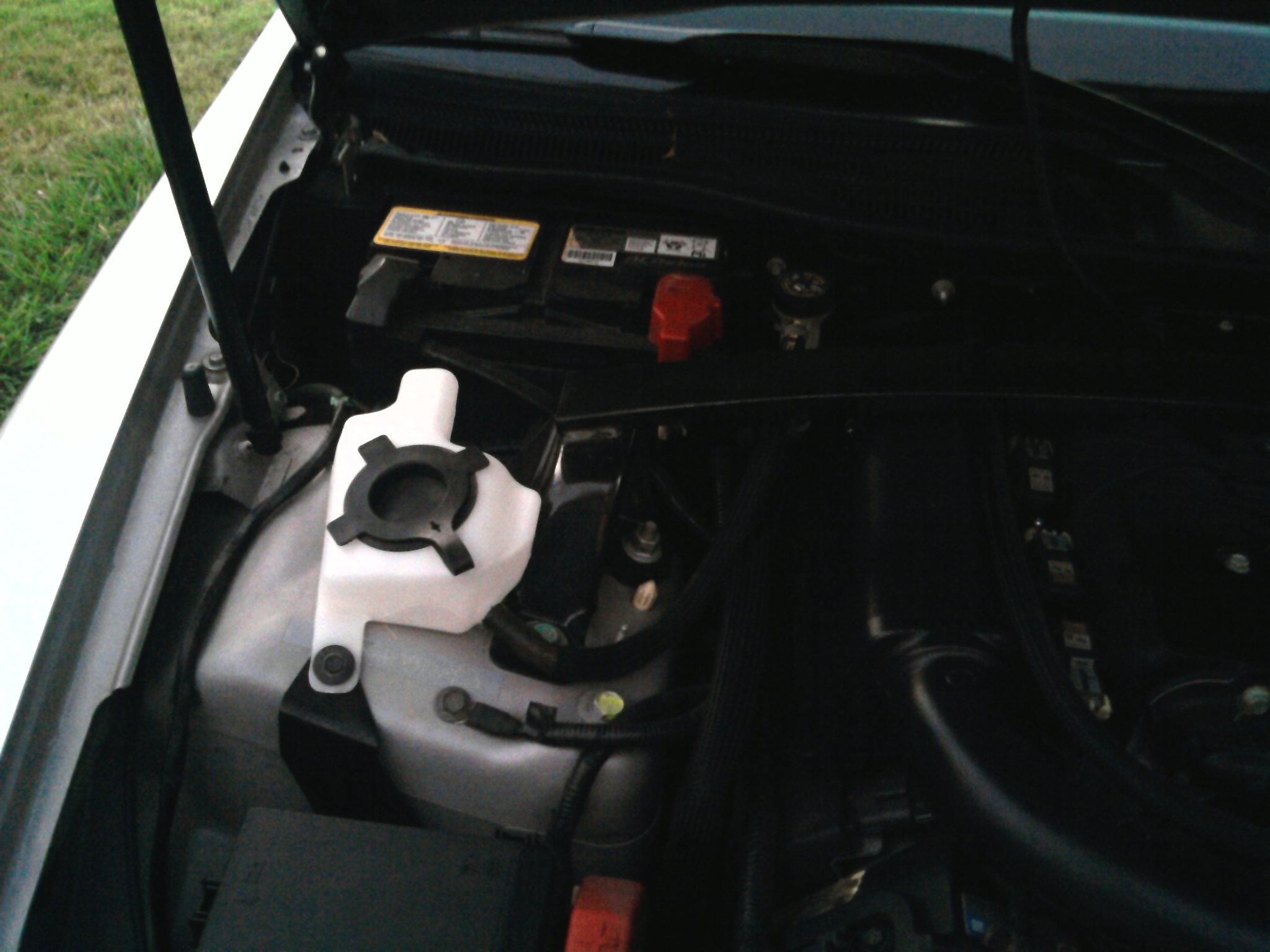
During my intercooler research I discovered that although the 2006/2007 Cadillac STS-V had a intercooler coolant expansion/overflow reservoir, the 2008/2009 STS-V just has a tube that drains to in front of the battery.    Looking at the system, I suspect that this is because the expansion/overflow is not really needed.  I wanted one though, so I reached out to ebay and picked one up.

Cadillac STS-V Intercooler Coolant expansion/overflow reservoir

This is a photo of the new overflow installed; it is the white tank to the left.  The reservoir bolted right in of course, as it is shaped to fit in that spot.  The tube was tied off to a support, so I disconnected it, plugged it into the reservoir, and it seems set.

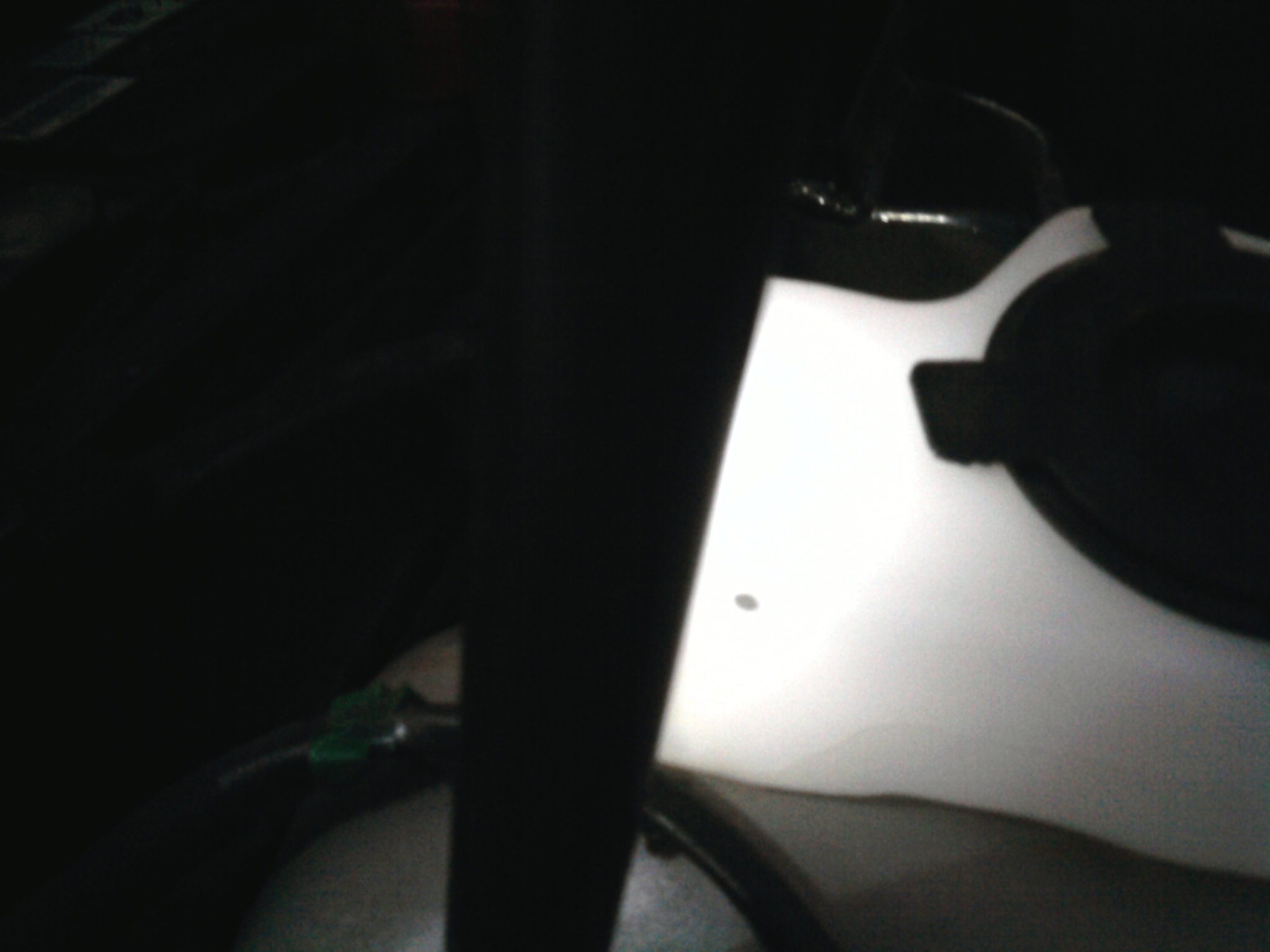
Cadillac STS-V Intercoler Coolant Reservoir Vent Hole

The reservoir is vented to atmosphere, so it is not pressurized.

Started my Friday morning by washing the STS-V with the 2-bucket method, car shampoo, and a microfiber towel for scrub, then microfiber towels for drying.  In the 2-bucket method one bucket is used for clean water/soap, the other bucket is used for dirty water and wringing.  So dip the scrub sponge or towel in the clean soap/water, scrub the car, then wash it off and wring it out over the dirty water bucket, repeat.

If I get out by 7 am the sun is not over the house yet and there is time to wash and dry.

I love Cadillac hats anyway, but I don’t have one that I keep in the V.  Clearly I need to change that.

With the nicely clean STS-V I needed to drop by Lowe’s to pickup a fan my Wife had ordered, then grab breakfast, and head to my day. Nice summer morning for Texas at 82F, so  I put the sunroof open, the windows down, and enjoyed the morning.  By the time I arrived at destination my hair was uniformly disheveled in a fairly comical way, straight up on one side and randomly placed everywhere else.

No, I didn’t grab a photo.  Yes, I’ll be adding a car hat.

#Pirelli, @OnStarConnect, @Cadillac Roadside Assistance, @FrankKent & STS-V

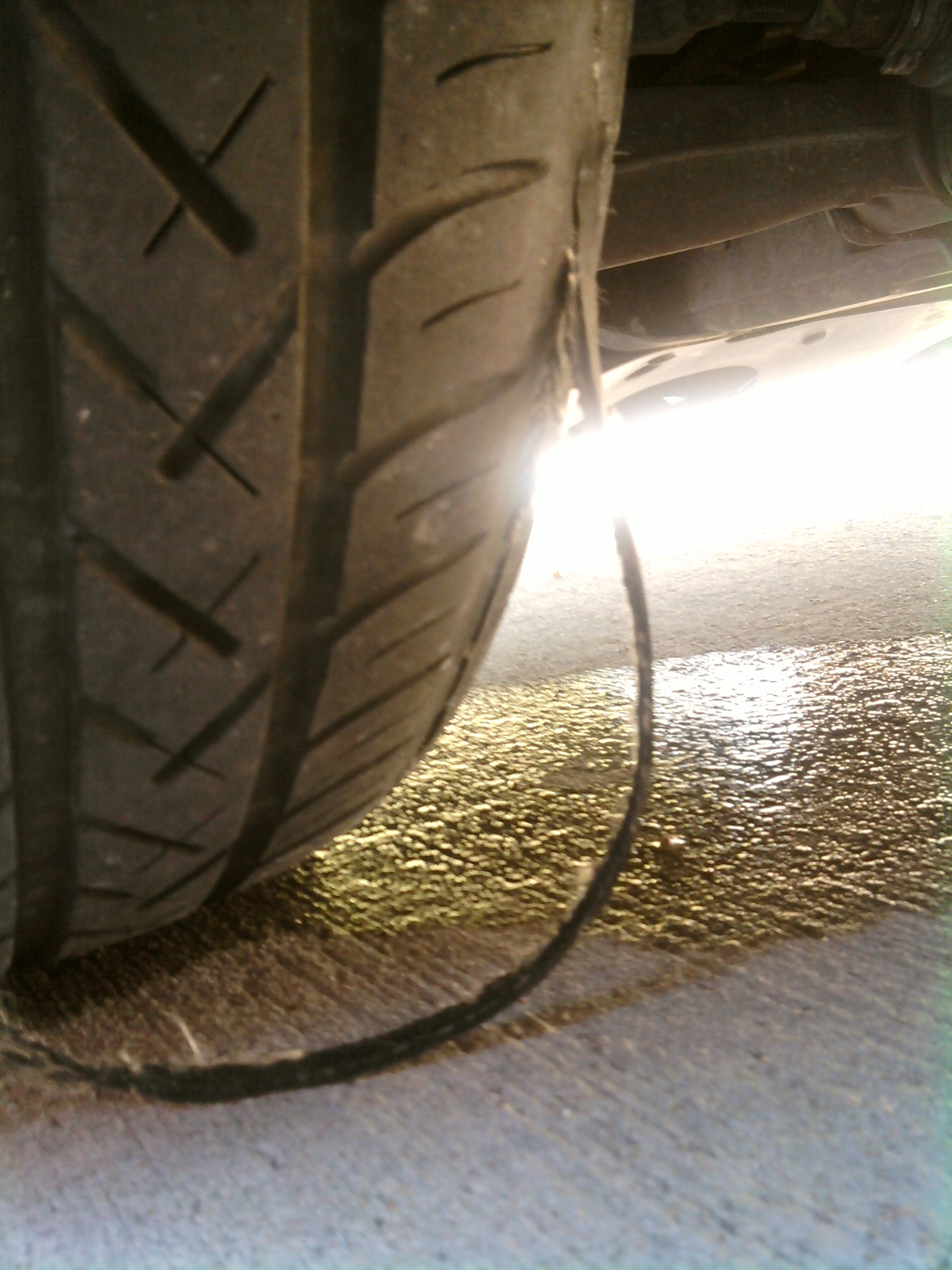
On the way home from Fort Worth to Plano this morning in my 2008 Cadillac STS-V I began to hear a loud “wap-wap-wap” sound.  I looked for a safe spot to exit the highway, then pulled into a parking lot to investigate.

Pirelli Eufori tire tread problem left front tire from the back looking front

Now, I am not a tire expert but I am certain the tire should not have part of the tread hanging off.

The STS-V is a performance sedan and uses Pirelli Eufori extended mobility runflat performance tires, in sizes 255/45-18 on front and 275/40-19 in back.  There is no spare, since the run flats can get you to the next place without going flat, and the wheel/tire sizes are different front to back (so no one size fits all).

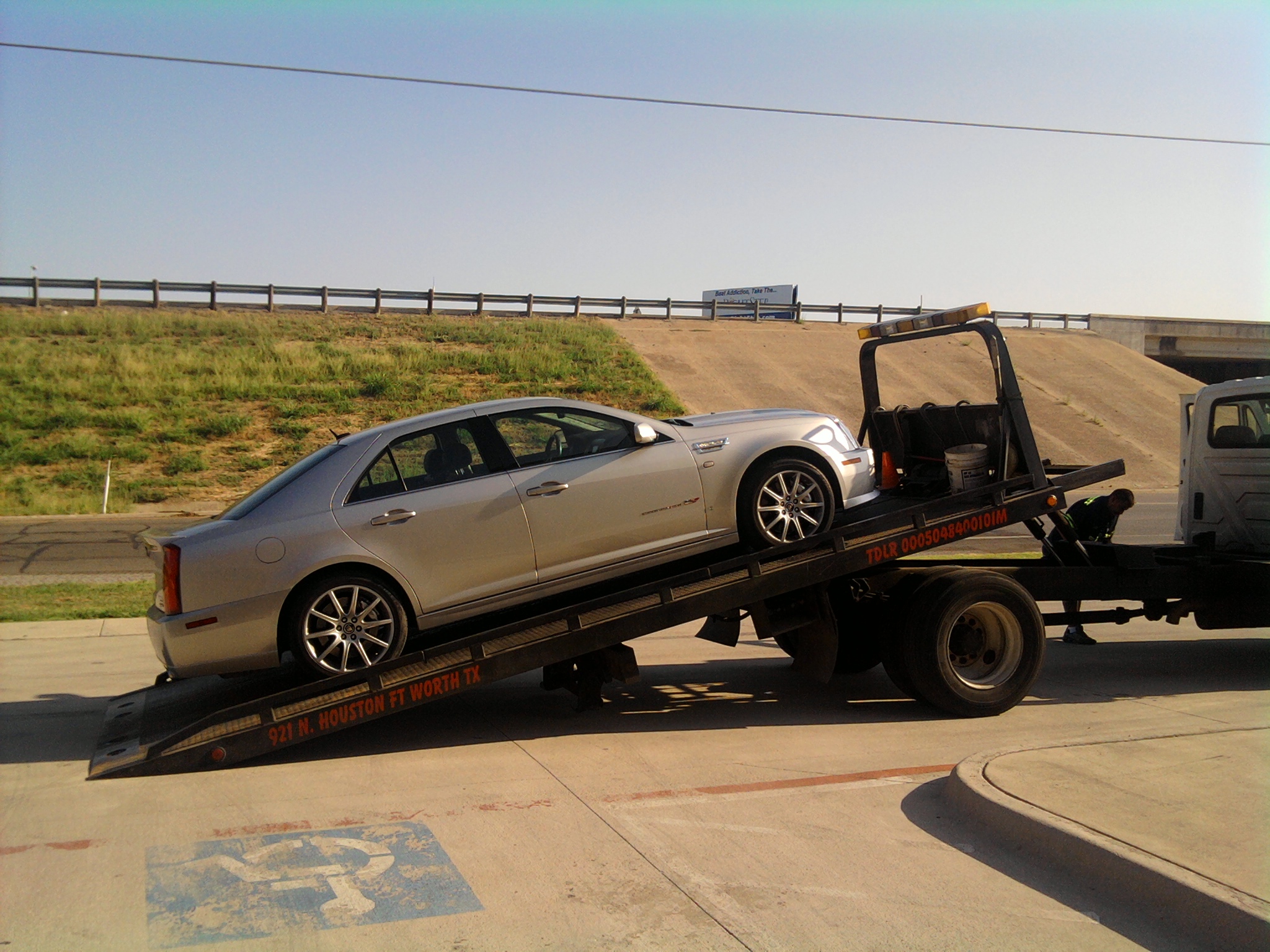
I used the OnStar button to discuss with OnStar and to get Roadside Assistance.  Roadside Assistance arranged for a tow truck to come and take the STS-V to the nearest Cadillac Dealer, in this case Frank Kent Cadillac in Fort Worth.

STS-V loaded on flatbed tow truck

The Tow truck arrived in about an hour from the first call to OnStar, which is good service for a Sunday.  Unfortunately, Frank Kent is not open this morning, but the advantage of having the Cadillac taken to a Cadillac dealer is that they have a secure lockup for delivery after hours.

So, my son came and picked me up from the stopped spot.  If I were further afield I would have had to take a taxi to a rental car place and get a rental car setup for the duration.  I believe the Cadillac coverage would cover the rental car fee.

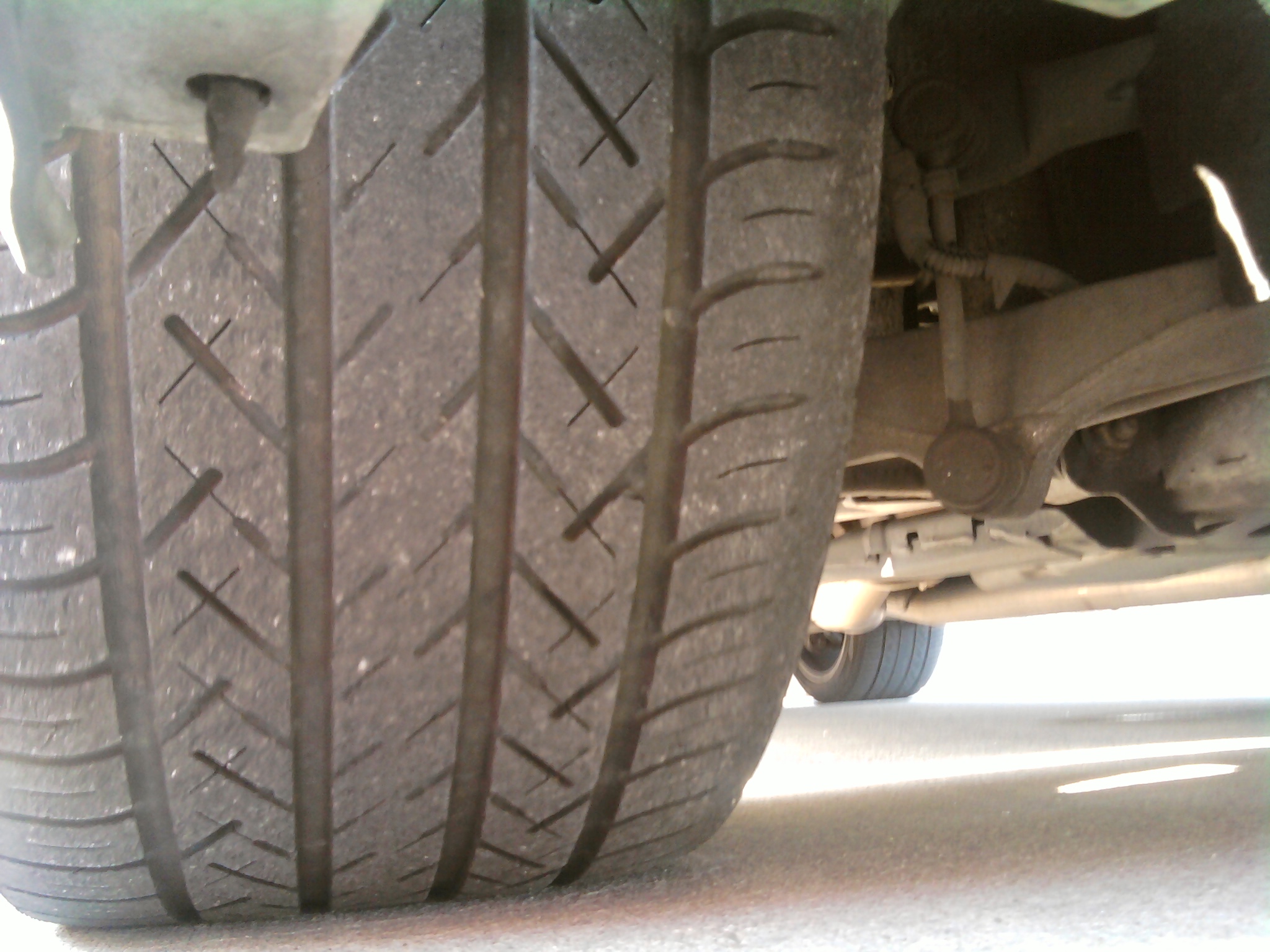
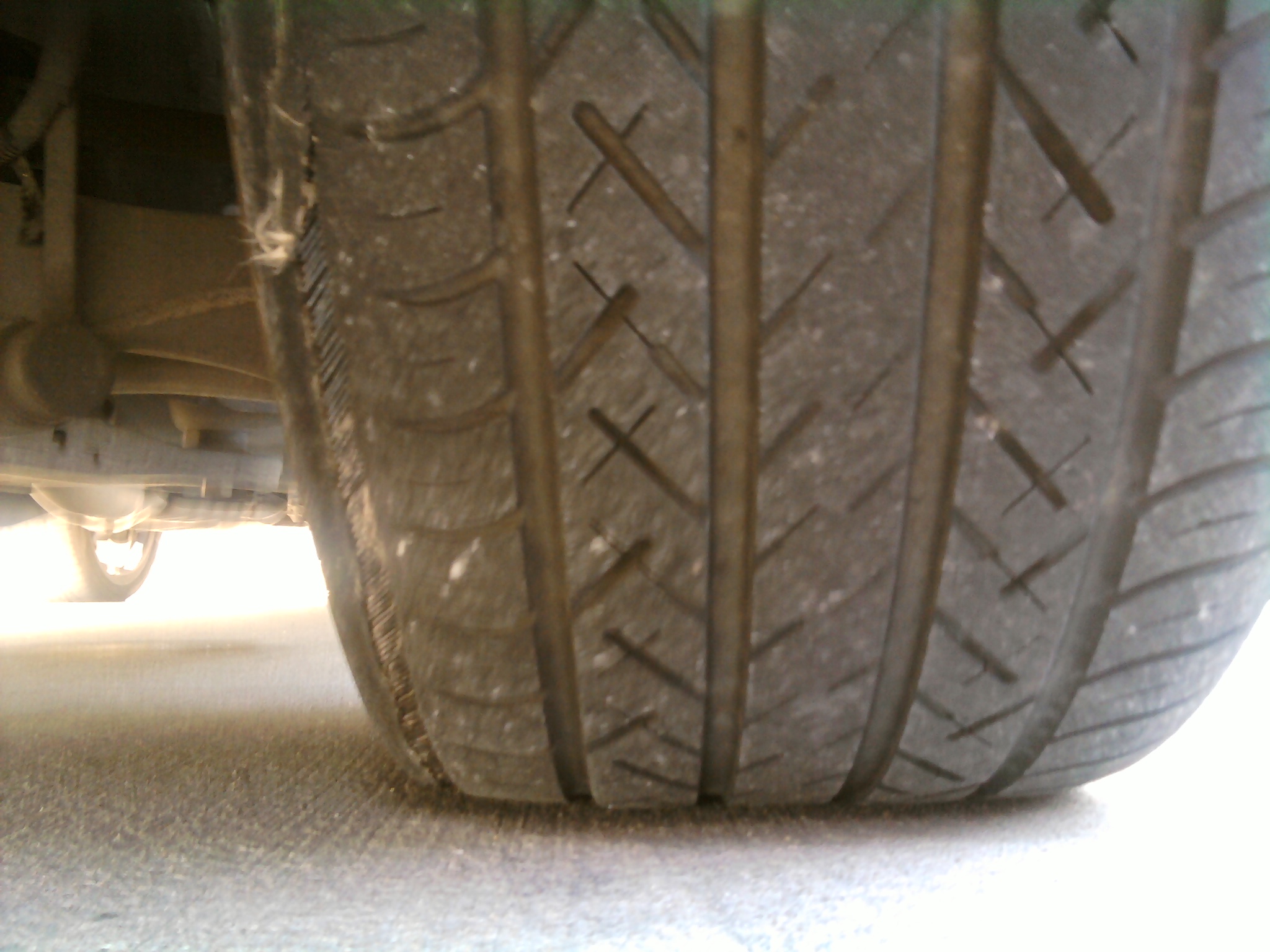
Tread on the front tires didn’t look bad except for the ripped part.

Right Front Tire from the Front looking back

Left Front Tire from the Front looking back

So I am not sure what caused the tire to have this sort of failure.  The tires had 18K miles on them when I purchased the car, and have 19.2xx on them now.  I assume they are the original equipment tires that came with the STS-V.

Next will be to talk to Frank Kent to determine the correct replacements.  The Pirelli’s run $377 each for the fronts, and $488 ea for the rears at discounttire.com

The trade off on run-flats is they have somewhat worse performance, but they don’t leave you stuck beside the road.  This morning I felt stuck beside the road, so I am not sure I want to put run-flats on again for the new tires.  With the V at the Dealer though I’ll have to see what the choices are.

My experience with OnStar was good.   They were helpful, polite, and got me connected to who I needed to talk to.

Cadillac Roadside assistance was helpful and got the car to the right place to be serviced. We discussed various options — such as which Cadillac dealer to tow to, or whether to tow to a tire store instead.

The Towing company sent the right kind of truck for the V, and the Driver took appropriate care to get the V up on the truck without scraping the front spoiler.

OnStar, Cadillac Roadside service, and the Towing Company all communicated clearly back to me.

I wish roadside assistance worked where a van pulled up with a new rare tire, and ready to mount it on the wheel.  Unfortunately, that’s not happening.  But I am glad that I was able to get the car lined up for repair and I got back home safely.