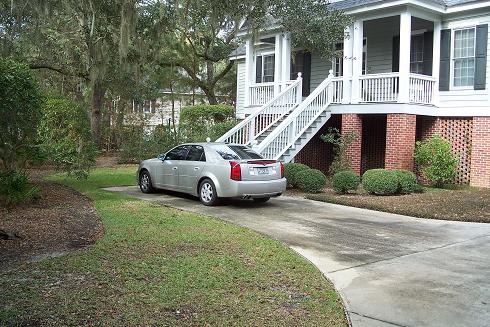
We may be seeing the last models with the Cadillac Northstar V8 engine. Rumors are that the new Cadillac XTS, which will replace the DTS and STS, will not feature the Northstar. With the retirement of the 1st generation SRX, and the XLR, no remaining models offer this powerplant, and the Northstar may go into retirement as well. Let’s look in depth at this important power plant.
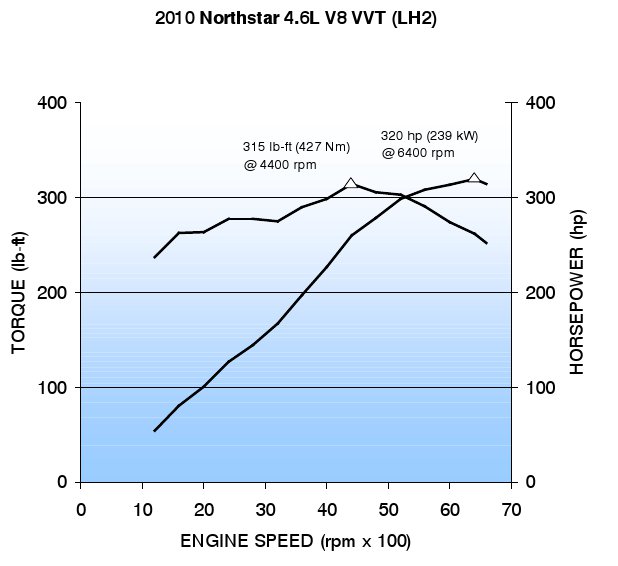
320 hp LH2 Rear-wheel Drive Variant
The Northstar V-8 was the basis for a technological renaissance at Cadillac, lending its name to an entire automotive system that includes the most advanced traction-enhancement, suspension and anti-skid electronics in the world when it was launched in the 1993 Cadillac Allante. The 90-degree Northstar was the first all-American dual-overhead cam aluminum V8 engine. Sixteen patents protected its advanced technologies; seven more have been granted since. In 1994, the original Northstar (RPO L37) was joined by a second version (LD8). Different camshafts and cam lobe profiles provided different power curves and very different driving characteristics. The L37 is more responsive, higher revving, with more peak horsepower and a higher redline (6500 rpm vs. 6000 rpm). The LD8 puts more emphasis on quick launch and part-throttle response, with greater peak torque. The L37 and LD8 are used in front-drive applications; the LH2 is the rear- and all-wheel-drive variant.
The Northstar was on the Ward’s 10 Best Engines list for 1995, 1996, and 1997.
Since the engine’s introduction, GM has steadily improved this premium V-8 and continued to push its technological envelope. In 2004, GM’s 4.6-liter Northstar V-8 made the transformation to be used in FWD and RWD/AWD applications. FWD applications benefited from a new, stronger forged steel crankshaft, a more powerful engine management computer, and several other key refinements that improved performance.
Also in 2004, the Northstar family of engines benefited from a host of new technologies and engineering features. For example, the LH2 Northstar debuted in the 2004 Cadillac XLR and SRX models, and in 2005 became optional in the 2005 Cadillac STS. Normally, a myriad of changes are required to adapt an existing engine to a new vehicle. In the case of the STS, only a different battery cable was required to enable the LH2 to bolt into an STS.
In the transition from FWD to RWD/AWD applications, the Northstar went from being transversely mounted to longitudinally mounted. Changes were major, and included the LH2 gaining variable valve timing (VVT), electronic throttle control (ETC), a boost in compression, a stronger engine block, a more powerful engine controller, polymer-coated pistons, high-performance exhaust valves, and a host of other technical enhancements. In total, the LH2 gained a five-percent power advantage over the FWD L37 Northstar.
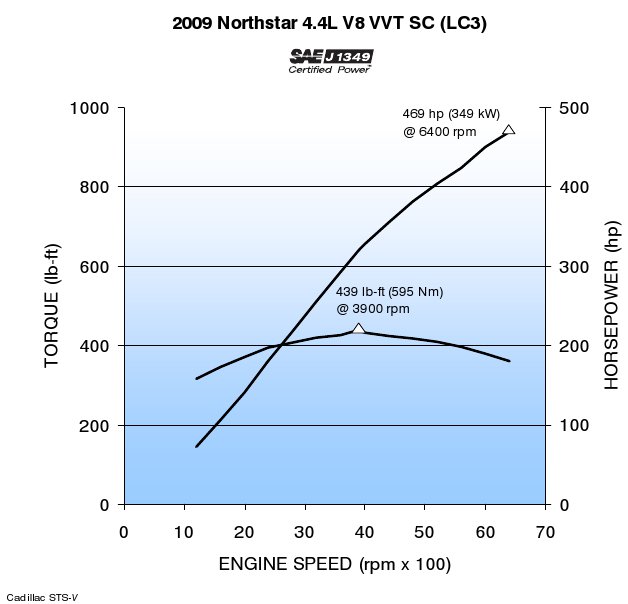
The Most Powerful Production Northstar
The ultimate Northstar variant arrived in 2006 with the STS-V and the XLR-V performance cars. This 4.4L Supercharged, Intercooled Northstar made 443 hp in the XLR-V, and 469 hp in the STS-V.
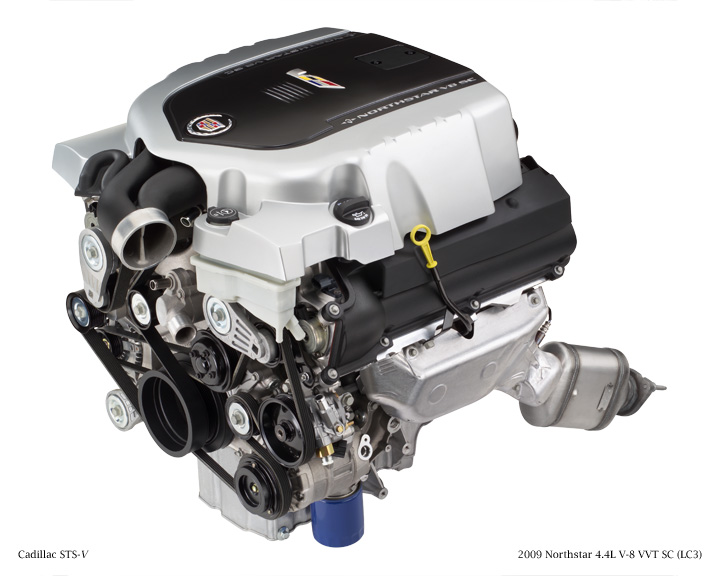
Supercharged Northstar
From its introduction as a 270hp engine to its final bow in 320 hp VVT Rear-wheel drive form, to Supercharged, intercooled, 4.4L 469 hp form in the STS-V from 2006-2009, the Northstar has delivered driving excitement.
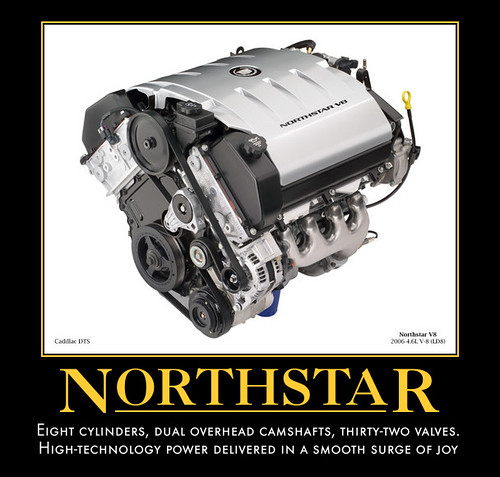
Issues:
- Early Northstar engines had some gasket and seal issues. This was solved by 1995.
- The Northstar has a reputation, deserved or not, for headgasket issues after 100K miles. Magnifying this issue is that repair of head gasket problems requires removal of the powertrain due to packaging, and so requires a very expensive fix. Several changes were made to the Northstar design over the 17 years of production, notably in 2000 and in 2004 that addressed this issue.
- Lack of power updates: the current 4.6L V8 in the Deville at 275hp has LESS power than the smaller 3.6L DI VVT V6 in the CTS. That engine makes 304 hp.
- Missing Ultra: The Ultra V8 was the planned engine in development to replace the Northstar. It would have been a V8 variant of the high-feature 3.6L engine, and so should have delivered over 385 hp.
Other Applications:
- The Northstar has a good following among hot rodders especially for use in sand buggies (dune racers).
- The least powerful Northstar was probably the 4L variant used in the Oldsmobile Aurora, which made 250 hp. There also was a V6 variant based on this engine called the LX5 premium V6, that made 215 hp.
- The Shelby Series 1 automobile used the 4L Northstar from the Aurora as its base engine, but also offered a supercharger as an option.
Conclusion: The Northstar was a very important engine for Cadillac. Unfortunately, without technology updates to raise its effective output level, it has been surpassed by the performance of other Cadillac engines. The expensive, hand-built LC3 Supercharged Variant solved the performance issues, but was a boutique solution and not the main production powerplant upgrade needed.