Cadillac STS-V understanding test result diversity

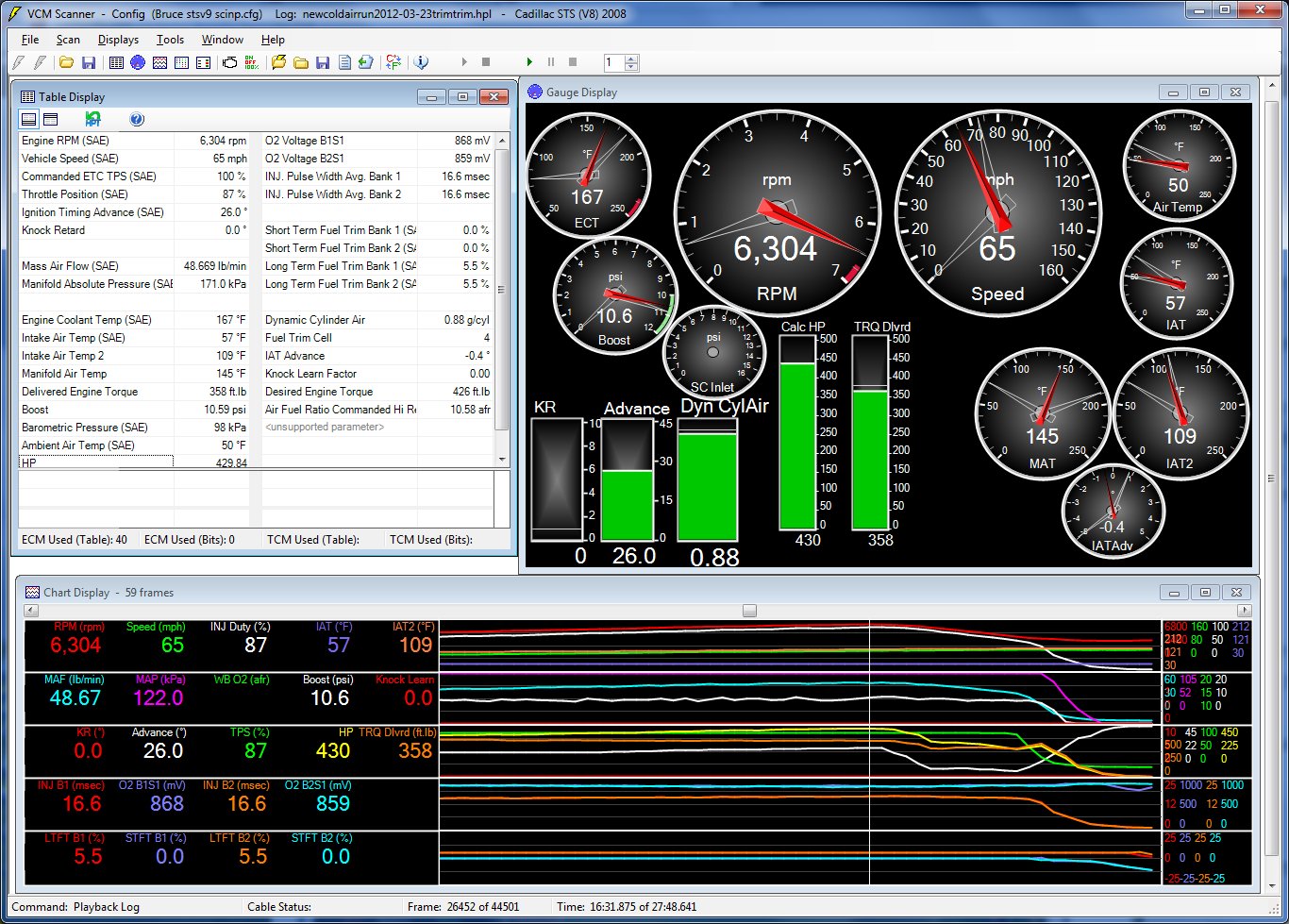
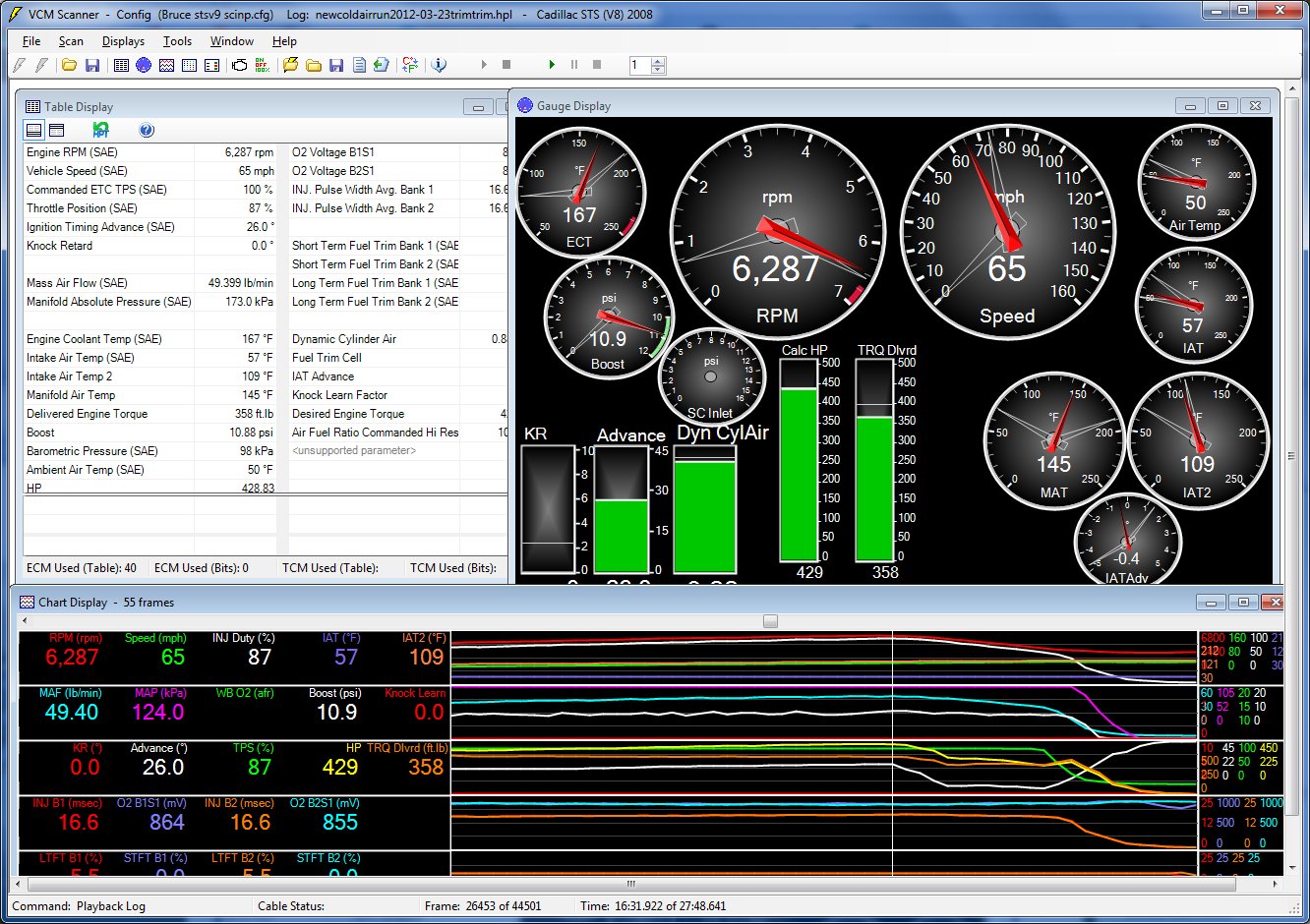
As a part of understanding the HPTuners data I am seeing I captured these snapshots from two different 0-60 test runs:

Time 11:

Time 11:01.531

Time 16:


Time 16:31.875

Summary:  Same Cadillac STS-V, same day, same driver, one run later than the other run.  Different locations.

On the 2nd run the car is able to maintain a lot more timing — 26 degrees of advance vs 18.5 degrees on the first run.  The MAT temp on the 2nd run is at 145F while it hits 171F on the first — for the identical 109F IAT2!  The boost is 0.4 psi higher on the 2nd run — the boost varies pulse to pulse so that could be noise.  Lots of variables — again, 2 runs from the same car same day same gas 5 minutes apart.

These two runs resulted in very similar 0-60 mph times — 4.9 sec on the first one and 4.8 sec on the 2nd one.  This sort of rich diversity in the results certainly is intriguing; let me know if you see something obvious that I am missing on why!

Updated baseline Cadillac STS-V 0-60 time

We had a last glimpse of colder weather today so I did a new baseline for my 2008 Cadillac STS-V with Spectre cold air intake.

Low on fuel, forecast 45.6F, Baro 30.05

Lost some of the data on the PerformanceBox — the text files captured properly, but the dbn full datafile did not.  I have archived and erased the SD card in case it was an issue with file naming or similar.  Meanwhile the capture was a 0-60 time of 4.9sec, followed by the best run a 0-60mph time of 4.8s:
————— Run 0006 —————
Date 23/03/2012

Accel results
Speed(mph)     Time(s)
0-60     04.8

Accel Distance results
Distance()     Time(s)     @Speed(mph)
0-60′     02.4     32.2

Misc PkAccelG     0.68G
Equivalent data from a prior run for comparison:
————— Run 0004 —————
Date 20/08/2011

Accel results
Speed(mph)     Time(s)
0-60     05.0

Accel Distance results
Distance()     Time(s)     @Speed(mph)
0-60′     02.3     33.4

Misc
PkAccelG     0.66G

I was running the HPTuners capture at the same time on the netbook, and it showed a 0-60 time of 5.12s which is probably a ‘no rollout’ equivalent for the 4.8s run.

HP Tuners Dashboard capture

At the end of a run we can see ambient 50F, IAT1 57F, IAT2 109F, and MAT 145F but only a hint of IAT retard -0.4 degrees.

Continuing my analysis of incoming air temps over speed under different conditions:

Baseline from August 2011

MPH (Temps in Deg Fahrenheit)
Deltas Item 0 30 45 60 Deltas
Ambient 90 90 90 90 0
23 IAT1 113 117 113 106 -7
5 IAT2 118 120 127 135 17
2 MAT 120 121 136 169 49
Hot: Trimmed Trim Mar 2012
75F
Deltas MPH (Temps in Deg Fahrenheit)
Item 0 30 45 60 Deltas
Ambient 75 75 75 75 0
16 IAT1 91 93 93 91 0
33 IAT2 124 122 129 136 12
-2 MAT 122 121 134 163 41
Cold Baseline Mar 2012
75F
Deltas MPH (Temps in Deg Fahrenheit)
Item 0 30 45 60 Deltas
Ambient 50 50 50 50 0
5 IAT1 55 57 57 57 2
35 IAT2 90 90 97 104 14
1 MAT 91 90 101 132 41

Summary:

Good delta between IAT1 and ambient — the new isolation around the Spectre intake is helping keep it cooler for the stop it takes to setup a run.

IAT2 was already at 35F at the start of the run, but only gains 14F during the run.

The MAT calculated (anticipated) IAT temp increases 41F during the run, consistent with the hot run.

Here is a comparison of IAT2s from the 2 different runs today — very similar 104F at peak,

Cold Baseline Mar 2012 1st Run


Deltas MPH (Temps in Deg Fahrenheit)
Item 0 30 45 60 Deltas
Ambient 54 54 54 54 0
7 IAT1 61 63 64 64 3
23 IAT2 84 86 97 104 20
2 MAT 86 88 101 143 57
Cold Baseline Mar 2012 2nd Run


Deltas MPH (Temps in Deg Fahrenheit)
Item 0 30 45 60 Deltas
Ambient 50 50 50 50 0
5 IAT1 55 57 57 57 2
35 IAT2 90 90 97 104 14
1 MAT 91 90 101 132 41

although with different resulting MATs.

Overall, good 0-60 run of 4.8s and 4.9s and more data to consider for the air temps.  Also a good baseline before the Corsa arrives.

Re-Establishing the Cadillac STS-V air box heat barrier

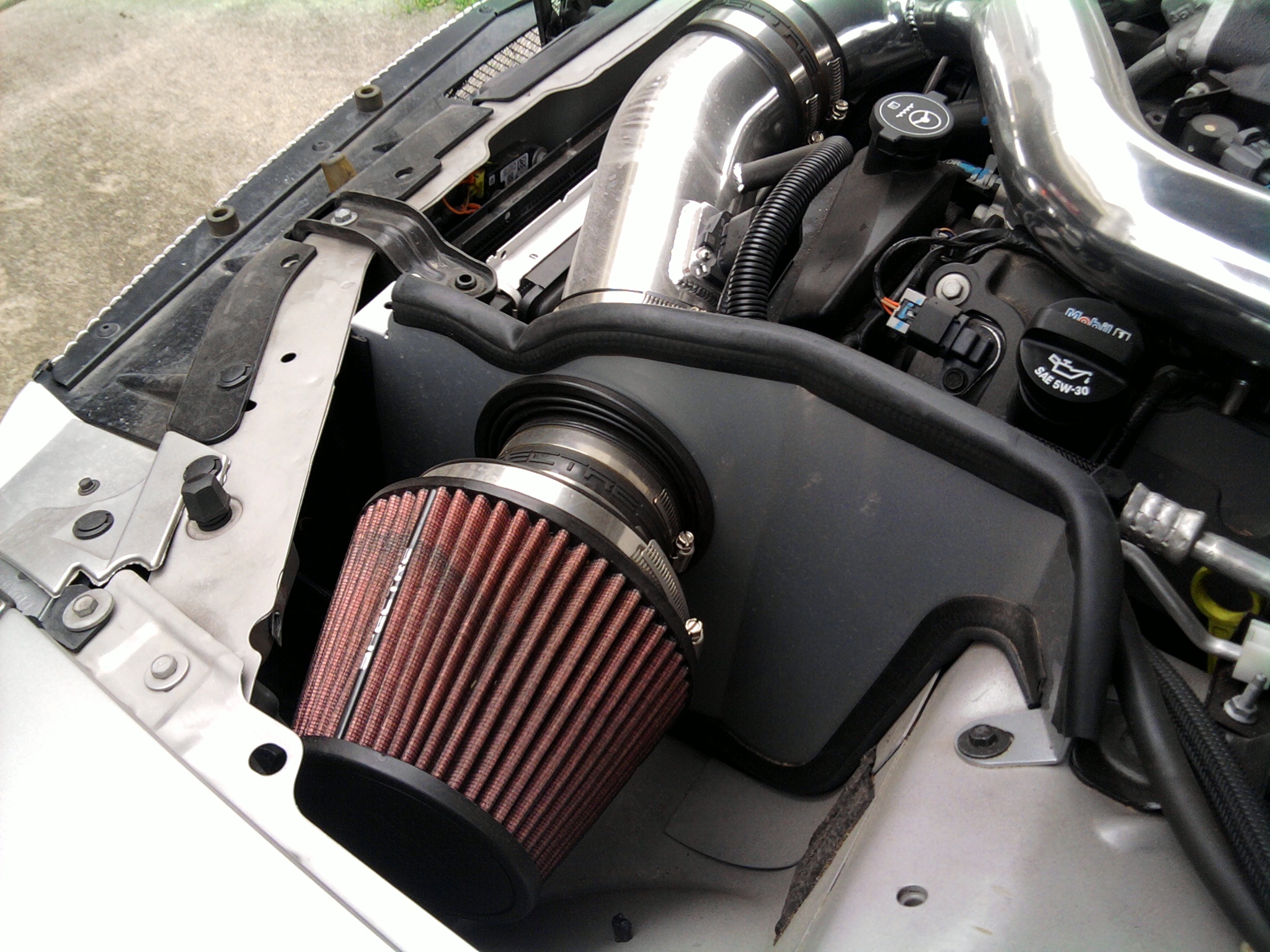
I like the Spectre intake for the Cadillac STS-V.  However, when we put the intake on we discarded the factory engine covers along the front and side. The Spectre intake includes a barrier to direct air away from the intake filter, but it is not closed at the top.
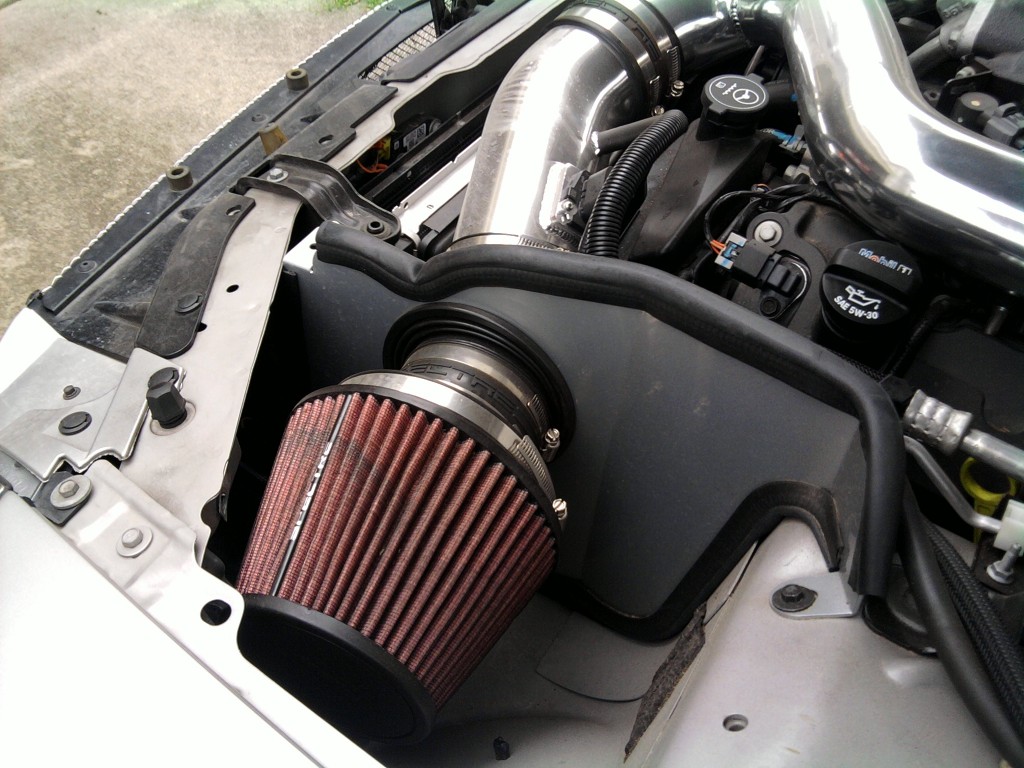
Cadillac STS-V Spectre Intake filter and air dam

I was considering building an insulated cover or box, but it is desirable to me to re-use the factory trim pieces.  Also, there are some functional air blocks built into the trim that I want to recover use of — example the foam air dam below the center front piece, and at the rear of the driver side piece.
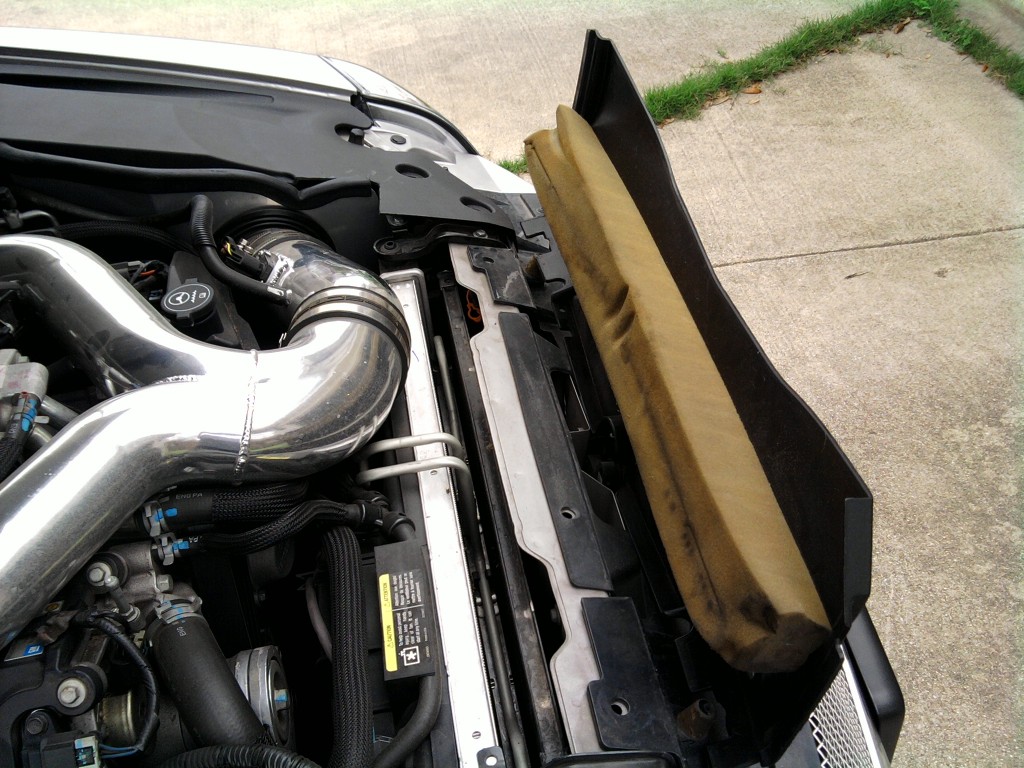
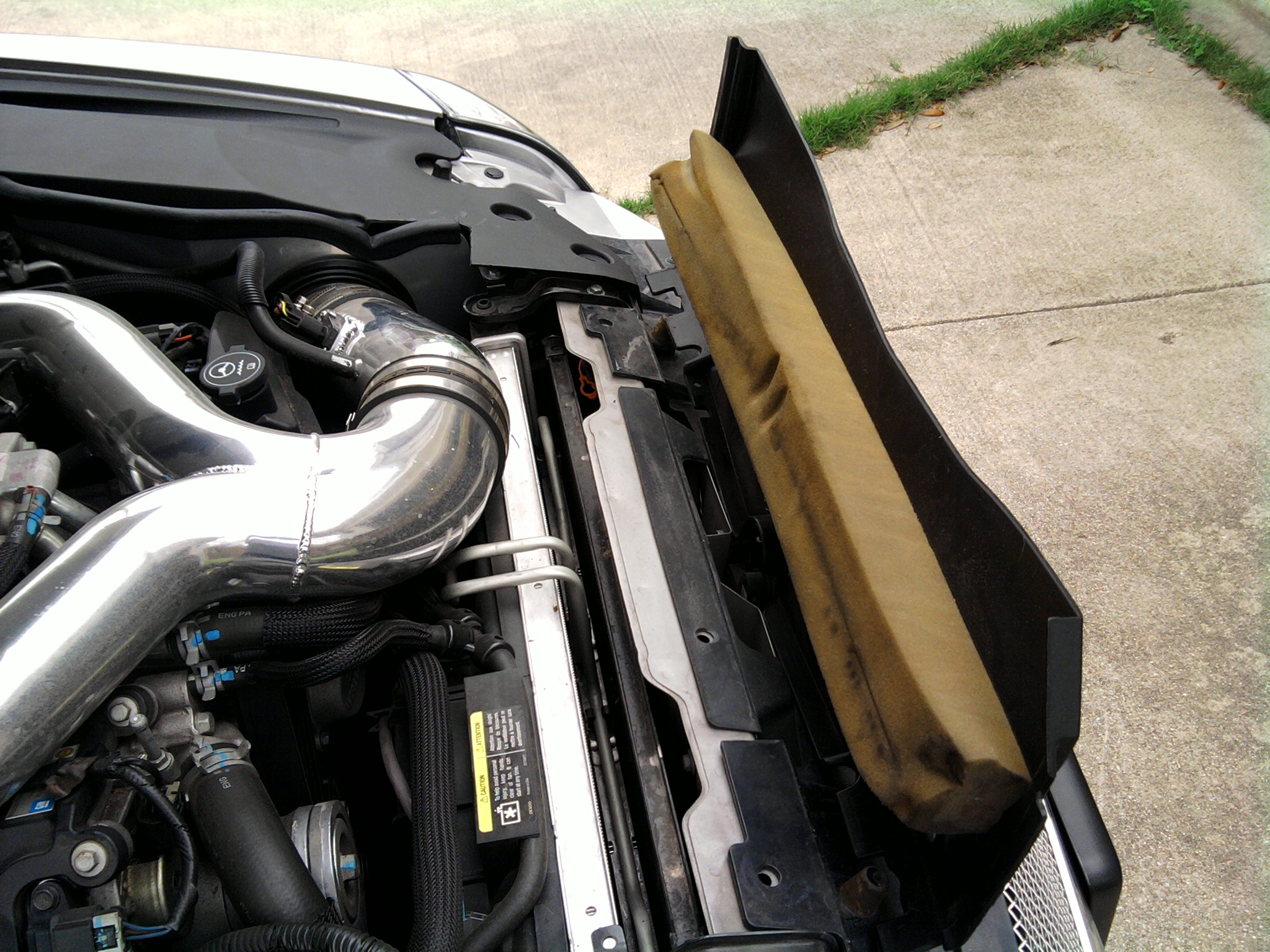
Foam on the under side of front middle trim acts to keep air in the radiator flow

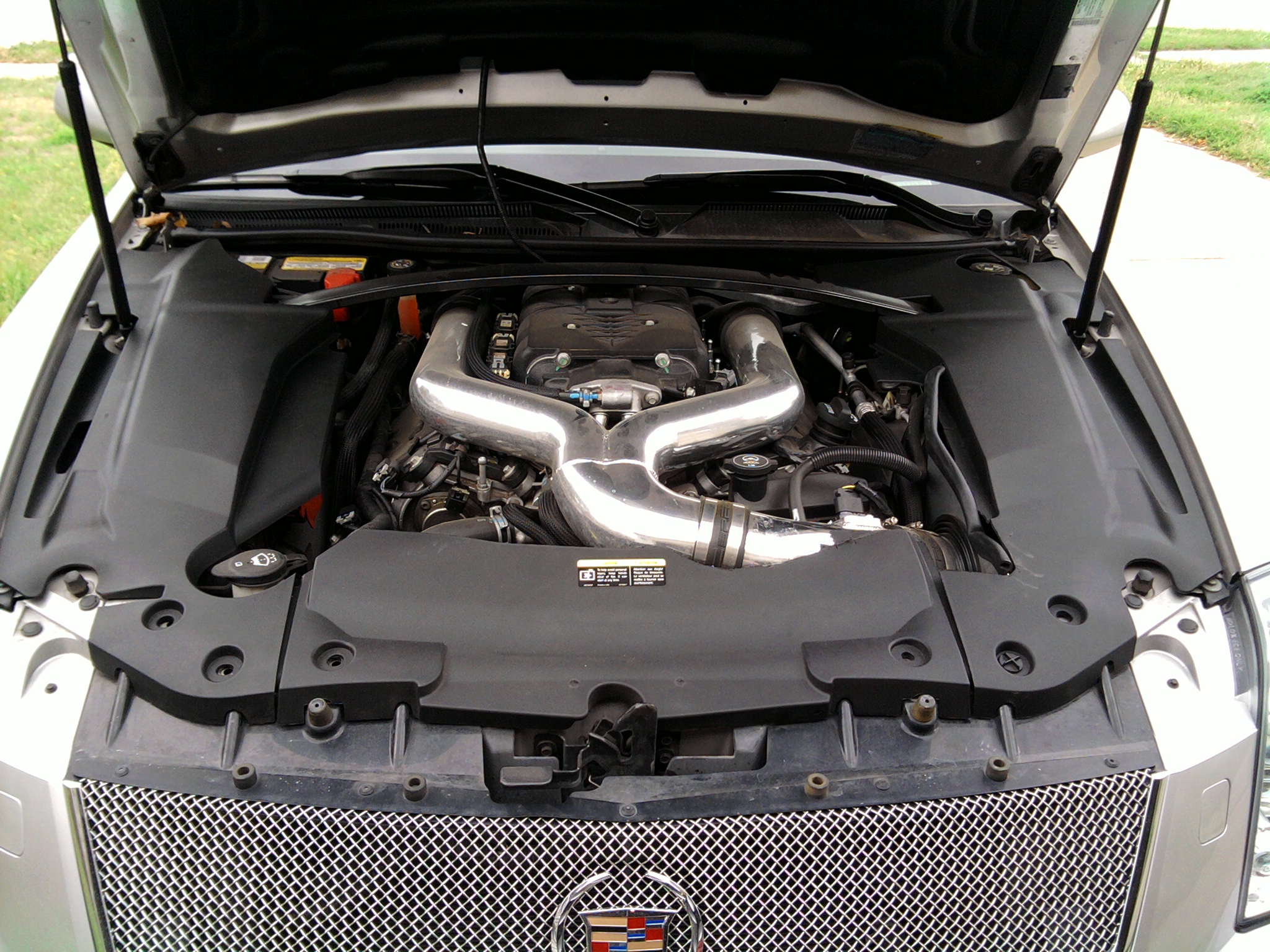
The factory piece that would fit over the driver side won’t fit with the Spectre intake in place, so I trimmed the side piece, and the front center piece, to allow them to fit with the Spectre Intake.  I need to get some rubber gasket material to close the gaps, and smooth the edges, but now all the pieces fit.
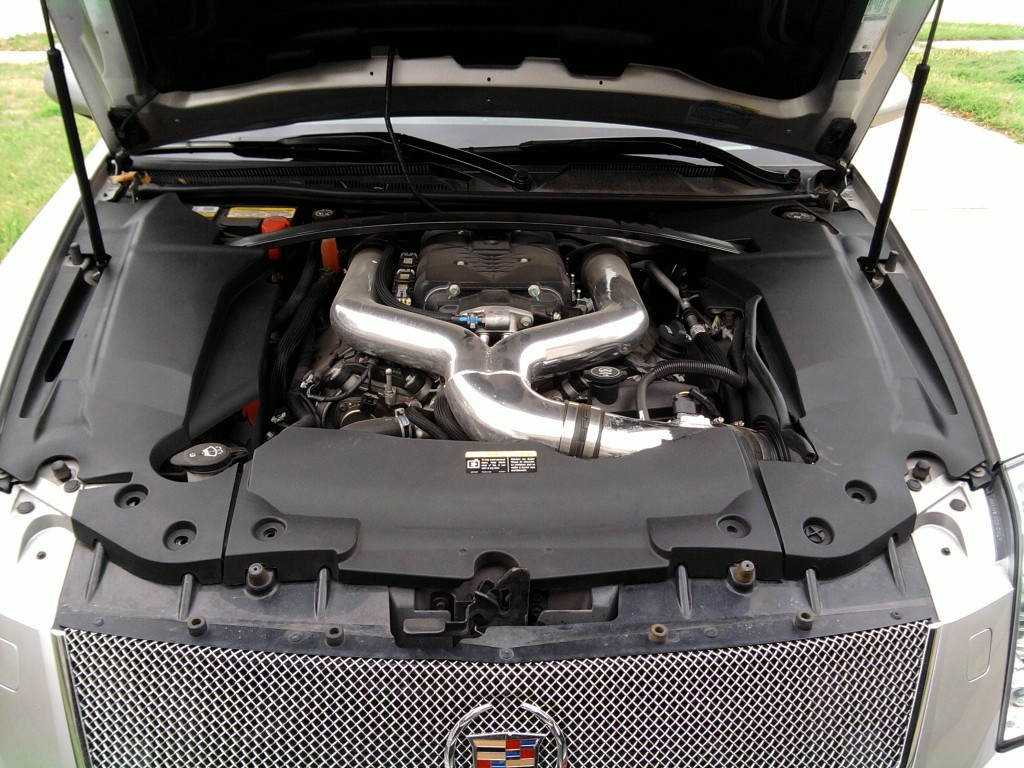
Trim pieces trimmed and in place

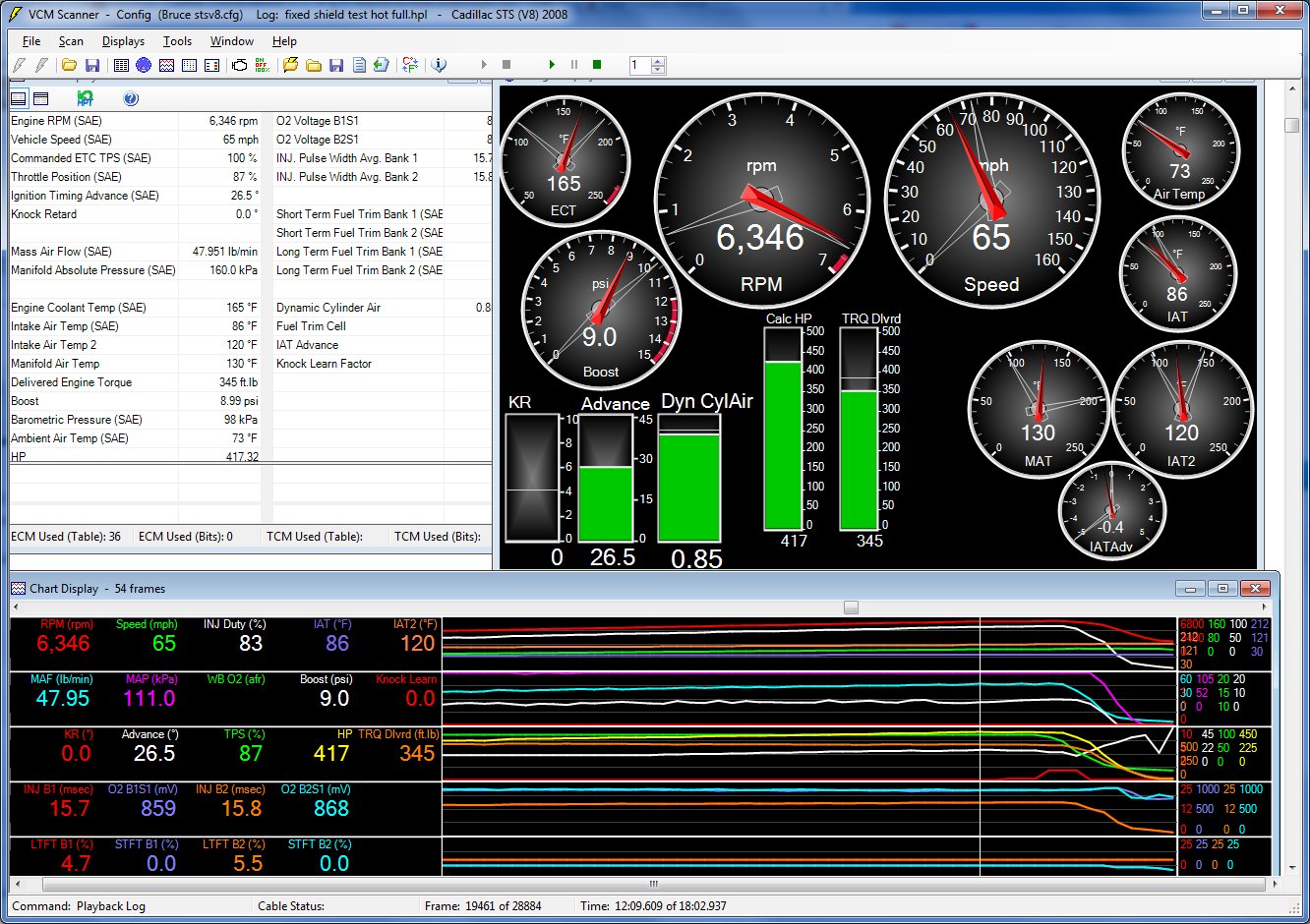
Even though the V was hot I did a test and data run:
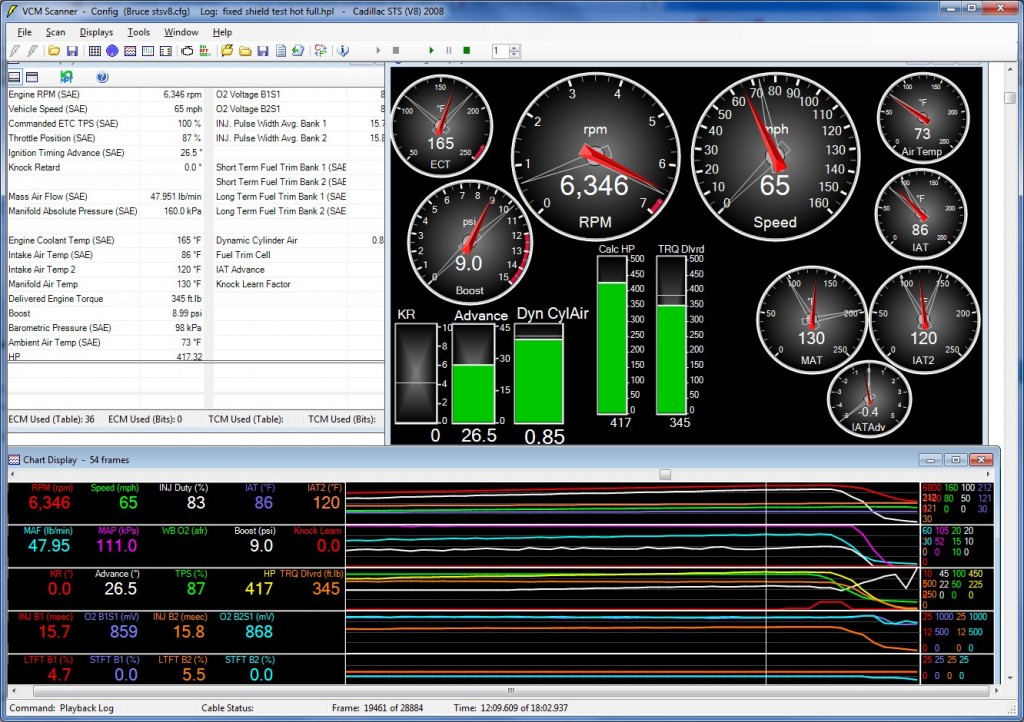
Max calculated power for the test run 415 hp in 2nd gear at 6346 RPM for comparative purposes; max torque 377 lb ft at 3324 RPM.


Unfortunately I only have a heat-soaked mid-day comparison run for today.  I attended Church this morning, then worked on trimming pieces, then did a test run.

Baseline from August 2011

MPH (Temps in Deg Fahrenheit)
Deltas Item 0 30 45 60 Deltas
Ambient 90 90 90 90 0
23 IAT1 113 117 113 106 -7
5 IAT2 118 120 127 135 17
2 MAT 120 121 136 169 49
Trimmed Trim Mar 2012
75F
Deltas MPH (Temps in Deg Fahrenheit)
Item 0 30 45 60 Deltas
Ambient 75 75 75 75 0
16 IAT1 91 93 93 91 0
33 IAT2 124 122 129 136 12
-2 MAT 122 121 134 163 41

There is a lot to read and try to analyze here, but let’s piece it together.

First, today is cooler than back in August, 75F instead of 90F.  However, my STS-V is heat-soaked today and wasn’t back in August.

IAT1 is 16F above Ambient now and was 23F back in August.   That is what the trim is supposed to help with, so good.  In August the 0-60 run itself cooled the IAT1, while it did not today.

IAT2 was only 2F above IAT1 in August (morning run, not heat soaked); today it was 33F above (heat-soaked).  In August the IAT2 gained 17F during the 0-60 run; today 12F.

MAT in August gained 49F on the run; today 41F.

I am cautiously considering replacement of the trim beneficial — did result in lower delta temps.   I would like to have a non-heat-soaked current run to compare for apples to apples however.  There are still some gaps in the trim fit that will benefit from some gasket material along the edges.