After Action Report: Cadillac CTS-V Challenge

An eclectic collection of car nuts gathered at the Monticello Motor Club today with a short list of competitive vehicles.  Several Cadillac CTS-Vs, a BMW M3, a BMW M5, a Mitsubishi Lancer Evo, a Jaguar XF, and an Audi RS4 were present.
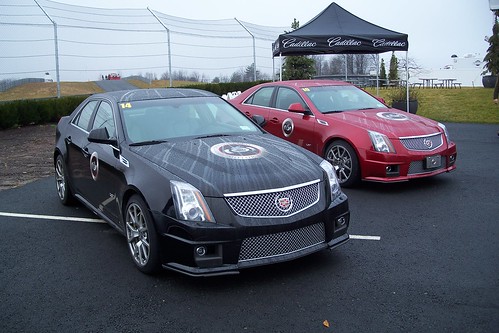
CTS-V

CTS-V

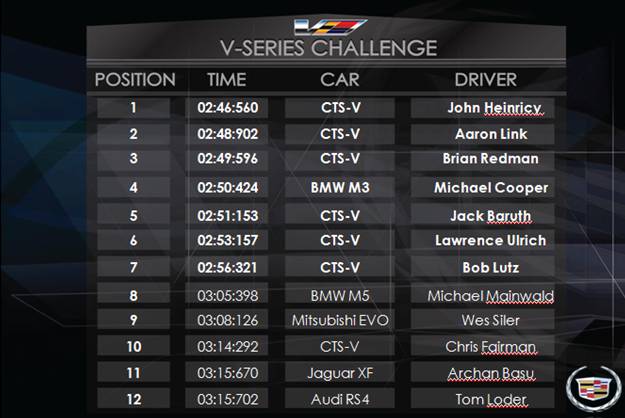
The final results:

We had lunch with Michael Cooper’s Dad and brother and his friend.  Michael’s time was very good.  He has had some previous racing experience and did a great job in the competition.  He had the low time for a while, and it looked like the M3 might take the upset.  Later in the day he did get a chance to drive the CTS-V on the track, but did not get a competitive, timed lap in the V.    Ari Straus, the Monticello Motor Club Manager, estimated that head to head with the same driver the M3 is probably 2 seconds slower at Monticello than the CTS-V.  Yes, the M3 is good — but not as fast around the track as a CTS-V.

Overall John Heinricy set the low time, (besides a “Mystery Driver” who took some timed laps but is not mentioned in the official score), but as impressive is that one of the CTS-V Engineers, Aaron Long, also had a very good time.  Love it when the product guys know how to use the product well.

The host, Monticello Motor Club, did an excellent job.   The facility is a world-class racing venue.   Parking was effortless, space was good, area for lunch, viewing, and presentations was good, display area, shop, wifi for guests.  Telemetrics on the vehicles fed a clear laptime board by driver by lap that made it easy to keep up with progress across the groups of drivers.  Food and drinks were out everywhere.  Lunch was well prepared, served quickly, and everything tasted great.

The Cadillac hosting team was tremendous.  Check in at the entry gate was no problem.  Check in at Registration was easy, including waiver of liability and mandatory wristbands.    The entire GM and Cadillac team including Bob Lutz and everyone in attendance were open and accessible.  The event flowed so well that it appeared effortless for the hosting team.

The CTS Coupe was present.  This product cannot get to market fast enough.
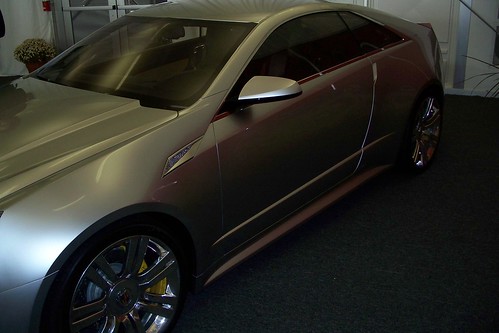
CTS Coupe Prototype

CTS Coupe Prototype

Also the CTS Sport Wagon was there
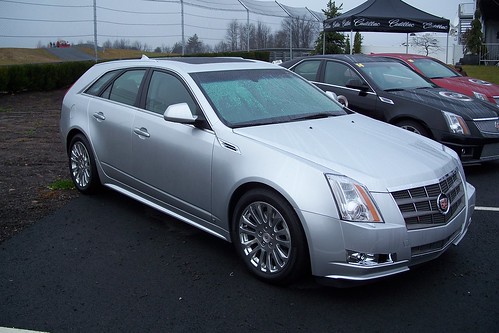
CTS Sport Wagon

CTS Sport Wagon

Flickr Photostream

What can one conclude about the whole event?

  • Cadillac stepped up and sponsored a successful event to show that the CTS-V can compete with anybody in its class.
  • The competitors all did very well, everyone stayed safe, and no cars were damaged in the contest.
  • I had a great time, and met some very interesting people.  Truly, if you love cars this was THE place to be today.
  • Monticello Motor Club is a terrific venue.  It may not be within your means, but if it is, I highly recommend it.
  • Get a bunch of car lovers together, regardless of their favorite marque, mix in racing and competition, and you have a fun day.
  • Join us in the Caddyinfo Forum thread for ongoing discussion, or comment below.
Expecting THE Sedan: the Cadillac XTS

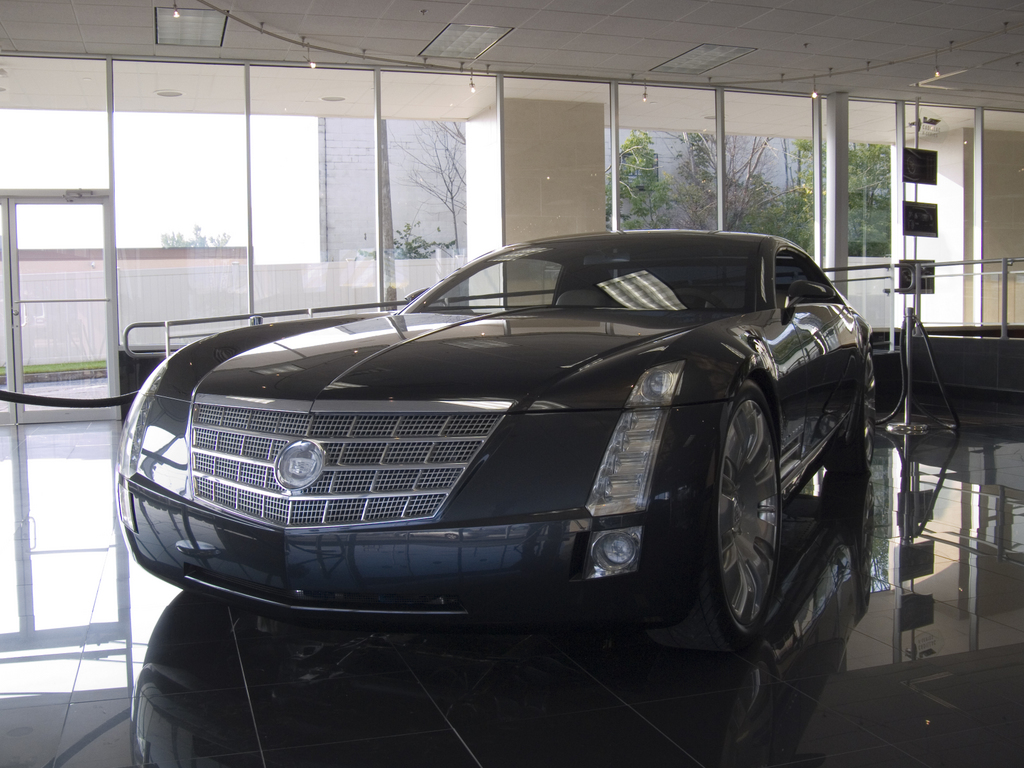
Cadillac has not released much actual news about the upcoming DTS/STS replacement sedan.  It may or may not be named “XTS”.  The internal designation is probably GM 166.

2003 Cadillac Sixteen Concept

2003 Cadillac Sixteen Concept photo courtesy Marika Buchberger

Logically, let’s look at what is likely:

Engines:

  • Base model 3.6L DOHC DI V6, with 304 hp.  Hybrid model to follow after release.
  • Performance Sedan: L99 6.2L V8 with 390 hp.  The return of Active Fuel Management to Cadillac. AFM Lifters in cylinders 1,4,6, and 7 and the AFM control system enables V4 operation at engine operating conditions where V4 mode is more efficient.

Chassis: Long wheel base Epsilon II w/ 115″ wheelbase, or 3″ more rear leg room than the CTS sedan. FWD or optional AWD, so it should definitely be an all-season selection.  Ultra-high strength steel in a premium chassis for super rigidity.

Interior: Hand stitched leather. Elegant, sweeping interior with infotainment system, and navigation.

Exterior:  Styling hints from the Cadillac Sixteen concept.  Love it or hate it elegance.

Pricing:  US$45-$65K, with later Hybrid and Platinum lines at a premium.


2010 Cadillac CTS vs 2010 Camaro Suspension

The Cadillac CTS has a 3L or 3.6L (LLT) Direct-injection V6 on a premium “Sigma II” chassis.  The new 2010 Chevrolet Camaro has a 3.6L (LLT) Direct Injection V6 or choice of 6.2L V8s (auto/manual have different V8s), on the “Zeta” chassis.

So what is the difference between these two mid-size, rear-wheel drive chasses?  Let’s read through the product catalogs:

Driving dynamics– 2010 Cadillac CTS

The CTS chassis enables a great balance of performance and luxury. The hardware includes structural enhancements via a tower-to-tower brace; large, four-wheel disc brakes and premium steering. Three suspension tuning levels are available: FE1 (standard), FE2 (standard on 3.6L models and optional on 3.0L models) and the FE3 sport suspension with a summer-only tire (RWD only).

All models feature an independent short/long arm (SLA) front suspension system, with performance characteristics optimized with the use of low-mass aluminum for the upper and lower control arms, as well as the knuckles. Hydraulic control arm front bushings are used for motion control and help minimize high-speed road vibration by damping energy transmitted through the vehicle structure. Also, hollow front stabilizer bars bring weight savings and are sized specifically to each of the three available suspension levels.

A multi-link rear suspension, with a fully isolated subframe that delivers excellent kinematics, contributes to a superior ride with excellent handling. The CTS Sport Wagon also features advanced chassis technology in the form of Cadillac’s StabiliTrak electronic chassis control system. It integrates the car’s standard four-channel ABS with the full-function traction control, hydraulic brake assist and engine drag control systems.

2010 Cadillac CTS Suspension choices:

FE1 FE2 FE3 CTS-V
Configuration RWD or AWD RWD or AWD RWD RWD
Differential: open limited-slip limited-slip limited-slip
Front: independent SLA with monotube shock absorbers; 24-mm hollow stabilizer bar (RWD); 33-mm hollow stabilizer bar (AWD) independent SLA with monotube shock absorbers; 29-mm hollow stabilizer bar (RWD); 33-mm hollow stabilizer bar (AWD) independent SLA with monotube shock absorbers; 29-mm hollow stabilizer bar independent SLA; 29-mm hollow stabilizer bar; elastomeric handling and ride bushings; 65-N/mm spring rate; Magnetic Ride Control with electro-magnetically controlled shocks
Rear : independent multi-link with monotube shock absorbers; 18-mm hollow stabilizer bar (RWD); 19 mm hollow stabilizer bar (AWD) independent multi-link with monotube shock absorbers; 20-mm hollow stabilizer bar (RWD); 19-mm hollow stabilizer bar (AWD) independent multi-link with monotube shock absorbers; 20-mm hollow stabilizer bar independent SLA; 24-mm solid stabilizer bar; elastomeric trailing arm bushing; 90-N/mm spring rate; Magnetic Ride Control with electro-magnetically controlled shocks

Here is the product catalog description for the Camaro suspension:

Chassis and suspension– 2010 Chevrolet Camaro

Fully independent front and rear suspensions are the underpinnings of the 2010 Camaro. The standard independent rear suspension is a first for Camaro and is designed to compete with the best in the world. It’s a 4.5-link system that includes a unique, L-shaped upper control arm that attaches to the knuckle at one end and incorporates a ride bushing in the rear.

Two suspension packages are offered: FE2 sport on V-6 models and FE3 performance with the V-8. The front suspension has a dual ball strut system, with a direct-acting stabilizer bar that measures 22.2 x 4 mm on FE2 and 23 x 4.2 mm on FE3. Hollow bars are used for mass savings. Rear suspension features include high lateral stiffness for handling via three lateral ball joints per side. A sub-frame at the rear is double-isolated to minimize vehicle body motions and dampen road imperfections. Coil-over shock absorbers are used in the rear with a decoupled, hollow stabilizer bar. FE2 includes a 21.7 x 3 mm rear bar, while the FE3’s large bar measures 23 x 3 mm.

2010 Camaro Chassis / Suspension

Front: double-ball-joint, multi-link strut; direct-acting stabilizer bar; progressive-rate coil springs; fully adjustable camber, caster and toe
Rear: 4.5-link independent; progressive-rate coil springs over shocks; stabilizer bar; fully adjustable camber and toe

Conclusion?  Very similar descriptions.  In summary one might say:

  • The CTS suspension has more aluminum components and more isolation as one would expect from a Luxury chassis. The CTS uses a short/long arm front suspension and a mult-link rear suspension.
  • The Camaro suspension features a double pivot McPhearson front strut suspension, and an independent rear suspension system very similar to that of Sigma II but using cheaper steel rather than aluminum to save cost.