
If I didn’t drive a Cadillac I’d drive a…

My last few automobiles have been Cadillacs.  My next vehicle is likely to be a Cadillac — preferably something from the V-Series.  I like the formality and elegance of Cadillacs.  I like the performance and luxury.  I have reached a point in my life that I can afford to have nicer things, so I prefer to drive a nicer vehicle, and Cadillac offers the right mix.  If I were NOT to drive a Cadillac as my next vehicle however, what might I purchase?

1. Saturn Sky Redline

First of all, I am a Corvette fan.  But I have really been smitten by the value equation of the Saturn Sky Redline.  Although now out of production, starting at US$28K new, you could purchase a quick roadster.

Along with the boost in horsepower and torque, the Sky Red Line featured a long list of standard equipment including:

  • Stabilitrak electronic stability control
  • Traction control
  • Close-ratio five-speed manual transmission with self-adjusting clutch
  • Four-wheel ABS disc brakes
  • Limited slip differential
  • Performance-tuned suspension with coil-over Bilstein monotube shocks
  • Air conditioning
  • Power locks, windows and mirrors
  • OnStar with one year of Safe & Sound service

I was so ready for Cadillac to get one of these Kappa platform cars!  In 2-seat convertibles, a used Porsche Boxster S tends to be VERY inexpensive.  I never have gotten used to the idea of that platform packaging with NO engine access though.  I also like the looks of the BMW Z4.  I would likely look for a used Corvette at the same time as a used Sky Redline, and take the one I found first.

2. Chevrolet Camaro 2SS

The recently redesigned Camaro is a great vehicle choice car for a 2-door 2+2.  Rear wheel drive, V8 making excellent power, tight suspension, great looks, great price.
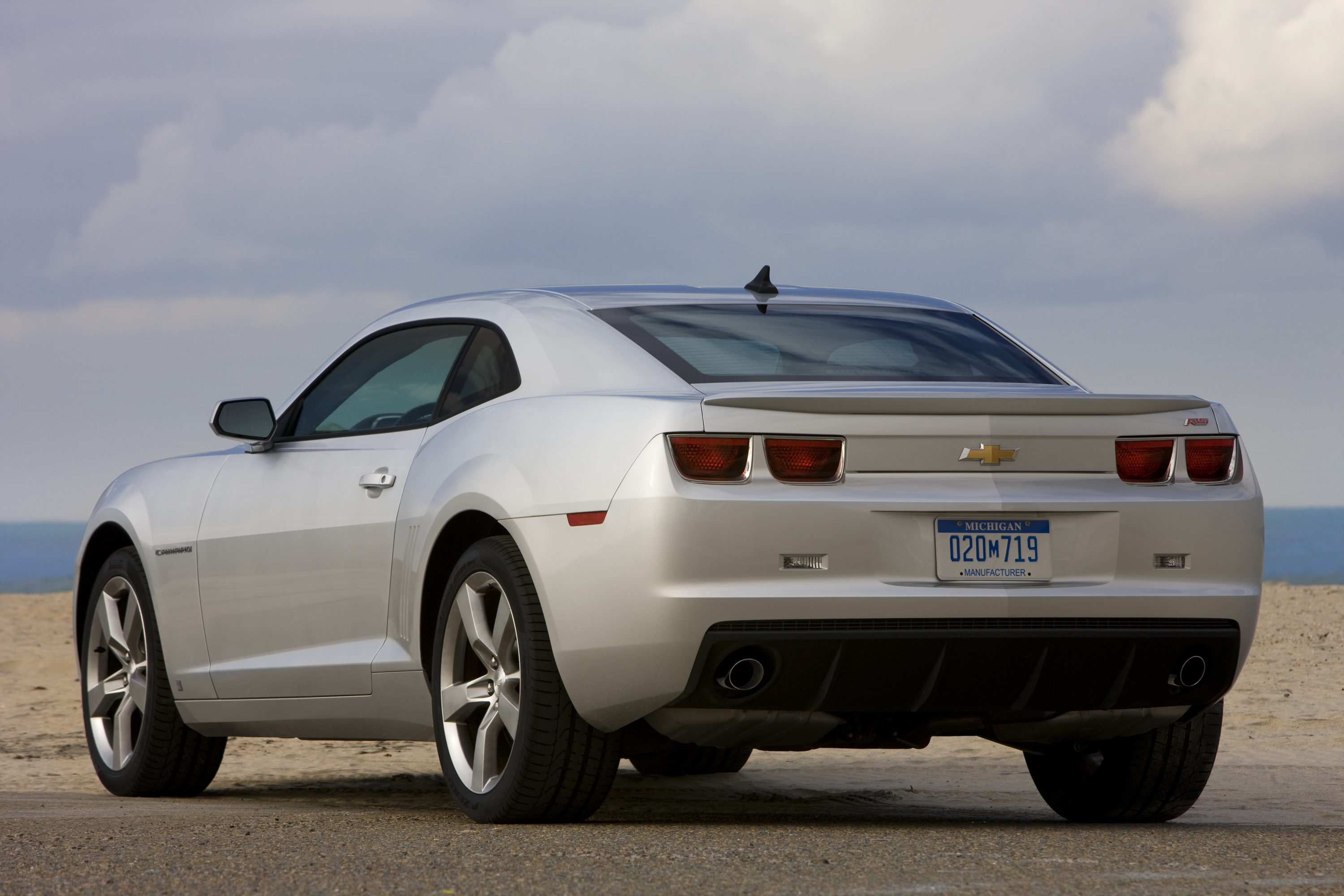
2010 Camaro LT with RS appearance package

Starting at $23K, the Camaro V6 is a persuasive package as well.  It uses the same LLT 3.6L V6 as the current Cadillac CTS Premium or Performance editions, making 304 hp.  That is as much or more than some recent V8s made.  Two V8s are offered, one with an automatic transmission, and a slightly different engine with the manual transmission.    The full boat 2SS variant starts at $33K.  The Camaro team has hit the range I wish Cadillac would hold the CTS — about $10K difference across the model range from least expensive to most expensive.

Honorable mention in this configuration goes to the previous Pontiac GTO.  I never really liked the looks of the GTO, but the package is sweet with a Zeta RWD chassis, LS engine.

3. BMW 335i Sedan (used)

For a 4-seat, 4-passenger sedan I would look at a used BMW 335i.  Now the M3 is the V-Series equivalent for BMW, but in the 3-Series range the current 335i with a 300 hp turbo 3L V6 makes a very nice value versus the more expensive M3 with 414 hp V8.  I would feel terrible if I spent the more money for the M3 and could have had the Camaro V8 and cash back.  On the other hand if I had to have 4 doors, the price of the M3 would move it out of my range of consideration.
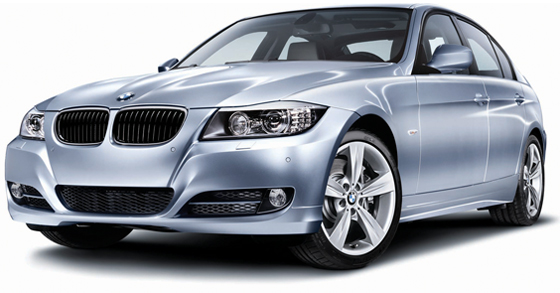
BMW 335i

A new BMW 335i Sedan starts at US$40,600.  That would likely make even the 335i more than I would want to spend.  The 1-Series seems unattractive to me, so no joy there.  I see used 335i’s for under $30K, so they rapidly come down in price from new.  By comparison the BMW M3 Sedan new starts at US$55,400; definitely out of my target budget range.

But if you can overcome the funding issue, the BMW 3-series has good acceleration, good cornering, and good looks in a tight package.

For the CaddyInfo Cadillac Forum Readers — If you didn’t drive a Cadillac what would you drive?

Caddyinfo Twitter Updates for 2010-02-20

Powered by Twitter Tools

Re: Cadillac killed the Electric Car (in 1912 with the electric starter)

The National Post has an interesting article Cadillac killed the electric car explaining a popular theory that the electric car originally lost out to its gasoline competitor once Cadillac developed the electric starter.  Although I like the logic of this also, by 1912 when Cadillac created the electric starter I believe that the gas powered car had already become dominant.  The electric starter was important to the continued development and enjoyment of gasoline powered cars by everyone (and SAFER!).

Charles Kettering, GM Engineer, with the first electric starter

Early cars were steam powered, or battery powered, or electric, or gas powered.  It was an open market, full of innovators and experimentation.  The reason the current conventions for the automobile developed was natural selection — survival of the fittest.  As each innovation or approach came to market, the public selected and bought the ones that were the most useful, and features of those models were copied or emulated by competitors.  Just over 100 years later we have today’s somewhat homogeneous automobiles.

If we all drove electric cars and someone suddenly developed a gasoline car today it would be viewed as a masterpiece.  The internal combustion engine gives the greatest independence, the quickest recharge, and the lightest, most efficient package of any of the technologies we know today.  The major drawbacks are emissions, which we have largely solved in modern automobiles via the catalytic converter, and the use of non-renewable fossil fuels.  Current gasoline is often E10, or 10% Ethanol; and many flex-fuel cars can run on E85, or 85% ethanol / 15% gasoline.  It is fair then to say that we can run many of today’s internal combustion engines on renewable fuels, and continue to eliminate non-renewable fossil fuels.

The reason I am so excited about extended range electric vehicles (EREV)  like the Chevrolet Volt or the Cadillac Converj Concept is that they give options.  Every vehicle can be characterized by stored energy (in the form of gasoline for conventional cars), and time of refueling (visiting a gas station, or plugging in to house current for an extended range electric vehicle).  What the EREVs give us is more options.  In my daily commute I may be able to charge at home, never need to use the gas mode, and seldom need to refuel at a gas station.  That convenience is important to me.  I am unlikely to be able to generate more gasoline at home.  There are however ways to generate electricity safely at home (solar).  Even drawing off the grid however just the convenience of a car that automatically refuels itself in my garage is an improvement.

Plug-in hybrids like the Cadillac XTS Concept have a different mix of attributes along that same range.  How much battery should a hybrid carry?  Enough to run the automobile for 10 miles or 20 miles or 40 miles?  The trade off is in weight for the battery, and oddly enough in time of recharge.  If I only commute 10 miles a day, I don’t need a 40 mile battery.  GM’s two-mode Hybrids today such as in the Escalade Hybrid tend to be able to travel in electric-only mode only at slow speeds and for only a very short range.  The plug-in hybrids (designed to plug in to wall current and recharge overnight) will have an extended battery reserve, and an extended range.  In question is how far that extended range should be.  The first full EREVs will have a 40 mile range and so a LOT of battery power and weight.  I am hopeful the plug in hybrids will have a 20 mile range, which would give me a lot of options in my commute.

This is a terrific time for the automobile.  We have higher performance vehicles than ever before, cleaner vehicles than ever before, and safer vehicles than ever before.  The new vehicles are promising to be even better than the ones we drive today.  I am very optimistic that Cadillac is bringing automobiles to market that will continue to provide enjoyment for automobile lovers.