
CaddyInfo Cadillac Forum Server Shift

Confusingly, the CaddyInfo Forum has shifted from where it was before, but it is in the same place.

To put it another way, it is at the same address, but the address has moved on the name servers (DNS) to a new address.  So until your local DNS server updates you may have difficulty finding the forum!  As it turned out mine changed right away, and if you CAN click right over to the caddyinfo forum then all this is old news for you.

In the mean time, you can use this trick to add the correct forum address to your local hosts file:

To override the DNS on your PC, and assuming you use Windows 7, you need to open this file for editing:

/Windows/System32/drivers/etc/hosts (there’s no file extension, it’s just ‘hosts’)

then add these two lines to the bottom of the file:

50.28.75.70 caddyinfo.ipbhost.com
50.28.75.70 www.caddyinfo.ipbhost.com

and save it. Make sure whatever editor you use doesn’t append a file extension like .txt or .rtf and saves it as just ‘hosts’. Reboot your PC, and you should get to the site right away. Remove those two lines in a few days.

Then after your DNS servers DO update you’ll want to get rid of these lines just to tidy up.

Feel free to comment here if you need assistance or have better info on how people can get to the forum.
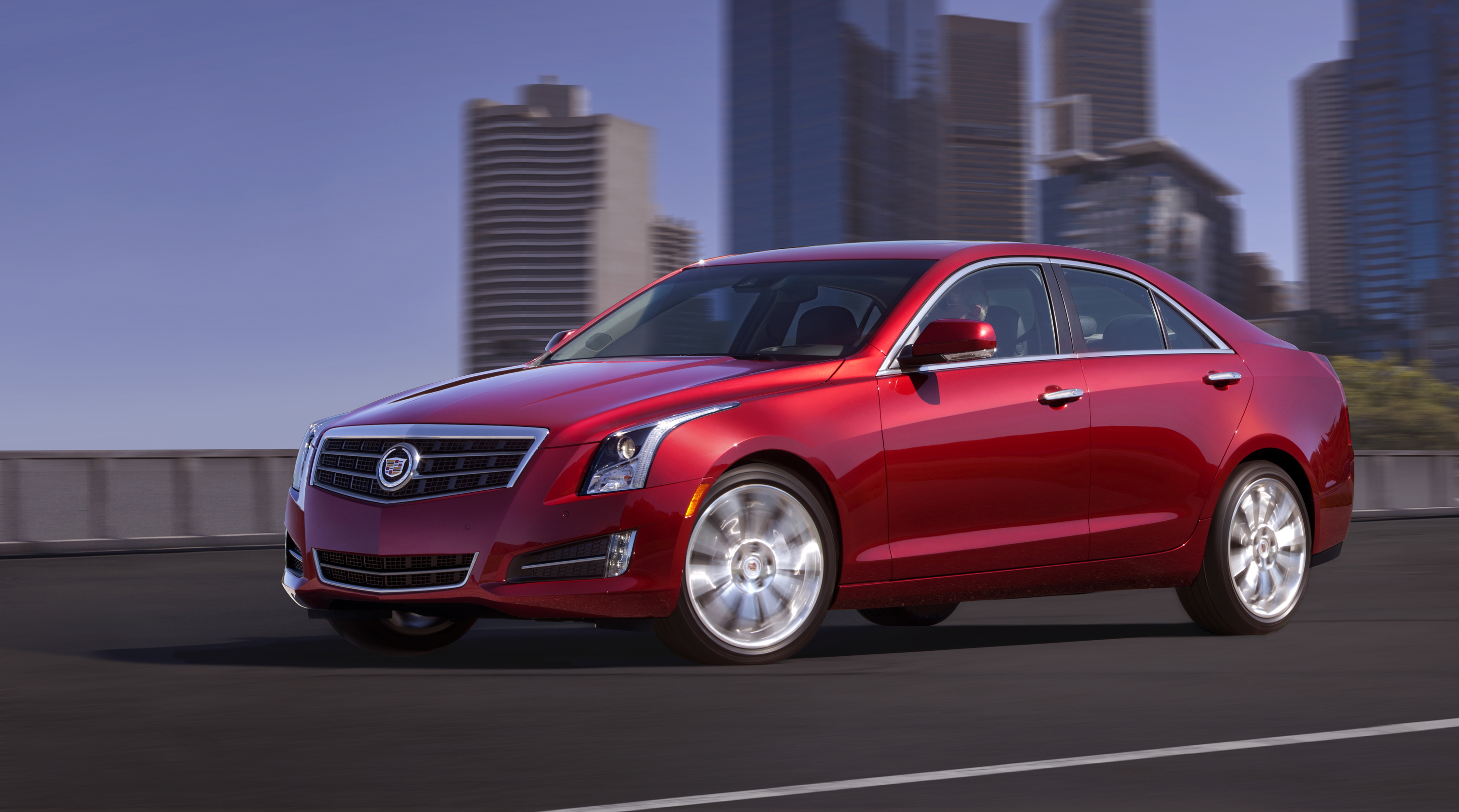
Final Cadillac ATS power figures?

The Cadillac Dealer Order Guide is online and although the ATS info still seems pretty preliminary, it shows the initial figures for the Cadillac ATS power trains:

LCV Engine, 2.5L I4, DI, DOHC, VVT (202 hp [150.6 kW] @ 6300 rpm, 190.3 lb-ft of torque [258 N-m] @ 4400 rpm)
LTG Engine, 2.0L Turbo, I4, DI, DOHC, VVT (272 hp [202.8 kW] @ 5500 rpm, 260 lb-ft of torque [353 N-m] @ 1700-5500 rpm)
LFX Engine, 3.6L V6, DI, DOHC, VVT (321 hp [239.4 kW] @ 6800 rpm, 274.4 lb-ft of torque [372 N-m] @ 4800 rpm)
  • 2.5L Four cylinder LCV: The new standard equipment ATS will get the new 202 hp inline 2.5L four cylinder.  It wasn’t that long ago that the 4.9L OHV Cadillac V8 was rated at 200 hp, and that Cadillac weighed more than the ATS will.  The 2.5L ATS should have plenty of power.
  • 2L Turbo Four LTG: The LTG 2L turbo was spec’d at 270 hp but has settled up to 272 hp.  This is likely to be the surprisingly balanced choice for an overall package, and offer a lot of room for upgrades and modifications.
  • 3.6L Six LFX: The Cadillac ATS LFX 3.6L variant gets a Camaro-like 321 hp.  This is a good selection, as it could have been the 304 hp flex-fuel variant or the 318 hp version from the CTS.  Out of the box this will be the ‘hot’ choice for the ATS.

The planned wheels are 17″ and 18″ wheels which are ideal for weight and performance.  This also highlights the choice of tires:

RB7
Tires, P225/40ZR18 all-season, blackwall
QFN
Tires, P225/40R18 front and P255/35R18 rear, 90W blackwall RF4

The 17″ wheels will have 225/40 tires, and the 18″ will sport staggered 225/40 and 255/35 tires.

Some packages will include steering wheel-mounted Magnesium paddle shifters for the automatic, so no matter which transmission  you choose there will be complete control over gear selection.

Cooler on deck: Cadillac STS-V intercooler heat exchanger Stage 1 Step 2

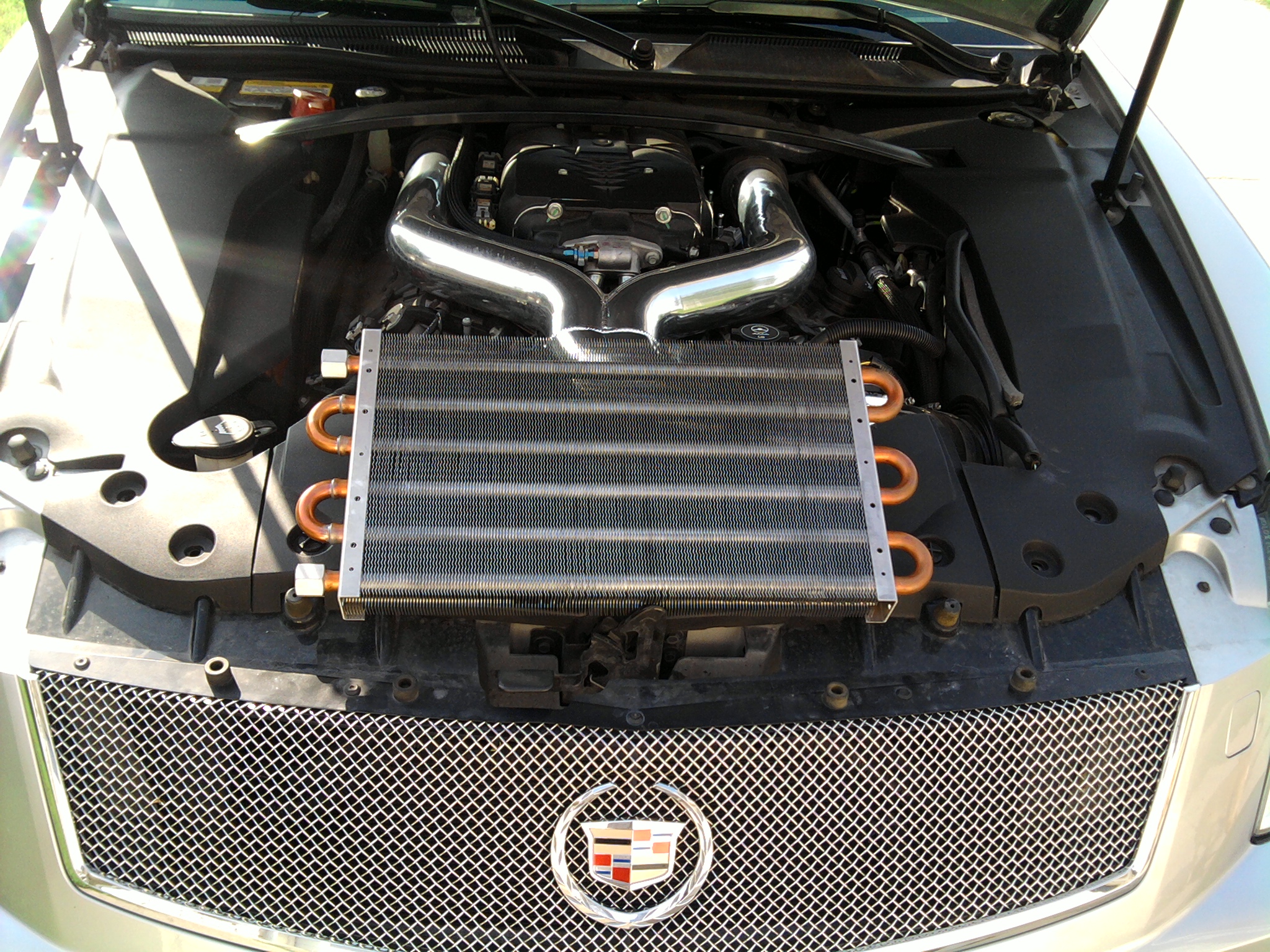
I received the Flexalite 45321 heat exchanger today:

Comparison size of the new heat exchanger in relation to the STS-V

It is not installed yet, but I set it on the front of the engine covers so one can see the size for perspective.

The Flexalite came with some mounting trim but I will need to go to Lowe’s or Home Depot to get an NPT connector to hose fitting.  I am thinking get a 90 degree 1/2″ NPT elbow then an NPT to hose connector after I get the connectors pointed backwards.

I am still conflicted on how to install this.  Choices are either install the new HX in place of the existing OEM radiator single pass HX or install the new HX in addition to the existing OEM radiator single pass HX.  The advantage of the first choice is then I am set to add another heat exchanger under the bumper later if needed.  The advantage of the 2nd choice is that we get the benefit of both exchangers in series, albeit at the cost of more resistance to flow.

The people using a variant of this HX are either using it alone, or with another front mounted heat exchanger in series.  No one is using it in series with the OEM HX.