
Cadillac STS-V Intercooler Heat Exchanger install

As I  planned, today I replaced the heat exchanger for the intercooler on my 2008 Cadillac STS-V.  The stock or OEM heat exchanger is a radiator type single pass (one row) heat exchanger.  Each drop of water goes past the cool air 1 time.
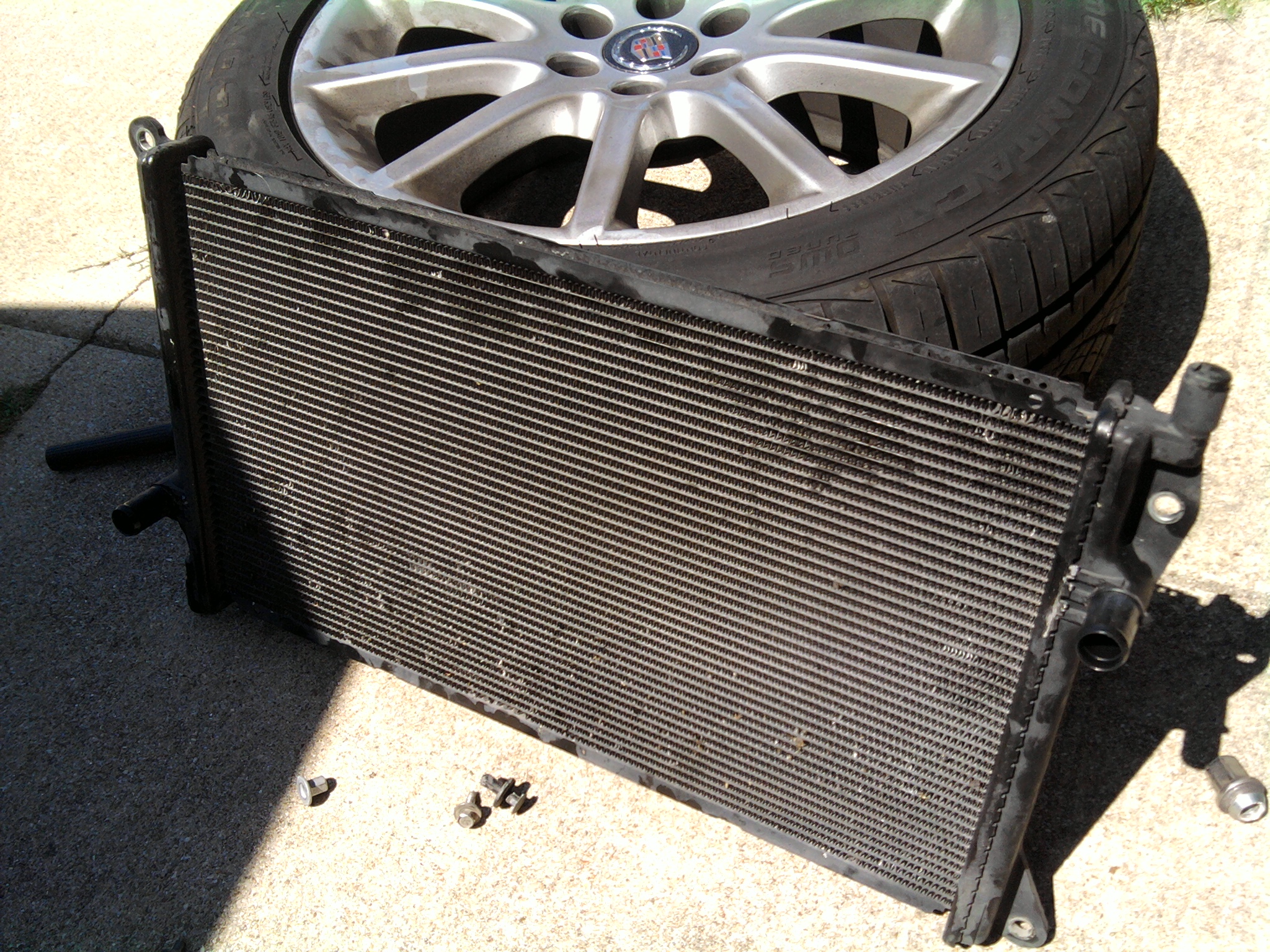
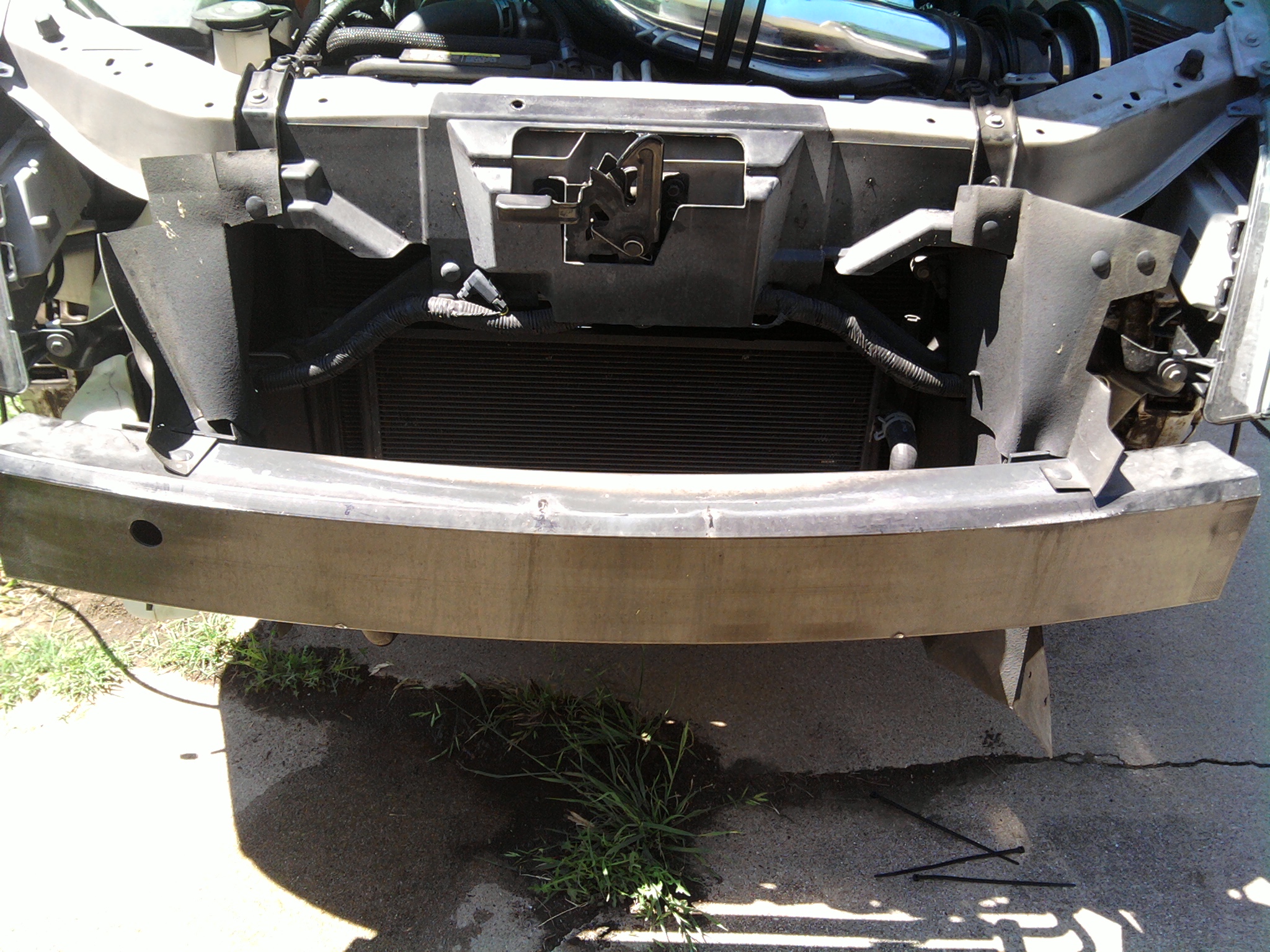
Here is a shot of the front end of the STS-V removed and the stock Heat exchanger in place:
My replacement choice was a Flexalite 45321 oil cooler used here as a intercooler heat exchanger.  It is a tube and fin type heat exchanger, and has 6-passes but one flow tab instead of the multiple rows in the radiator type OEM unit. I ordered this one from Amazon for $120.  Here is a view installed:

Although I considered running the two units in series, after studying fitment I decided it was best to simply replace the stock unit with the Flexalite.

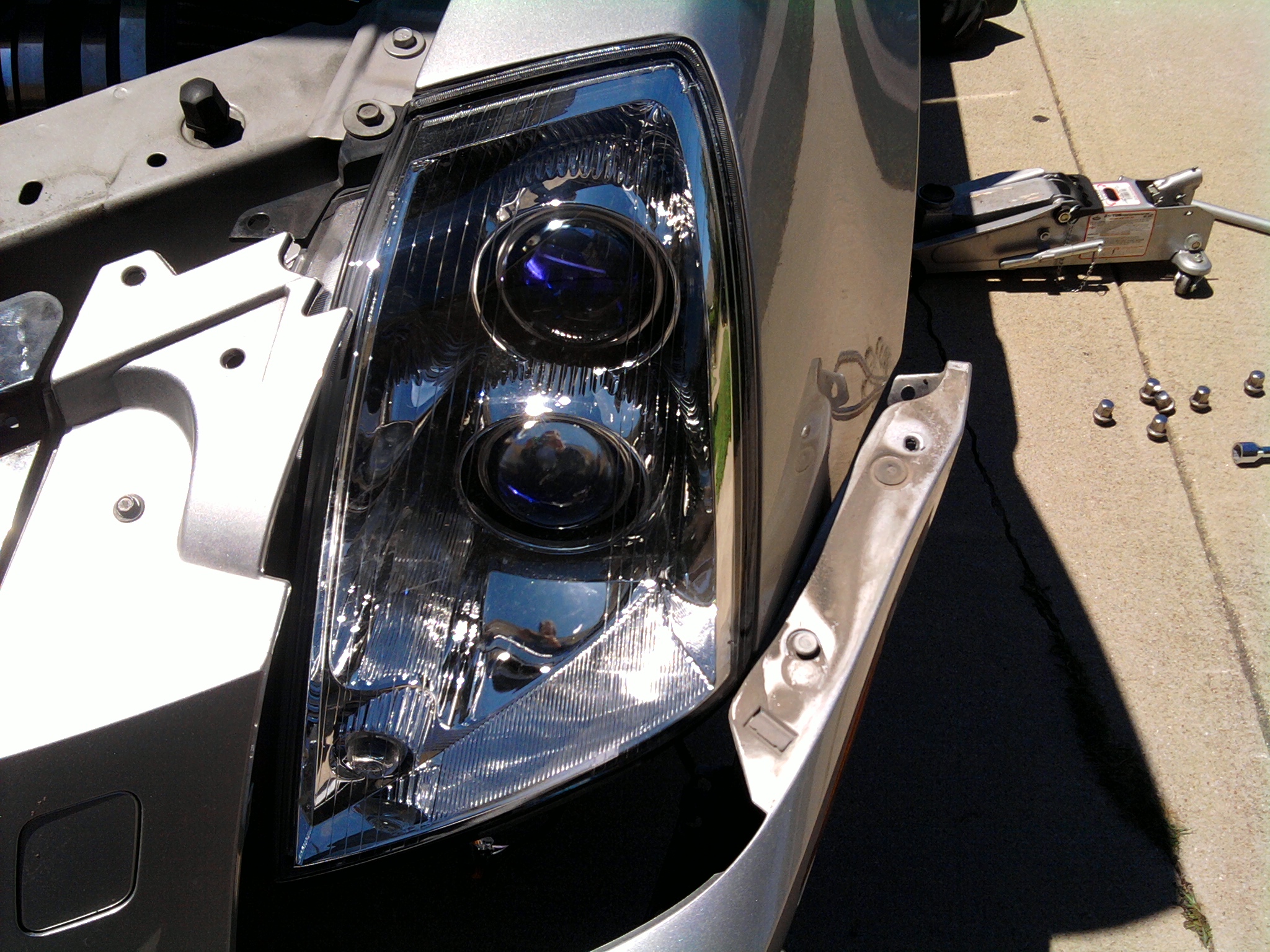
The only tricky area of the install was that the Cadillac needs to have the front end in the air and both front wheels off to reach every plastic rivet to get the various mud shields and air deflectors off to get in to do the work.  That and a portion of the bodywork on each side actually slides a tab in a slot then can be removed from the car.
The flexalite comes with a bag of mounting parts, but none were very useful.  I picked up some brackets with holes at the hardware store and was able to use those to get the new heat exchanger installed where I wanted it.  Although I was able to re-use the hose leading from the heat exchanger, the hose for the flow to the heat exchanger was not long enough and had to be replaced with heater hose.  The hose was 1″ outer diameter and 3/4″ inner diameter.  I also purchased 1/2 NPT to 3/4″ hose barb fitting to adapt the heat exchanger for hose fittings.

The instructions suggest running the engine for 10 minutes to check for leaks.  My intercooler pump is set using HP Tuners to run when the car is on battery power, so I was able to keep it running and let it slowly push the air out of the system, which allowed me to add more 50/50 dexcool as the system burped itself.  No leaks were observed.
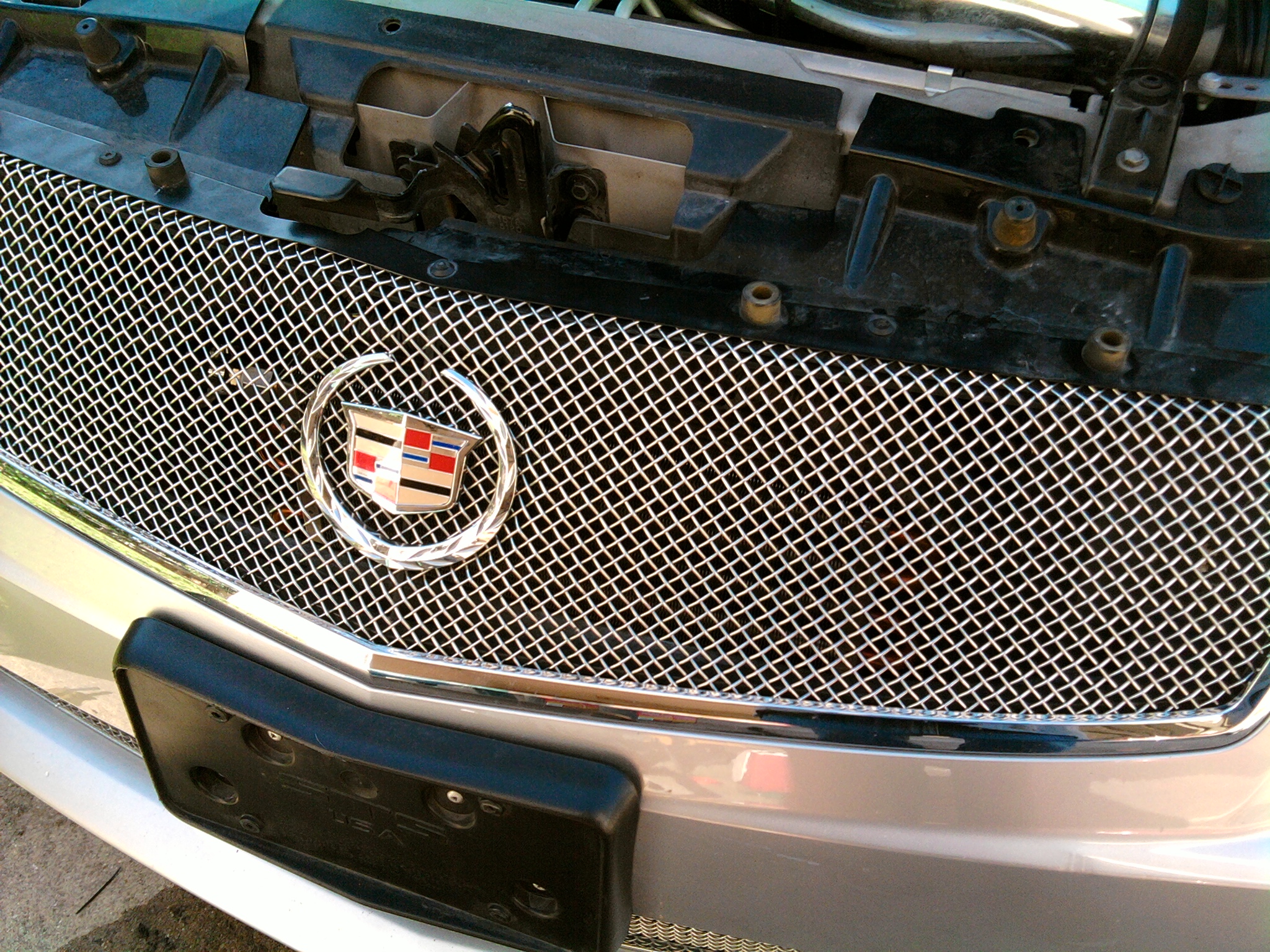
Once everything is buttoned back up the new HX is invisible

Unfortunately I did not have time to do any tests today, so we’ll have to wait to see how the unit performs.

Project list:

  • Flexalite 45321 heat exchanger
  • 1/2 NPT to 3/4 inner diameter hose barb (2)
  • Heater hose (5 ft although ~3 were used), two hose clamps
  • bracket material, various miscellaneous screws and bolts to use to attach brackets depending on design
  • Dexcool — if you catch the dexcool in the system when drained, you can perhaps re-use.  I purchased multiple gallons premix 50/50 dexcool/water but only used part of one to refill so far.
  • teflon tape to seal the fittings to the heat exchanger
  • Tools:  floor jack, jack stands (both wheels need to be in the air and off), screw driver, ratchet set, hose cutter

Overall not a difficult job comparatively, although it took me way too long to do because I had not taken off the front end before, so lots of figuring things out as I went, and I tried to avoid taking off the front wheels.  You probably can, but need to run the car (for power steering) and turn the wheels to get them out of the way on this side, then that side, to get all the plastic rivets out of the wheel wells.  Once I gave up and put the car up I made a lot more progress.

I still have the bottom air deflector to sort out tomorrow, and then hopefully we’ll get some IAT2 test and trend info with this setup.
Forum Software update

If you have come here because the CaddyInfo forum is down, please bear with us.

Tech Support is updating or about to start updating our forum software to the latest version.  Then there will be some housekeeping to get the appearance back
to the right look, etc.  This is a normal now and then sort of maintenance activity, and I appreciate your patience.

Please use this time to read and comment here on the blog!

Cadillac’s ‘Super cruise’ could be ready by mid-decade

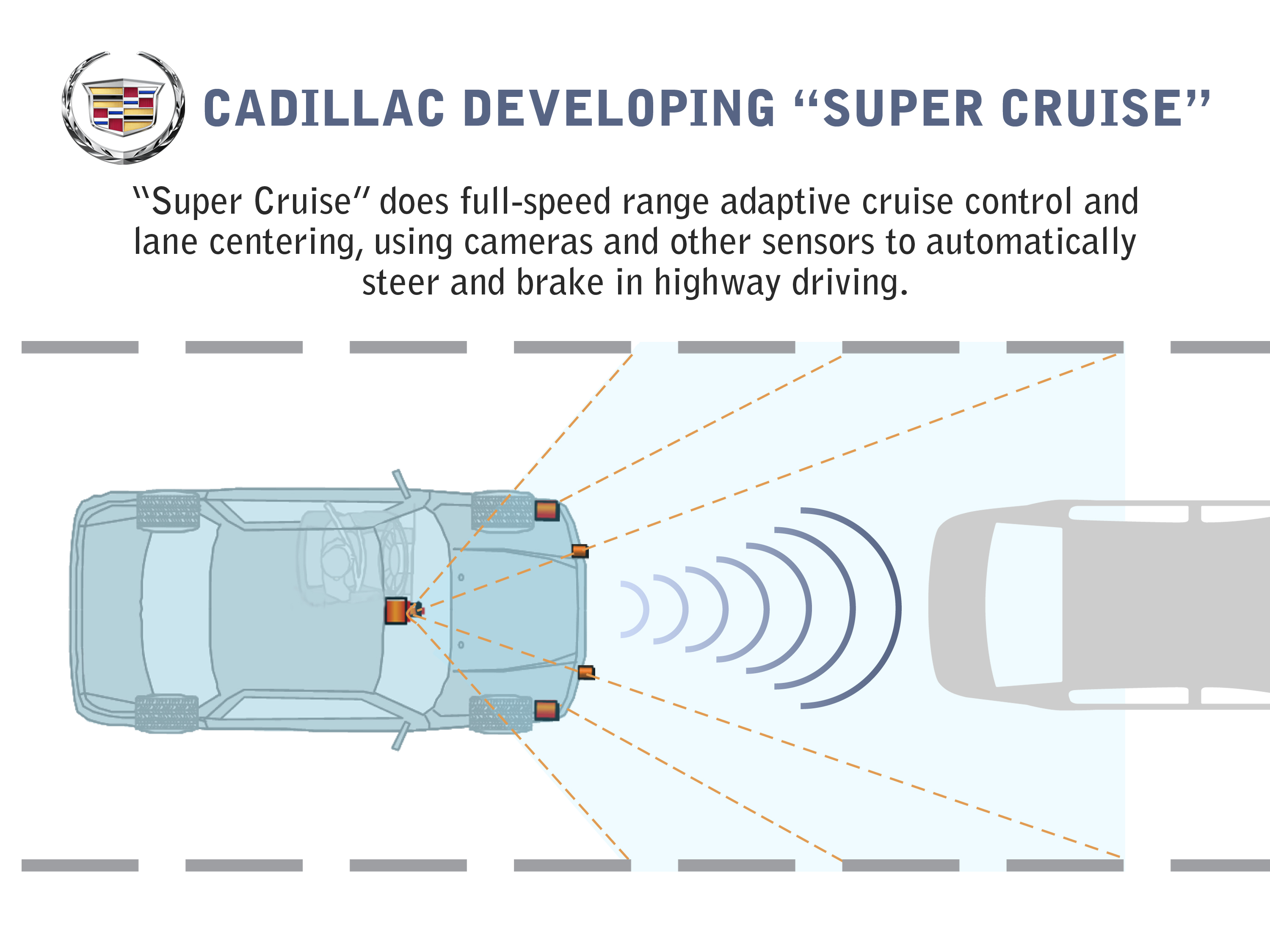
DETROIT – Cadillac is road testing a semi-autonomous technology it calls “Super Cruise” that is capable of fully automatic steering, braking and lane-centering in highway driving under certain optimal conditions. The system could be ready for production vehicles by mid-decade.

Super Cruise is designed to ease the driver’s workload on the freeway, in both bumper-to-bumper traffic and on long road trips by relying on a fusion of radar, ultrasonic sensors, cameras and GPS map data.

“Super Cruise has the potential to improve driver performance and enjoyment,” said Don Butler, vice president of Cadillac marketing. “Our goal with advanced technologies, like this and our CUE system, is to lead in delivering an intuitive user experience.”

Many of the building block technologies for Super Cruise are already available on the all-new 2013 Cadillac XTS and ATS luxury sedans, as part of the available Driver Assist Package. It is the first Cadillac system to use sensor fusion to provide 360 degrees of crash risk detection and enhanced driver assist features, including:

  • Rear Automatic Braking
  • Full-Speed Range Adaptive Cruise Control
  • Intelligent Brake Assist
  • Forward Collision Alert
  • Safety Alert Seat
  • Automatic Collision Preparation
  • Lane Departure Warning
  • Side Blind Zone Alert
  • Rear Cross Traffic Alert
  • Adaptive Forward Lighting
  • Rear Vision Camera With Dynamic Guidelines
  • Head Up Display

The key to delivering semi-autonomous capability will be the integration of lane- centering technology that relies on forward-looking cameras to detect lane markings and GPS map data to detect curves and other road characteristics, said John Capp, General Motors director of Global Active Safety Electronics and Innovation.

Even when semi-autonomous driving capability is available on vehicles, the system will have operational limitations based on external factors such as weather and visibility of lane markings. When reliable data is unavailable, the driver will need to steer.

GM and its research partners recently conducted a study funded by the Federal Highway Administration on human factors in semi-autonomous vehicle operation. When asked, some study participants expressed strong interest in having a vehicle that could drive itself, particularly for long trips when lane centering and full-speed range adaptive cruise control could help lighten the driver’s workload.

“The primary goal of GM’s autonomous and semi-autonomous vehicle development is safety,” Capp said. “In the coming years, autonomous driving systems paired with advanced safety systems could help eliminate the crash altogether by interceding on behalf of drivers before they’re even aware of a hazardous situation. More than ever, consumers will be able to trust their car to do the right thing.”

Cadillac has been a leading luxury auto brand since 1902. In recent years, Cadillac has engineered a historic renaissance led by artful engineering and advanced technology. More information on Cadillac can be found at media.cadillac.com.