Capless Cadillac XTS is a gas

DETROIT – The new Cadillac XTS luxury sedan features many technologies that are noticed the instant the vehicle’s ignition button is pushed. But some advancements, like a new capless fuel filler assembly, hide literally behind closed doors.

“This new system has advantages for both the car and the driver,” said John Hamilton, Cadillac fuel fill systems design engineer. “It helps keep hands free of dirt and fuel, paint free of scratches caused by a swinging cap, and the engine running smoothly.”

Because fuel systems must be fully sealed, a loose cap can trigger a “check engine” light and lead to service visit.

The 2013 XTS doesn’t have a traditional twist-off cap hidden behind its fuel door. Because of this, the door itself doesn’t need to accommodate a hand and was designed to be smaller and less noticeable on the XTS’ sheet metal.

Despite having no cap, the system meets all fuel system sealing regulations. When a fuel nozzle is inserted, it pushes aside a set of two doors, each locking fuel in with a rubber seal around its edge. The two doors are designed to assure the system will remain air-tight through years of ownership.

“Some capless systems on the market have just a single door, making them vulnerable to leaks,” said Hamilton. “Unlike competitors, Cadillac’s system also has no internal drain, something that can also lead to inadvertent dripping.”

Moving beyond capped systems has further advantages for car owners. It eliminates the risk of leaving a gas station with a dangling cap, which can lead to paint damage and messy fuel dripping.

Because the XTS uses an advanced V-6 engine with direct-injection and lightweight innovations like exhaust manifolds integrated into the cylinder heads and a next-generation six-speed transmission, fuel stops will also be less frequent.

“We ignored no detail in making XTS the most advanced Cadillac sedan yet,” said chief engineer Sheri Hickok. “Even things taken for granted, like a fuel cap, deserved and received a full rethink.”
Cadillac’s ‘Super cruise’ could be ready by mid-decade

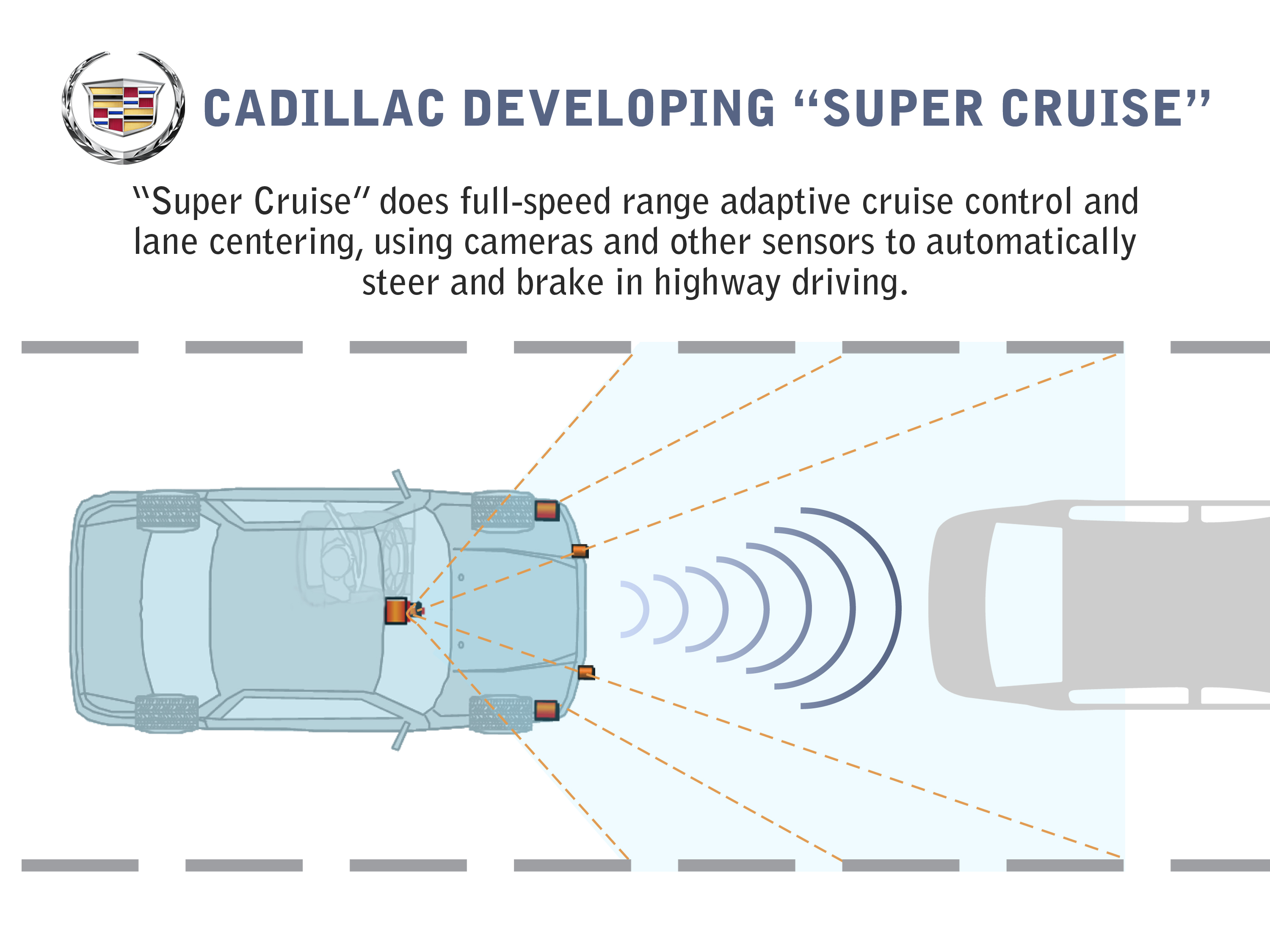
DETROIT – Cadillac is road testing a semi-autonomous technology it calls “Super Cruise” that is capable of fully automatic steering, braking and lane-centering in highway driving under certain optimal conditions. The system could be ready for production vehicles by mid-decade.

Super Cruise is designed to ease the driver’s workload on the freeway, in both bumper-to-bumper traffic and on long road trips by relying on a fusion of radar, ultrasonic sensors, cameras and GPS map data.

“Super Cruise has the potential to improve driver performance and enjoyment,” said Don Butler, vice president of Cadillac marketing. “Our goal with advanced technologies, like this and our CUE system, is to lead in delivering an intuitive user experience.”

Many of the building block technologies for Super Cruise are already available on the all-new 2013 Cadillac XTS and ATS luxury sedans, as part of the available Driver Assist Package. It is the first Cadillac system to use sensor fusion to provide 360 degrees of crash risk detection and enhanced driver assist features, including:

  • Rear Automatic Braking
  • Full-Speed Range Adaptive Cruise Control
  • Intelligent Brake Assist
  • Forward Collision Alert
  • Safety Alert Seat
  • Automatic Collision Preparation
  • Lane Departure Warning
  • Side Blind Zone Alert
  • Rear Cross Traffic Alert
  • Adaptive Forward Lighting
  • Rear Vision Camera With Dynamic Guidelines
  • Head Up Display

The key to delivering semi-autonomous capability will be the integration of lane- centering technology that relies on forward-looking cameras to detect lane markings and GPS map data to detect curves and other road characteristics, said John Capp, General Motors director of Global Active Safety Electronics and Innovation.

Even when semi-autonomous driving capability is available on vehicles, the system will have operational limitations based on external factors such as weather and visibility of lane markings. When reliable data is unavailable, the driver will need to steer.

GM and its research partners recently conducted a study funded by the Federal Highway Administration on human factors in semi-autonomous vehicle operation. When asked, some study participants expressed strong interest in having a vehicle that could drive itself, particularly for long trips when lane centering and full-speed range adaptive cruise control could help lighten the driver’s workload.

“The primary goal of GM’s autonomous and semi-autonomous vehicle development is safety,” Capp said. “In the coming years, autonomous driving systems paired with advanced safety systems could help eliminate the crash altogether by interceding on behalf of drivers before they’re even aware of a hazardous situation. More than ever, consumers will be able to trust their car to do the right thing.”

Cadillac has been a leading luxury auto brand since 1902. In recent years, Cadillac has engineered a historic renaissance led by artful engineering and advanced technology. More information on Cadillac can be found at media.cadillac.com.

Taking Cooling Cues from the ZL1

The May 2012 GM High Tech Performance Magazine has a nice article (not on the website yet)  about the new Chevrolet Camaro ZL1 development.  The ZL1 uses some parts in common with the Cadillac CTS-V, only with the opportunity for the team to tweak a few things.

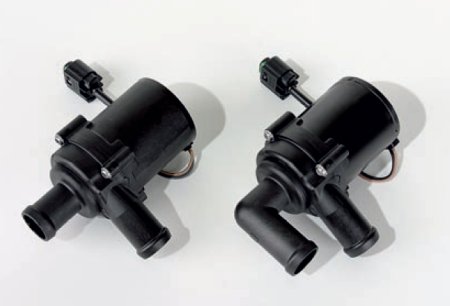
  • Intercooler pump:  the ZL1 uses the water pump from the Chevrolet Volt — which is super efficient — but runs it at 80W instead of the Volt’s 50W.
  • Dual mode muffler setup
  • Secondary air inlet to the airbox
  • Redesigned intercooler brick with higher water flow rate and higher air flow rate so less pressure drop

Is this the battery cooling pump perhaps:

13579713 PUMP. Drive Motor Battery Cooling. Engine Coolant.
PUMP,DRV MOT BAT COOL. Required: 01

and the Volt Battery cooling radiator is this one:

20925998 RADIATOR. Drive Motor Battery
RADIATOR, DRV MOT BAT COOL. Required: 01For: RC (2011-2011)

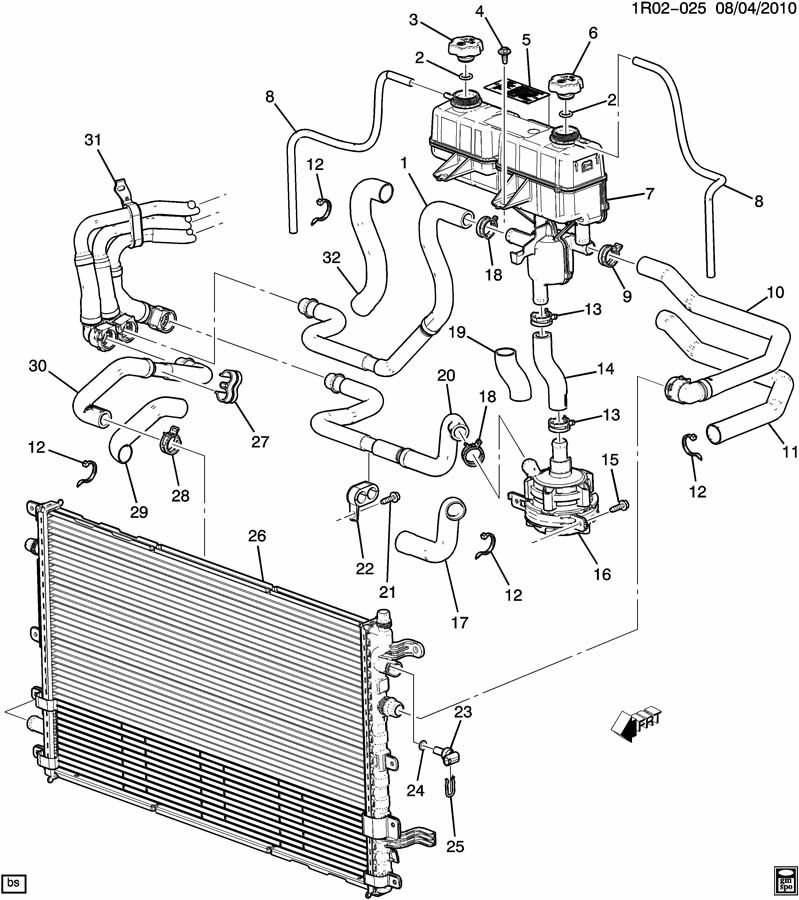
Actually, the Volt battery cooling system looks a lot like an intercooler heat exchanger system:

Chevrolet Volt Battery Cooling System


The ZL1 is rated for 580 hp instead of the CTS-V’s 556 hp — and based on the improved intercooler work it should be more resistant to heat soak.