Cadillac XTS Named Connected Car of the Year

Honored for balance of safety, convenience, infotainment

DETROIT – Connected World magazine awarded the Cadillac XTS a Connected Car of the Year award in the luxury category.  Available in late spring 2012, the new XTS will debut Cadillac CUE, a comprehensive in-vehicle experience that merges intuitive design with auto industry-first controls and commands for information and media.
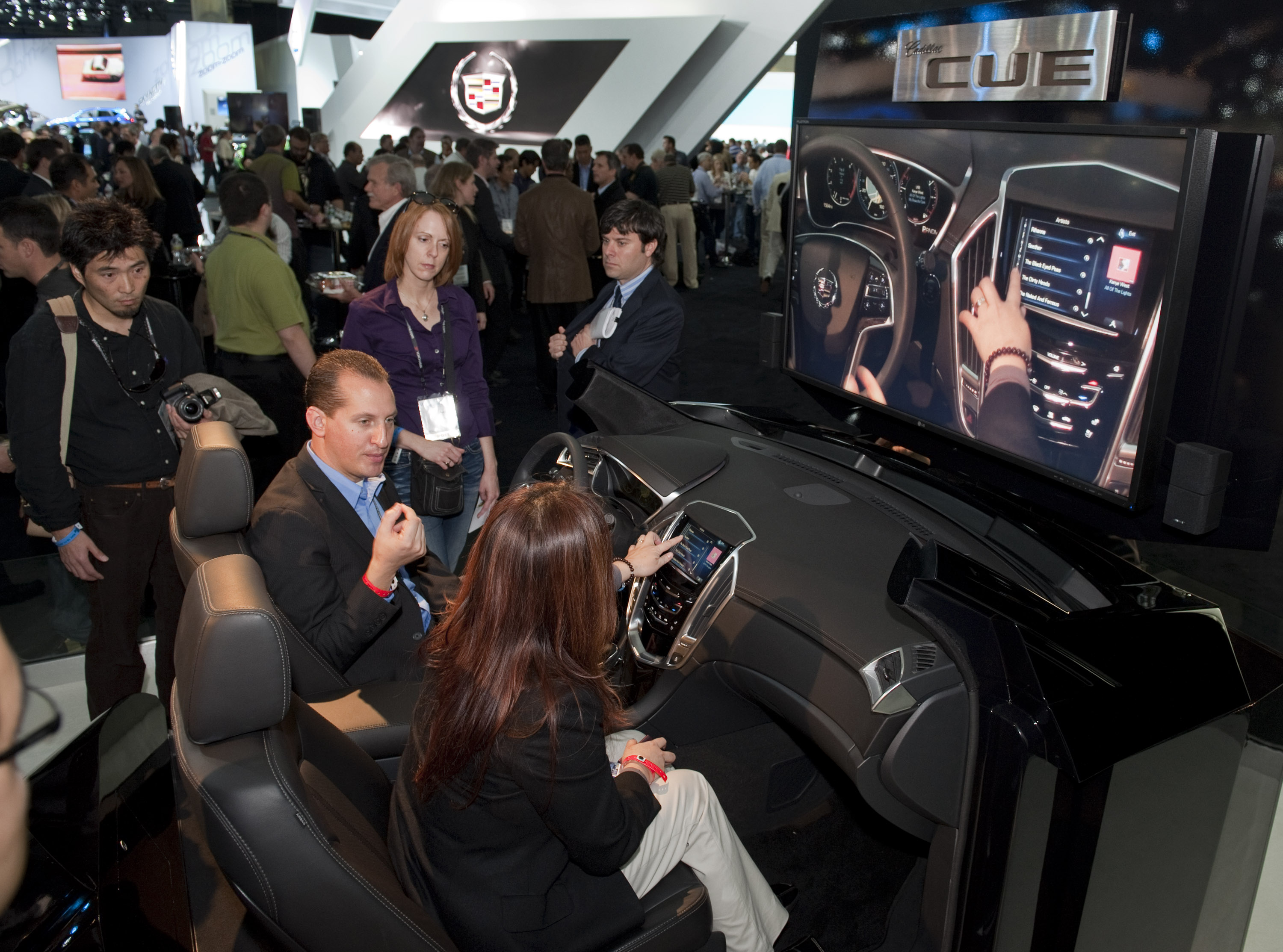
Cadillac CUE (Cadillac User Experience) Program Manager Jeff Massimilla (left) demonstrates the Cadillac CUE technology at the Los Angeles International Auto Show in Los Angeles, California. CUE is a full suite of infotainment, navigation and communication tools that combines natural voice recognition, fewer buttons, larger icons and greater customization to provide a more intuitive connected driving experience. CUE has 3.5 times more processing power than current auto industry systems. (Photo by Steve Fecht for Cadillac)

“Rather than just looking for power, speed, and performance, a connected car means turn-by-turn directions, voice-activated controls, and precollision systems,” says Peggy Smedley, editorial director, Connected World. “Car buyers now want it all under one hood and in the cabin.”

CUE, which stands for Cadillac User Experience, is a highly customizable user interfaces including a standard eight-inch (203 mm) screen in the “center stack.” CUE features several auto industry firsts, including capacitive-touch control with proximity sensing, gesture recognition and natural voice recognition.

The intuitive touch interface used in CUE is the same technology employed by many of today’s most popular handheld phones and tablets. Designed for both tech savvy and tech averse users, it allows consumers to securely store those mobile devices while channeling the information on those devices, along with navigation tools, weather maps with Doppler radar and AM/FM and XM radio.

In addition to CUE, the XTS will debut a network of safety cameras, radar and ultrasonic sensors to bolster driver vision and awareness of road hazards and intervene to help avert potential crashes.  In some cases, Cadillac’s enhanced vision and sensing systems will act without the driver, such as though automatic braking based on information indicating potential obstacles.

The Connected Car of the Year awards honor vehicles with technology that strike the right balance of safety, convenience, and infotainment. Chosen by the editorial team at Connected World magazine, the 2012 winners were named in   small, mid-size, luxury, and ultra-luxury categorie
Cadillac Most Desired Auto Brand in U.S.

2012 consumer survey measures emotional connections to brands

DETROIT – Cadillac is the most-desired automotive brand in the United States by men, according to results of a market research test by a company that studies emotional connections.

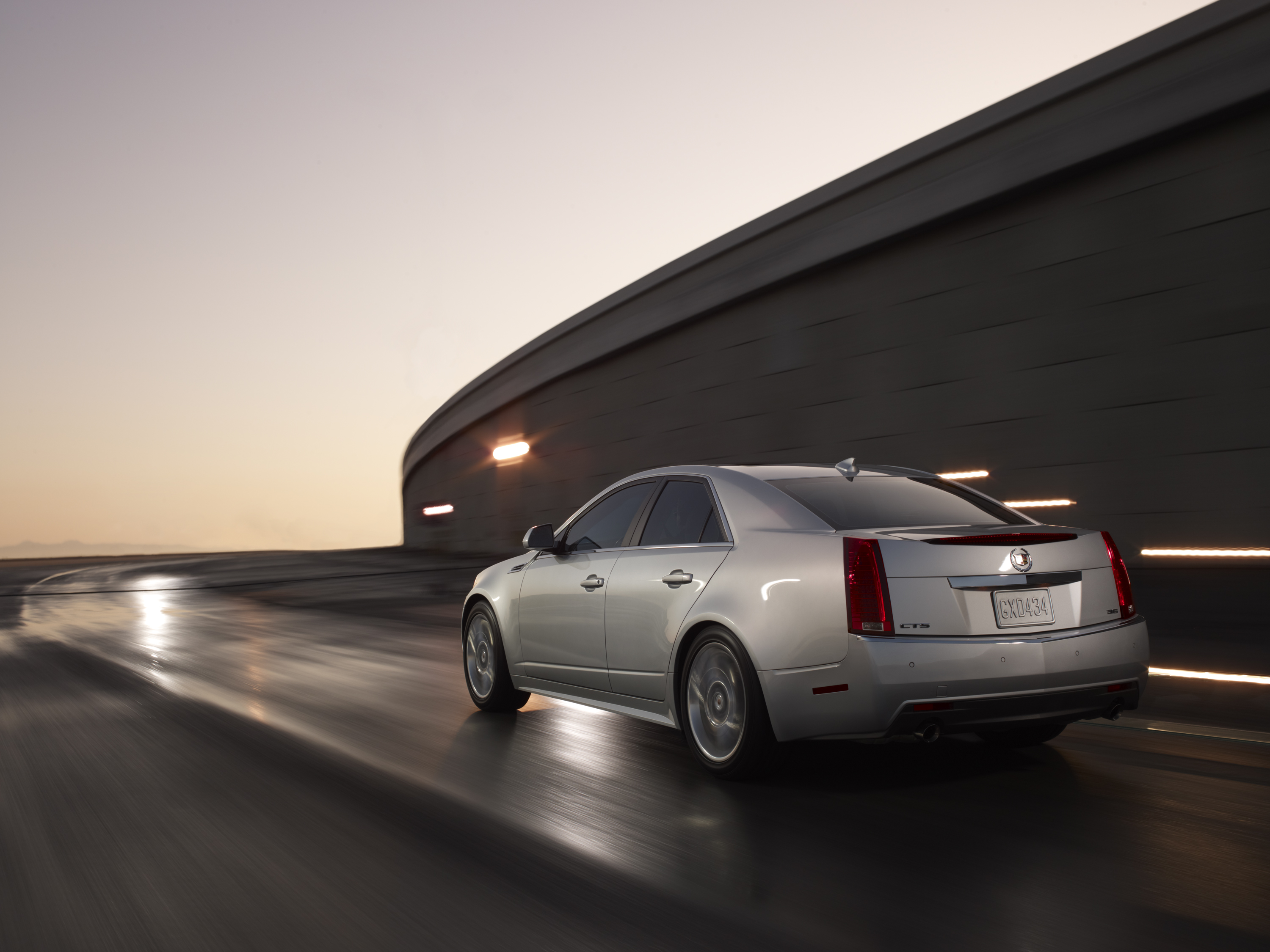
CTS is the centerpiece of Cadillac's lineup. The CTS Sedan is focused on excellent driving dynamics and technology, competing strongly against many of the world's finest midsized luxury cars.

The 2012 “Most Desired Brands in the U.S.” survey was conducted by the global strategic neuro-insight firm Buyology Inc and uSamp, which measured personal and emotional connections to 220 well-known brands across 10 industries.

Cadillac saw retail sales growth of 6.8 percent in 2011, led by the CTS family of cars, which were up 19 percent over 2010, and the mid-size luxury SRX crossover, which increased sales by more than 9.6 percent last year.

Cadillac is poised to further extend sales in 2012 with the introduction of the XTS full-size luxury sedan and the ATS compact luxury sedan, which will be released in the spring and summer of 2012 respectively.

Cadillac’s Electric Self Starter Turns 100

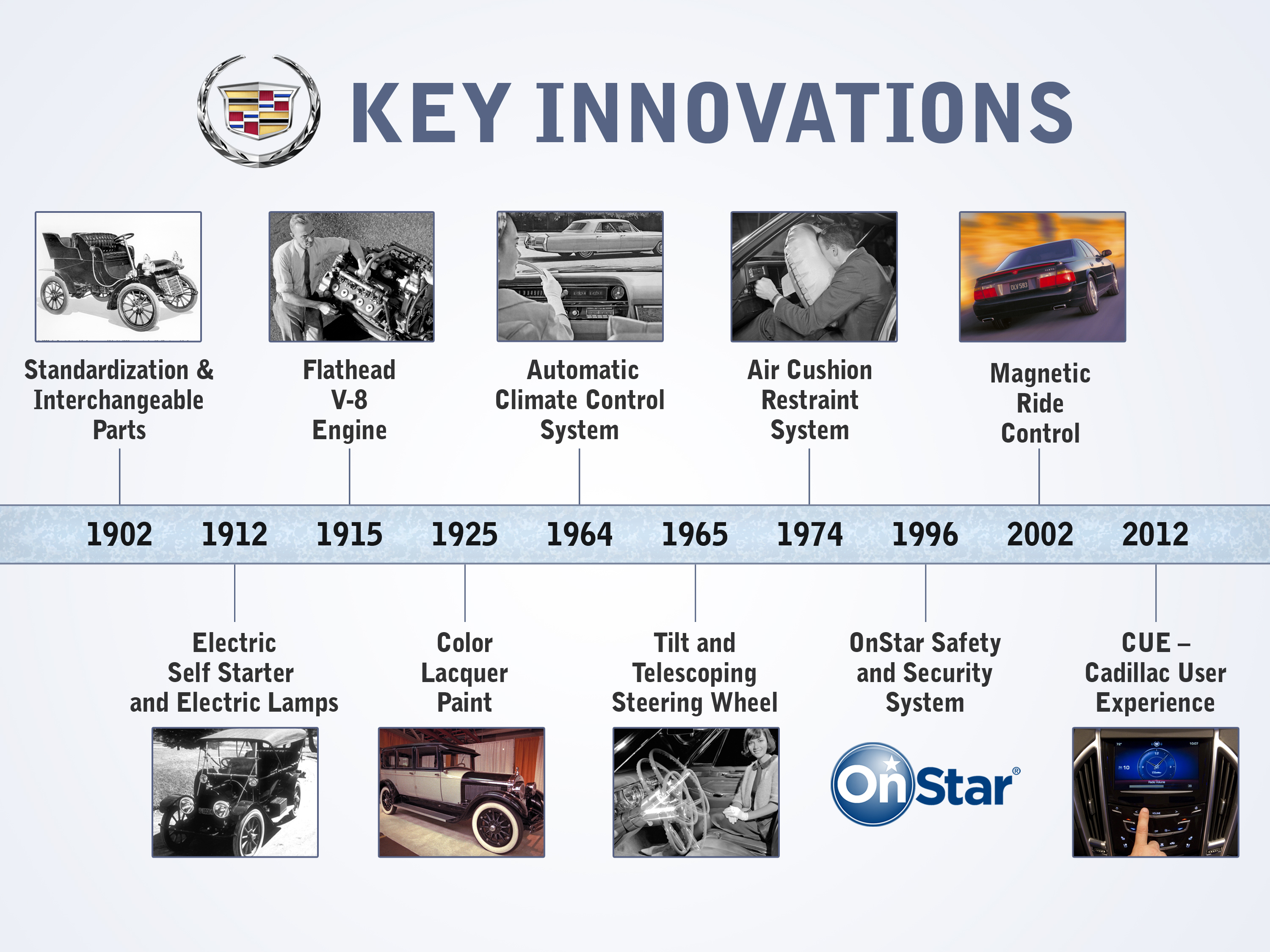
DETROIT – With the turn of a key or push of a button, starting a car today is taken for granted. But a century ago, the electric starter that debuted in the 1912 Cadillac Touring Edition helped establish Cadillac’s reputation as a test bed of technology and innovation.

Before the electric starter, it took a hand crank, a lot of muscle, and a bit of hope to start driving.

“Hand cranking was the No. 1 injury risk in those early days of the automobile,” said Greg Wallace, director of the General Motors Heritage Center, referring to the kickback on a crank handle that could break an arm, or worse.

As cars grew larger and purposeful, so did the engines and effort required to start them. It was so difficult, in fact, that it gave rise to the term “cranky,” which often described someone’s mood after struggling to start a car.

Cadillac founder Henry M. Leland, who had already pioneered electric lights and electric ignition on his cars, worked closely with Charles F. Kettering, the inventor of the electric starter, to incorporate the device into his cars. The electric starter also was GM’s first electric motor – a core business today anticipating the growth in the electrification of the automobile.

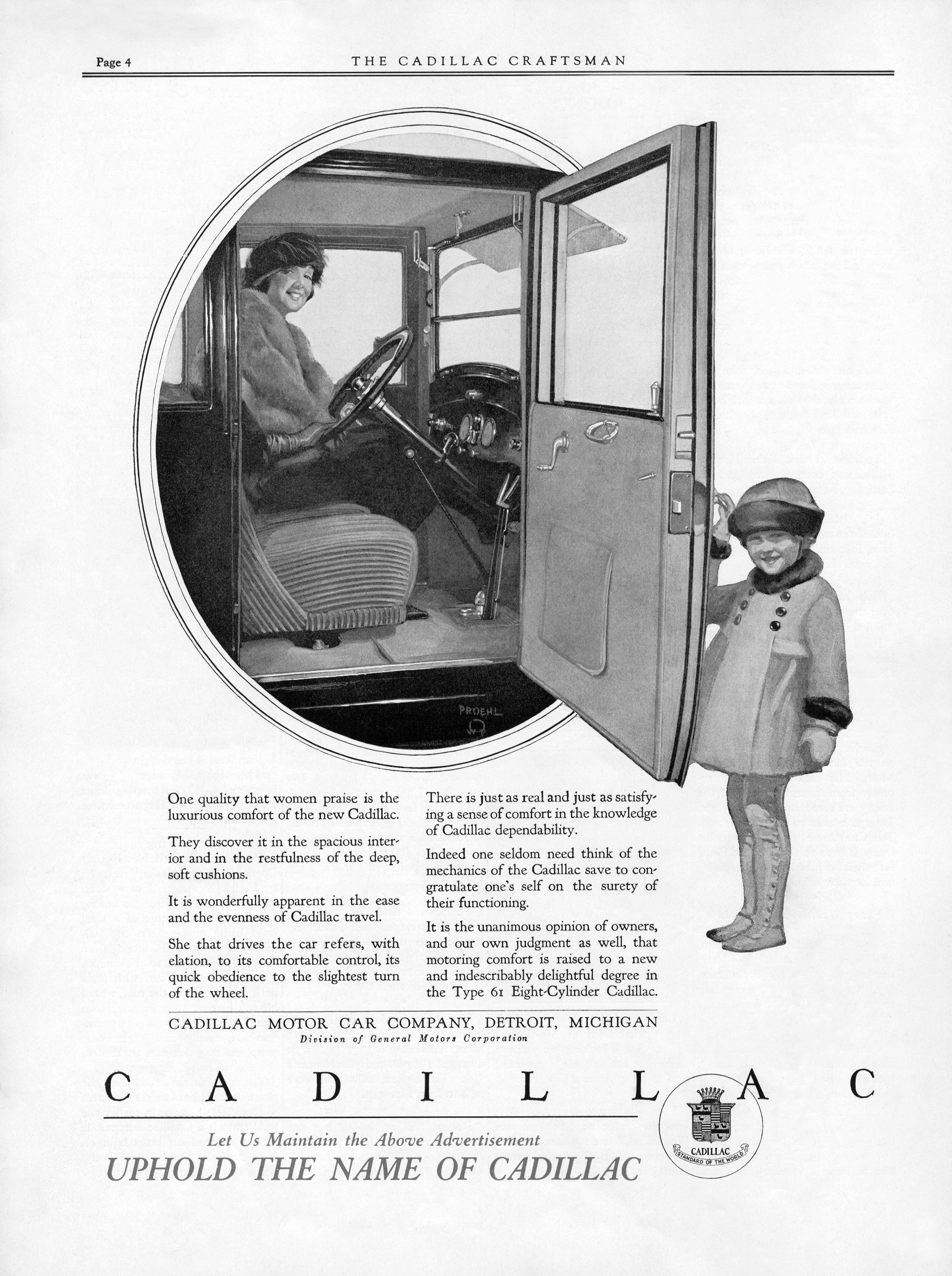
“It was one of the most significant innovations in the history of the automobile,” Wallace said. “It was a complete game changer. Within a few years, Cadillac featured women in their advertising showing them as drivers, instead of passengers or bystanders.”

Before the electric starter, Leland was an expert machinist and precision manufacturer. A few years earlier, he devised component standardization and interchangeable parts. Soon after the electric starter, Cadillac would be the first to introduce the V-8 engine and the synchromesh transmission for easier gear shifting.

Cadillac was also the first car company to offer a fully enclosed car body as standard equipment.

“As a premium brand even in its earliest days, Cadillac positioned itself as a technology and innovation leader as a way to set it apart from the dozens of other auto companies,” Wallace said.

Among the more visible Cadillac innovations beginning in the 1920s were designer bodywork and color lacquer paint. Later, Cadillac would innovate design with sleek, curvaceous body styles and jet-inspired tail fins.

Cadillac introduced the first automatic climate control and heated seats. Twilight Sentinel automatically turned on and off headlamps, and the first tilt-telescoping steering wheel helped drivers feel more comfortable behind the wheel. All were Cadillac firsts.

In more recent years, Cadillac was the platform for many high-tech innovations. It pioneered the air-cushion restraint system 1974 – a precursor to modern air bag systems. In 1996, Cadillac vehicles were the first to include OnStar, the leading on-board security, communication and diagnostic system.

In 1999, Cadillac introduced the first automotive night vision system. Magnetic Ride Control, the world’s fastest-reacting suspension technology, was introduced by Cadillac in 2002. Today Magnetic Ride Control is a crucial element in the performance of Cadillac’s CTS-V and Escalade models, as well as the upcoming XTS and ATS sedans. It’s been adopted by a few other automakers on a handful of elite sports cars.

Cadillac expands significantly in 2012, with new advanced technology elements CUE, a new user experience for in-car connectivity that will be a signature feature of the 2013 XTS and ATS. CUE recently received a Popular Mechanic’s Editors’ Choice Award at the 2012 International Consumer Electronics Show.

Cadillac has been a leading luxury auto brand since 1902. In recent years, Cadillac has engineered a historic renaissance led by artful engineering and advanced technology. More information on Cadillac can be found at media.cadillac.com.