
Tuning the 2013 Cadillac ATS 2L Turbo

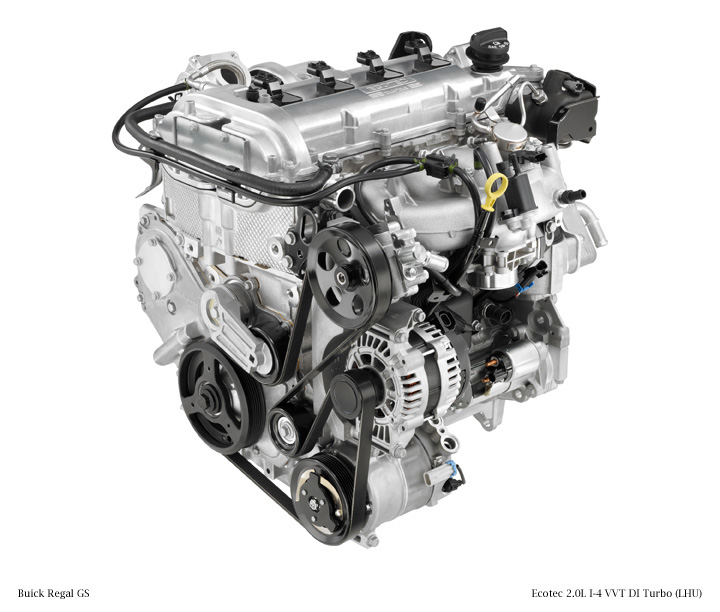
2012 Ecotec 2.0L I-4 VVT DI Turbo (LHU) for Buick Regal GS

For 2012 models GM offers two tunes on the current LHU 2L Turbo:

Applications: Horsepower: hp ( kw )
Buick Regal CXL 220 hp (164kW) @ 5300 RPM SAE CERTIFIED
Buick Regal GS 270 hp (201kW) @ 5300 RPM SAE CERTIFIED
Applications: Torque: lb-ft. ( Nm )
Buick Regal CXL 260 lb-ft (353Nm) @ 2000 RPM SAE CERTIFIED
Buick Regal GS 295 lb-ft (400Nm) @ 2400 RPM SAE CERTIFIED
Maximum Engine Speed: 6350 rpm ( forward gears )

The LTG 2L Turbo announced for the upcoming Cadillac ATS makes 270 hp and 260 lb-ft of torque.  Compare to the N20 2L Turbo in the 2012 BMW 528i, which makes 240 horsepower and 260 lb-ft of torque.

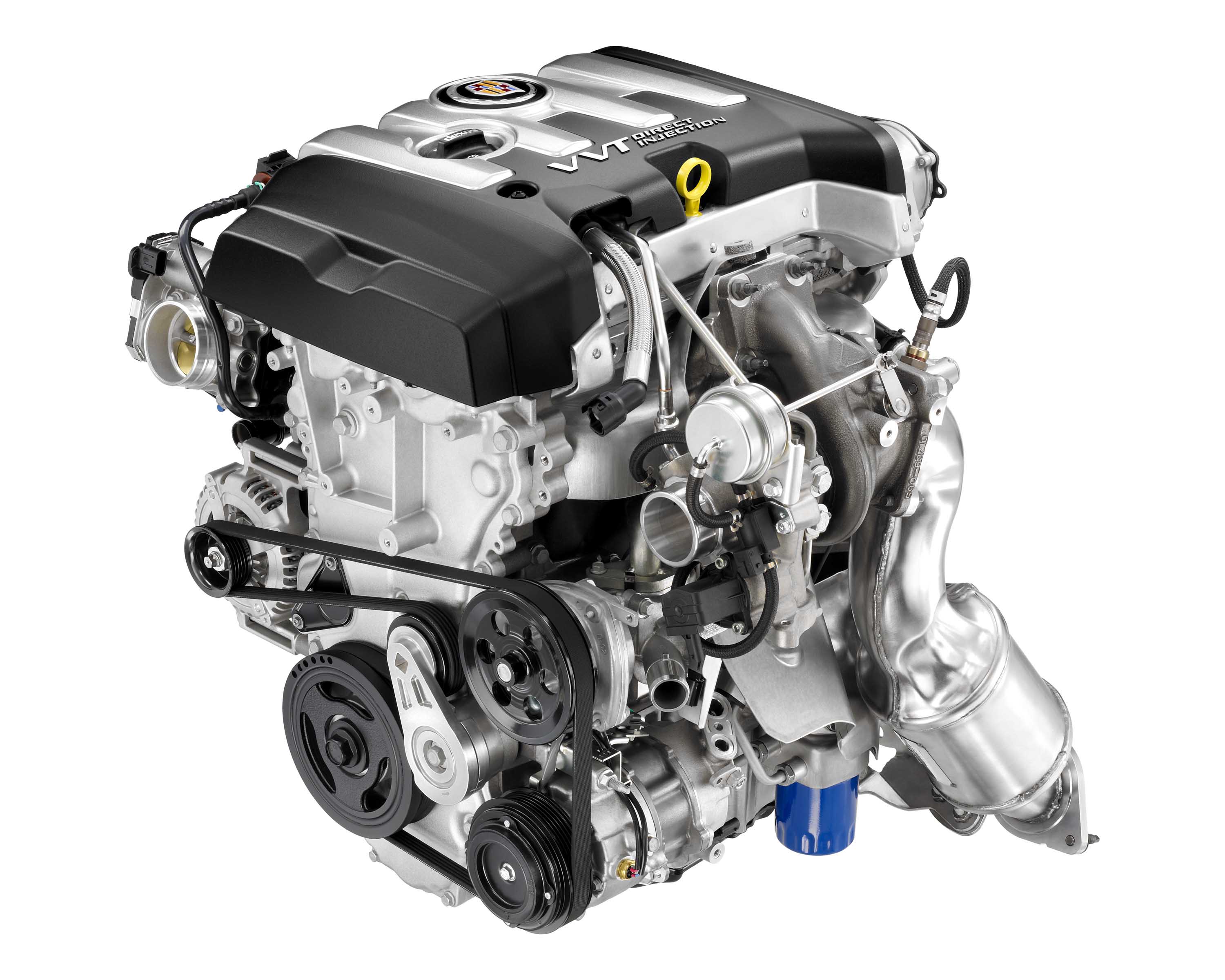
2013 Ecotec 2.0L I-4 VVT DI Turbo (LTG) for Cadillac ATS

The current LHU engine has these features:

DI ( direct injection )
Dual-scroll turbocharger
Dual CVCP (continuously variable cam phasing)
Sodium-filled Iconel exhaust valves
Aluminum pistons with jet-spray cooling
Forged Powdered Metal (PM) connecting rods
Forged Steel crankshaft
Semi-permanent-mold 356 Al cylinder head
Variable pressure fuel rail ( 50-150 bar )
Stronger block bulkhead and deeper water jacket
Coil-on-plug ignition
Direct injection high-pressure multi hole injectors
58x engine position sensing
Stainless steel fuel system components
Dual converter system
Cam driven high pressure fuel pump
Mechanical brake vacuum pump

and the new LTG engine features:

Among the 2.0T engine’s highlights: a direct-injection twin-cam, four-valve-per-cylinder engine with continuously variable valve timing; twin-scroll turbocharger with air-to-air intercooler; forged-steel crankshaft with modular balance shaft system; and a two-stage variable-displacement oil pump with jet-spray piston cooling.

None of which spring forth as new compared to the current design.  The current applications do have an air to air intercooler.

Looking at the two engine images above, there are some clear differences in configurations.  However, I wonder if the real secret of the new LTG 2L Turbo tune is that it can make 260 hp on regular unleaded instead of premium?  The current LHU engine is “premium recommended, but not required; L85 capable”.  Only needing regular unleaded would fit well with Cadillac’s tuning for the 3.6L to run on regular unleaded, and makes a nice bonus for the ATS.
Cadillac ATS Turbo, ATS 3.6L or ATS-V?

As expected Cadillac has confirmed that the ATS will offer the 2L Turbo making around 270 hp.  This should make a very good base engine for the ATS, and offer some after-market tuning capability.  This engine appears to be an updated version of the Ecotec 4 used in the Kappa cars (Solstice, Sky), and is a very good engine family.
Cadillac usually has a standard engine, a premium engine, and a V engine.  If the 2L Turbo is the standard engine, which engine will be the premium, the 3.6L 318HP V6?
And we are still waiting to hear the V engine, perhaps the twin turbo 3.6L?

Cadillac ATS Turbo 4

Video:

Press release:

  • 135 horsepower per liter among top-performing engines in the world
  • Compact ATS debuts at North American International Auto Show in Detroit

DETROIT – A new high-performance 2.0L turbocharged four-cylinder engine will debut in the all-new 2013 Cadillac ATS compact luxury sedan, which will be revealed at the 2012 North American International Auto Show in January.

The Cadillac-tuned, direct-injected engine will produce an estimated 270 horsepower (201 kW). At 135 horsepower per liter, it will be one of the most power-dense automotive engines, besting the highest-performing engines from luxury competitors such as Audi, BMW and Mercedes.

“This engine is the perfect match for the new ATS, which will be a refined performance luxury sedan,” said Don Butler, Cadillac vice president of Global Marketing. “The 2.0T has an exceptionally smooth and responsive power curve that will make the ATS nimble, quick and fun to drive.”

The new 2.0T highlights a broad engine lineup that will power the ATS which is slated to begin production next summer. Cadillac will also offer a normally aspirated 2.5L four cylinder engine and a 3.6L V-6 engine in the ATS.

The 2.0T builds on the advanced-technology heritage of previous GM turbo engines with features that enhance efficiency, durability and refinement.

Among the 2.0T engine’s highlights: a direct-injection twin-cam, four-valve-per-cylinder engine with continuously variable valve timing; twin-scroll turbocharger with air-to-air intercooler; forged-steel crankshaft with modular balance shaft system; and a two-stage variable-displacement oil pump with jet-spray piston cooling.

Overall engine friction is reduced by up to 16 percent. The low-friction design means engine power is delivered more efficiently.

Proprietary computational fluid dynamics analysis techniques were used to develop an all-new combustion system with a higher compression ratio, which also helped boost efficiency.

“The 2.0T is one of the most advanced and efficient engines of its kind, and contributes to the ATS’s exceptional balance of performance and great fuel efficiency,” said Mike Anderson, chief engineer for the 2.0T engine.

The 2.0T has a wide torque curve, delivering 90 percent of its peak 260 lb-ft. of torque (353 Nm) from 1,500 rpm to 5,800 rpm – giving the ATS the feeling of immediate power, whether from launch at a stop light or during higher-speed maneuvers, such as passing.

The turbocharger generates up to 20 pounds of boost and its twin-scroll design helps optimize power availability, virtually eliminating turbo lag and helping deliver a broad power band.

“It has the exhilarating, responsive power available when you want it, yet can provide the fuel efficiency that will make the ATS a fully competitive vehicle in global markets,” Anderson said.

At 135 hp/L, the ATS 2.0T four-cylinder turbo engine has the highest power density among key competitors, including:

  • Audi A4’s 2.0L turbo (105.5 hp/L)
  • BMW M3’s V-8 (103.5 hp/L)
  • Lexus IS F’s V-8 (83.2 hp/L)
  • Mercedes-Benz C250’s 1.8L turbo (111.6 hp/L)

Additional details on the ATS will be announced at the 2012 NAIAS. The ATS will be built at the Lansing Grand River plant alongside the Cadillac CTS Sedan, Coupe and Sport Wagon and V-Series performance cars.

Favorite Cadillac feature this week: seat heaters

This week the Dallas, Texas area is in the 30s (F) which is generally colder than I prefer. I am also back on my diet, so hopefully more sensitive to cold weather lol.

One of the features of my current Cadillac is front and rear seat heaters. I garage my car overnight, and I have a short commute. So while my Cadillac is not as cold as it might be in the mornings if it were sitting out in the weather, there are only a few minutes during my daily commute for the Cadillac to warm up enough to brace me for a windy parking lot traverse.

That’s where heated seats come in. While the climate control is waiting for the engine to reach operating temperature and provide warmth, the seat heaters are electric and go right to work. By the time I get to work my core is ‘fortified’ for the parking lot slog.

The same would be true for longer commutes of course — faster heat on a cold morning is welcome regardless.

My Cadillac also has a heated steering wheel but I am not as clear yet on that feature — I may have to break down and read the owner’s manual (oh no!).