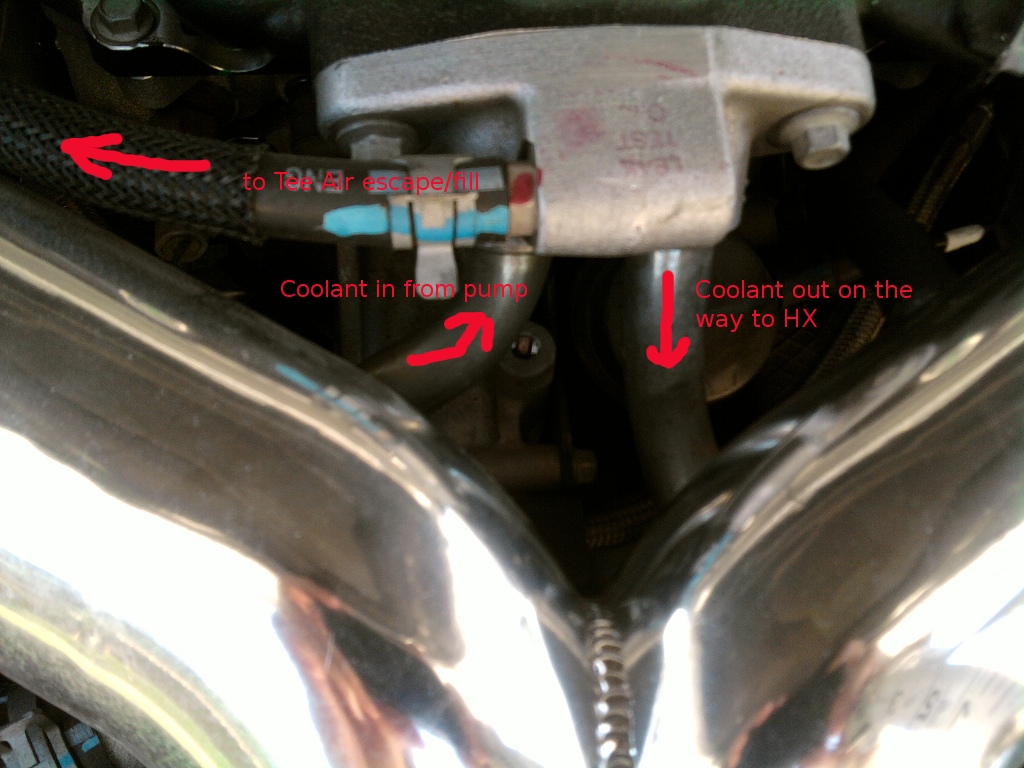
The intercooler plumbing on the Cadillac STS-V heads into the intercooler itself through a pair of pipes above the snout of the supercharger. These pipes are exposed to the heat of the engine compartment, and are not insulated in any way. For example, when I went out to verify their size to shop for some insulated sleeves, they were too hot to touch and I feared that my tape measure would melt before I got them sized. That can’t be helpful for keeping the coolant inside these pipes cold.
One of my next minor projects will be to either add some insulated sheathing to these pipes, or to wrap them with insulated wrap. Yes, the intercooler coolant only rushes through those in and out of the intercooler, but one fewer heat source would be great.
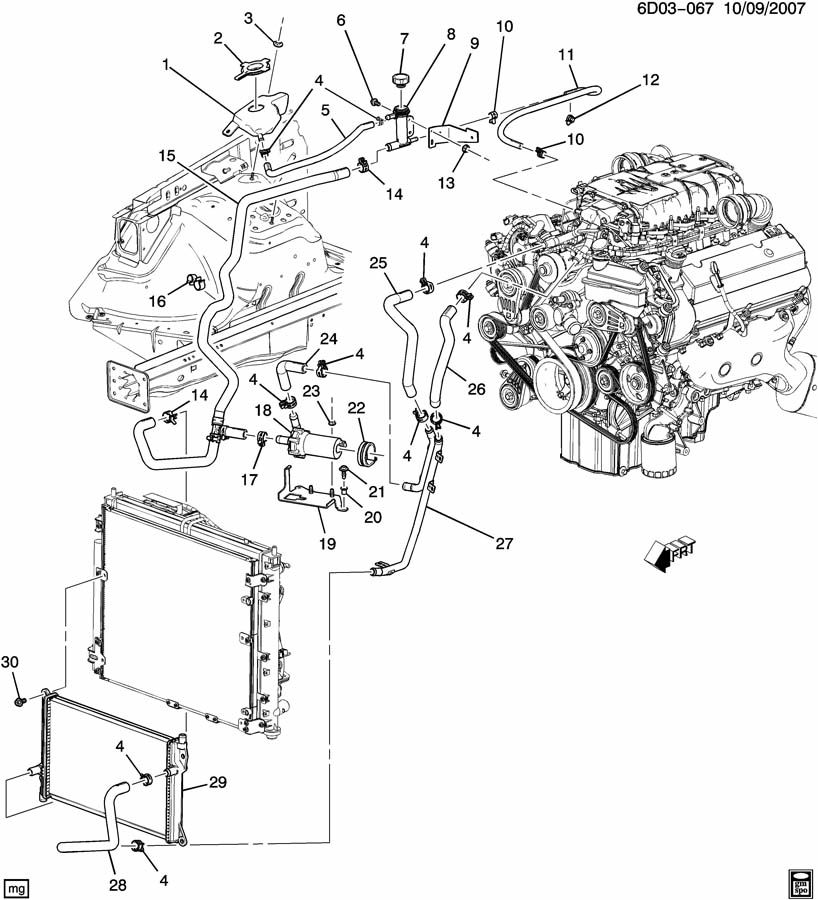
STS-V LC3 Intercooler Flow path & Parts
Update:
Here is the initial insulated piping shot. I like the look of the sheathing but I need to get it squeezed in to cover the pipe better.
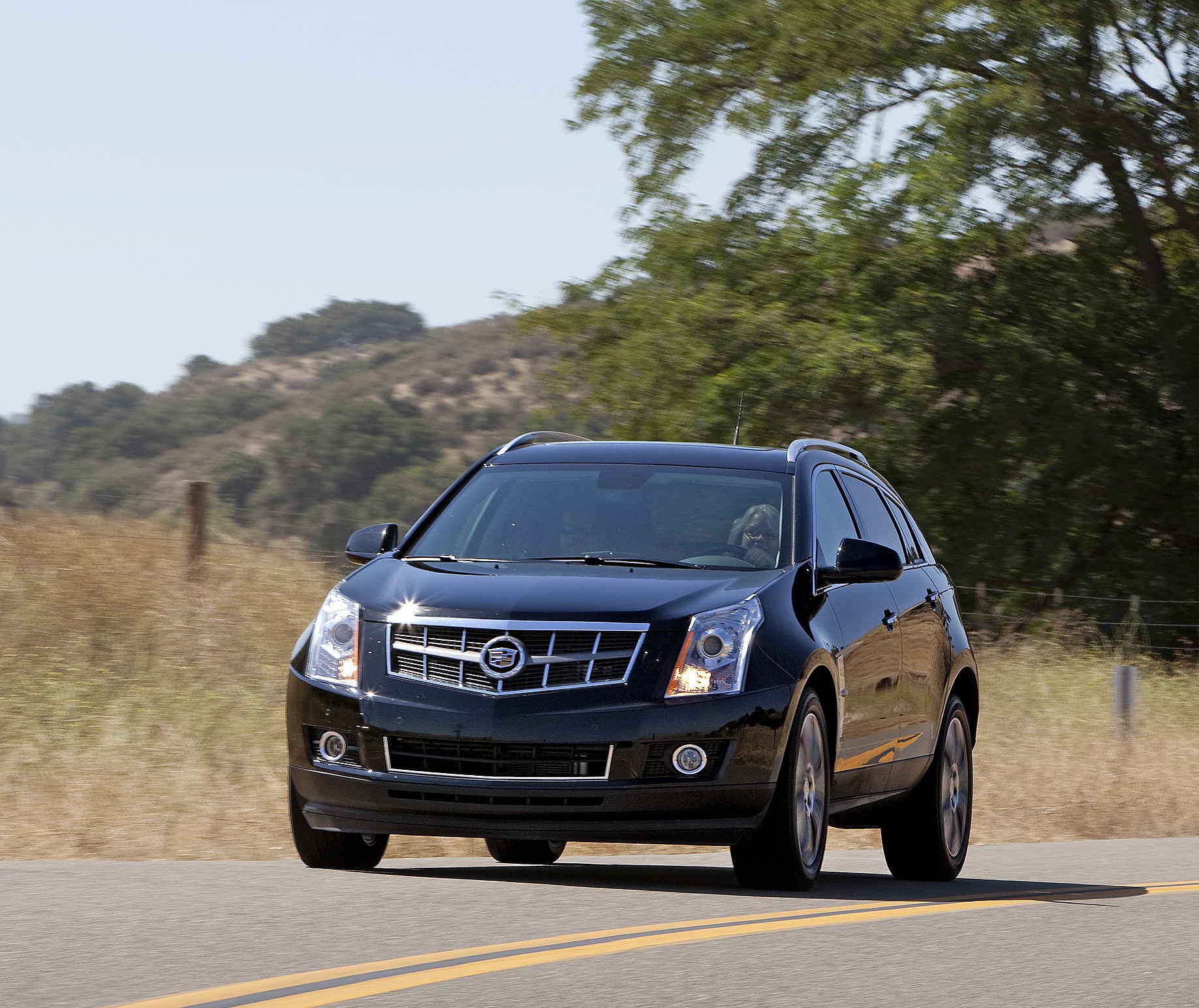
DETROIT – The summer road trip season is near, meaning millions of drivers are planning getaways – with lots of stuff. The Cadillac SRX crossover’s unique Cargo Management System is designed as an ideal companion for long weekends and driving vacations.
“We put a lot of thought into what kinds of items Cadillac customers would want to bring into the SRX and where they’d want to put them,” said Elizabeth Pilibosian, SRX chief engineer. “The philosophy was not just to maximize total space but to have a place for everything and everything in its place. That makes a huge difference on longer trips.”
The rear compartment Cargo Management System uses a segment-exclusive U-Rail track system with an adjustable cargo fence that segments the area to contain items of various sizes and restrict their movement when the vehicle is in motion. The fence is sturdy, but also easy to move around the U-shaped track to adjust to a variety of positions to suit a range of items and packing arrangements.
The cargo fence can be removed, retracted and conveniently secured beneath the load floor when not in use. An optional cargo net, organizer or area divider may be used in place of the tubular fence. Four steel loops positioned in each corner of the compartment provide convenient connection points for nets or bungee cords that a driver might bring into the vehicle.
The rear compartment’s load floor has a latch that reveals a waterproof bin, measuring 26 by 12 inches by eight inches deep. This easy-to-clean bin is ideal for storing damp or dirty items from a beach trip, or it can be used as a cooler, or to house smaller items under the floor and out of view. A smaller secondary bin holds the vehicle’s tire inflator kit that can be used as a pump for bike tires and beach toys depending on valve compatibility.
Flanking the main bin are two smaller discreetly covered compartments designed to be ideal for stowing small tools, such as a tire pressure gauge. Regular use maintains proper tire pressure, which can help maximize fuel economy.
A two-position cargo shade can be used to conceal the rear compartment when the hatch is closed.
In SRX’s passenger area are several additional storage areas. Each door has upper and lower bins, as does the glove compartment, which can cool fruit and beverages when the air conditioning is on. The center console offers an upper level for small items like an MP3 player or mobile phone, and a lower level for larger items.
The cup holders between the front seats are dual-level as well, with a retractable floor that lets the user go from a small coffee to a “grande” at the flip of a switch The false floor also creates a secret compartment that can hide a wallet or wristwatch.
In front of the cup holders is the SRX’s smallest bin, designed expressly to house mobile phones and sometimes known as the “phone throne.”
Open SRX’s rear programmable liftgate and more than 29 cubic feet of storage space behind the second row seating awaits, more than enough room for four rolling suitcases, sports equipment and sundries. With the 60/40 split rear seats folded flat, the cargo area grows to more than 61 cubic feet to accommodate items like a bike or baby stroller.
“We know that SRX customers are active people who value enriching experiences,” Pilibosian said. “They expect their journey to be just as enjoyable as their destination, and the SRX is tailored to meet their needs and exceed their expectations.”
Cadillac has been a leading luxury auto brand since 1902. In recent years, Cadillac has engineered a historic renaissance led by artful engineering and advanced technology. More information on Cadillac can be found at media.cadillac.com.
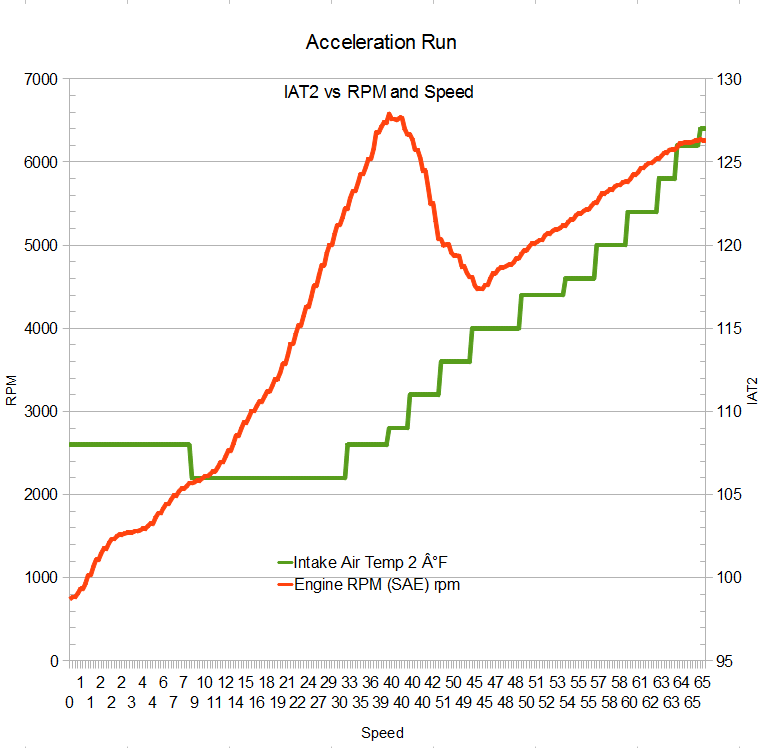
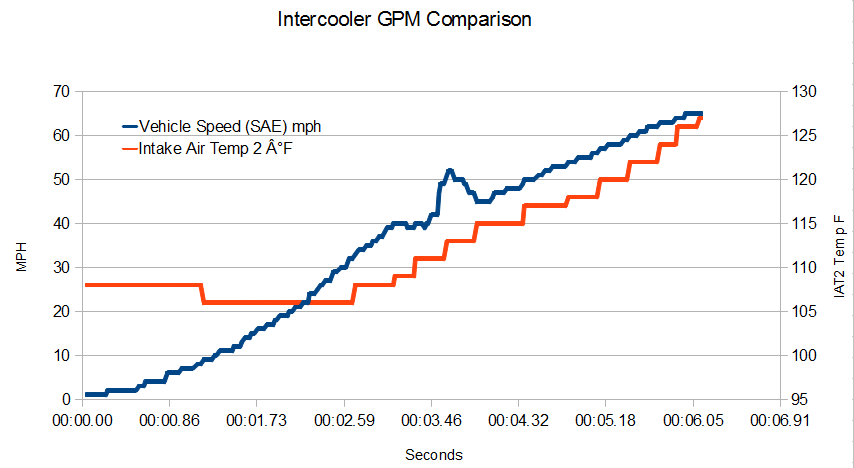
I am thinking more about this graph of IAT2 over time as the Cadillac STS-V accelerates:
Let’s consider the stock, OEM Bosch intercooler pump. This pump is rated for 8 gallons per minute (gpm) against no resistance, and likely does 5 gpm in the STS-V system. It is overall a very good pump, and very efficient.
Now, a gpm is 1/60=0.083 gallons per second (gps). So 5 gpm would be 0.42 gps. The STS-V can accelerate 0-60 in under 5 seconds. So on an average 0-60 run, the intercooler pump moves 5 sec x 0.42 gps = 2 gallons of fluid through the intercooler.
Now, keep in mind that the OEM system had 2.6 quarts of fluid, and my new HX added 2 quarts, so now my system has 4.6 quarts or just 1.15 gallons. A small part of the capacity is likely counted in the side fill loop, so we’ll say 1 gallon.
So on an average 0-60 run, the pump can move 2 gallons of fluid through the intercooler, and the system has 1 gallons in the main loop, so the coolant sees the inside of the intercooler twice in that 5 seconds. Put another way, my current 4 quart capacity system has a circuit time of ~3 seconds — every ~3 seconds the system circulates the entire coolant capacity.
For the intercooler testing I was focused on just getting an acceleration spike and not best time. But if we look at this graph of speed vs time vs IAT2,
What it appears to show is that the IAT2 temps are near constant for the first 3.27 seconds (looking at the exact figures in the data table), and rise dramatically after that. Now it is dangerous to read too much into a single sample, but this seems to validate our figures that at 3.27 seconds the intercooler coolant starts a 2nd loop through the system.
From this I conclude that a system with a 2 gallon capacity of coolant would have fresh, cool fluid in the intercooler for the first 6 seconds. Now 0-60 mph is not the end all and be all of performance. To keep uncirculated coolant in the intercooler for a dyno run one might need 10 seconds of fluid or 3 gallons — as a thumbrule think 1 gal per 3 seconds.
Also, if you speed up the pump, you’ll need more system capacity to offset the faster circuit time.
What do you think? Am I missing the boat? Do you agree? Hit the comments please!