Air Ducting to CAI DIY Mod #Motorama

What benefit is there to routing air from the lower bumper to the cold air intake?
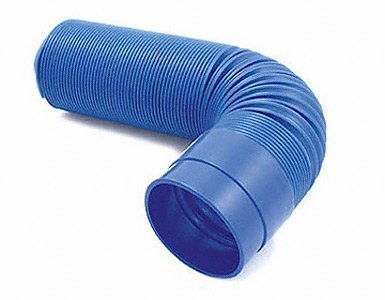
Spectre Performance 8746 Blue Air Duct Hose

I have a Spectre Cold Air intake on my 2008 Cadillac STS-V.  Today’s question is, what if we ducted cold air from the bumper to the CAI instead of to brake cooling as designed?

I shopped for this air duct by Spectre on Amazon.  It was available in a few colors, and the price differed by color, so I got the lower price blue one.
photo

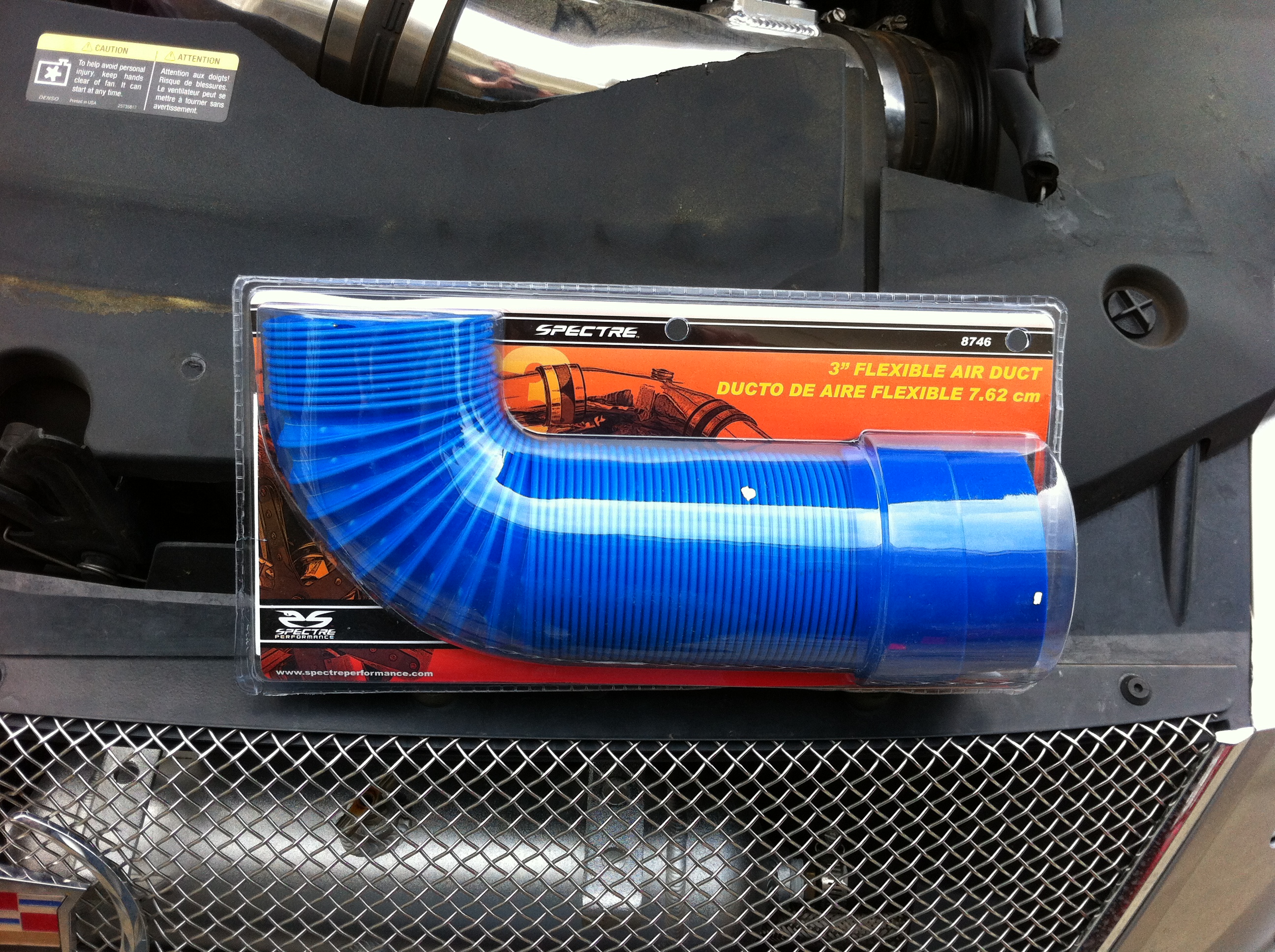
This is a shot of the hose in the package as received.
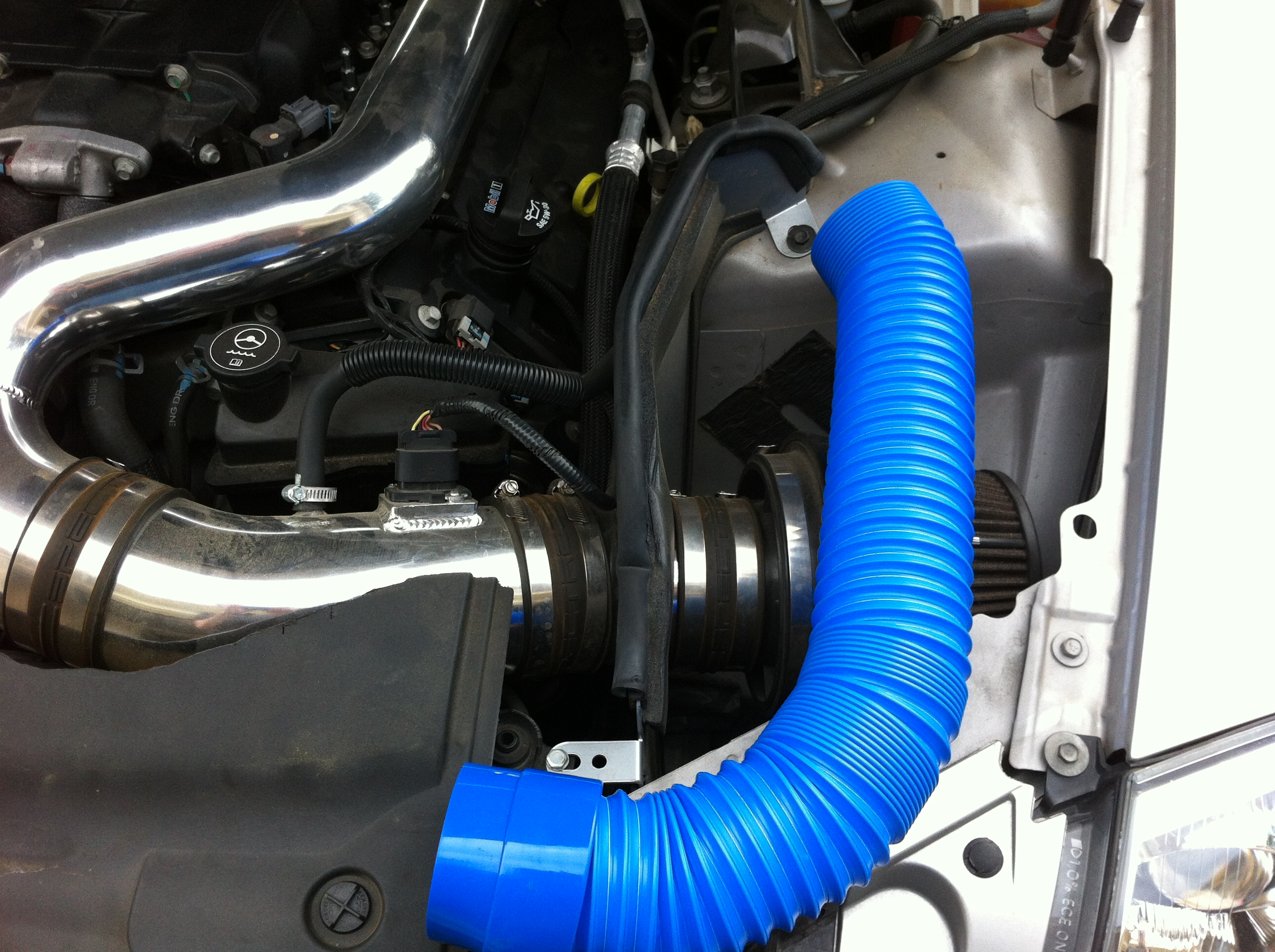
photo2

The end pieces are rubber; the hose itself is plastic.  It stretches out like an accordion, and holds it shape once adjusted.
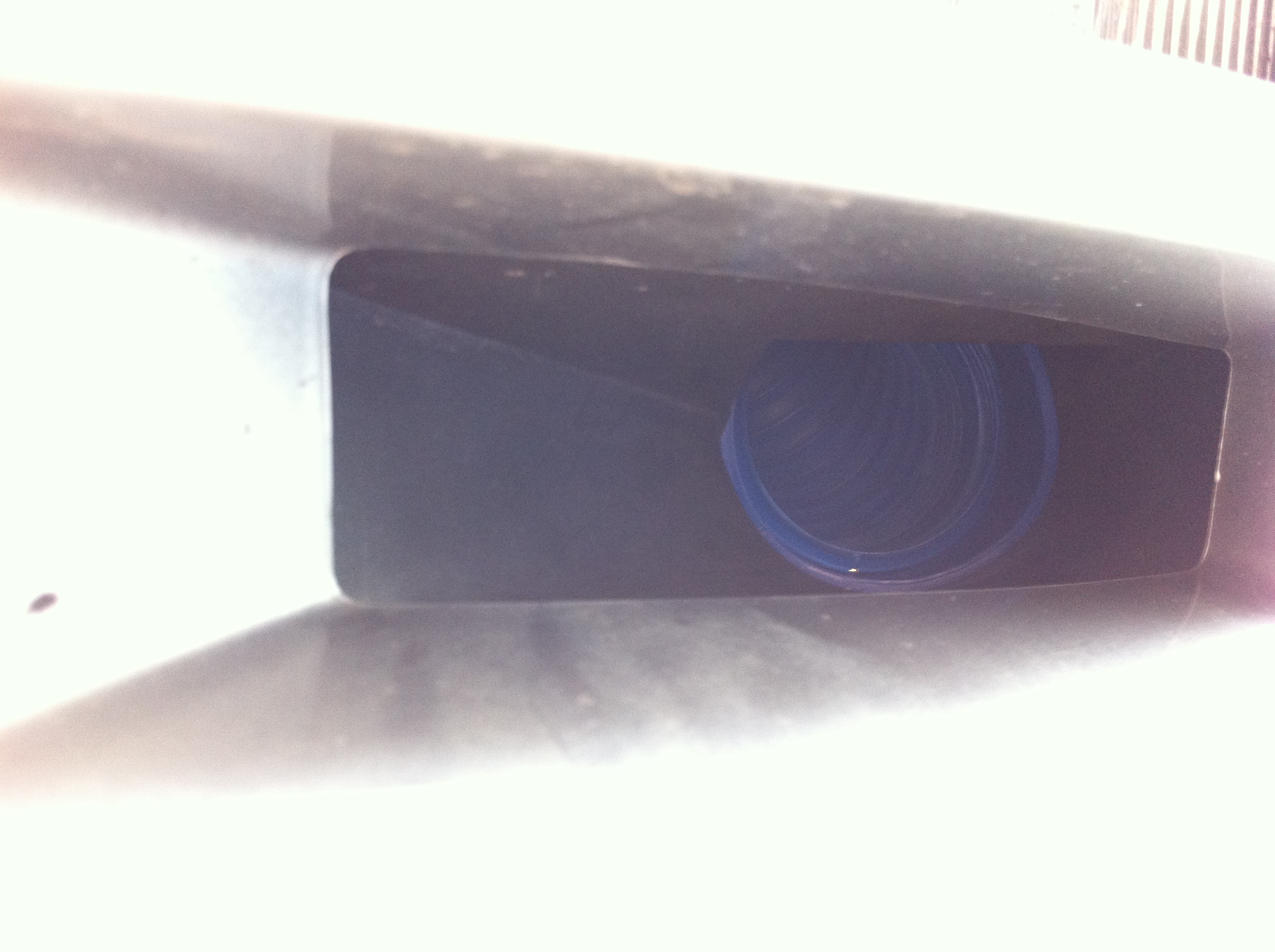
photo3

The coupler for the ducting is tucked into the brake cooling duct.  It is a press-tight fit, but I will keep an eye on it and see if it stays in place at speed.  I tested up to 45 mph or so and it was still there.  I would prefer to put a inner locking ring or similar to ensure it stays in place at speed.

The inner diameter of the brake duct on the Cadillac is larger than the outer diameter of the coupler on the ducting.  A 3.5″ diameter duct might be a better fit here.
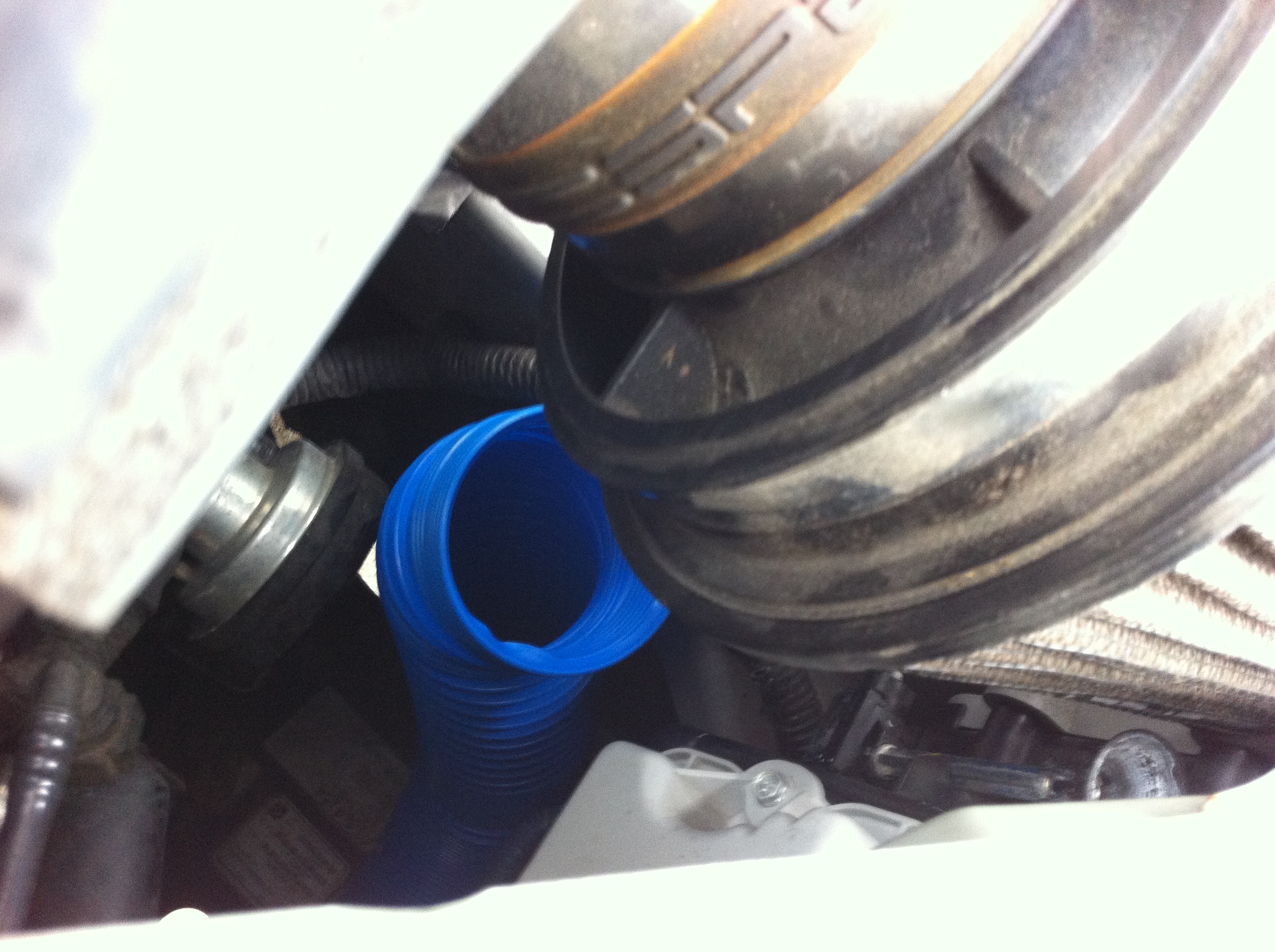
photo4

This shot is looking down past the filter into the top of the ducting.  This is where the incoming air will blow out of the hose and onto the air filter.

Only had time and temperature for a short test run to make sure the ducting stayed in place.  I will be testing next available good weather day.  Stay tuned.

Do you have other hints or suggestions for this setup?

Update:

Ran a new baseline / test run this morning.  Weather was okay but ambient read 81F, and test area 76F.

2013-05-18 reset 1-2 added ducting

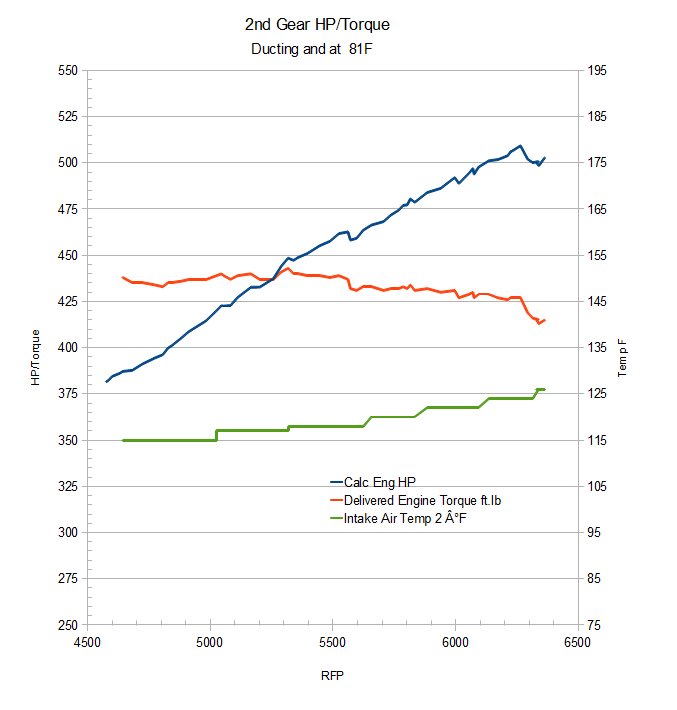
Virtual Dyno with 1st gear and 2nd gear together detected no improvement due to the new air ducting to the CAI.  The previous run Virtual Dyno vs HPTuners Delivered Torque Curve was at 379/345 hp/torque at the wheels.

comparison of virtual dyno runs

This shows a comparison of the two virtual dyno runs in 2nd gear side by side.  Technically 4 hp less for the ducted version.
hptuners more1-2 run 2013-05-18

HPTuners data shows perhaps a lower run-up in IAT2 max of 125F instead of 130F, but incoming air temp at speed would seem to have less impact on this — already cooler at that point.
comparison of maf readings

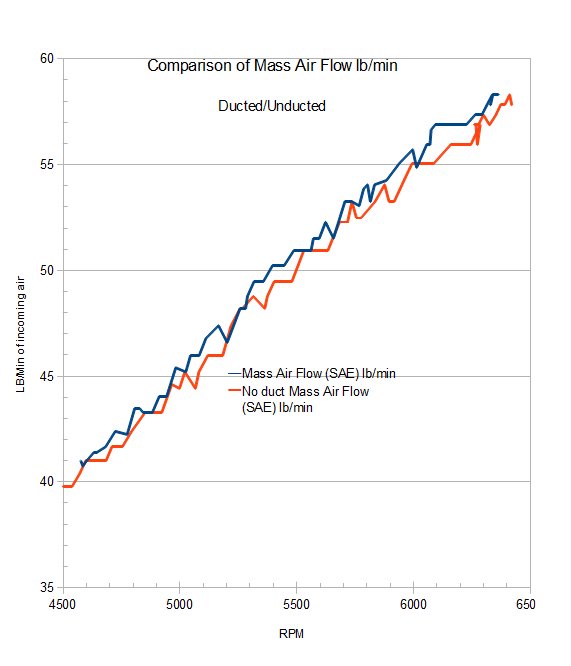
In an attempt to discern how to measure a difference, this chart shows the raw mass air flow coming into the intake.  This would show if we are presenting the engine with more air, regardless of what the engine is doing with it.  Although we might conclude given different days etc these are equivalent, it is notable that the ducted air is ahead of the unducted intake.

The ducting did stay in place through my test drive.  I plan to continue to test and evolve this setup.  I have a new replacement cone filter on the way also; mine is quite dirty.  I will put the new one on then clean this one and have it in standby.


Cadillac STS-V shift testing, adjustment 1

[Note the video quality can be adjusted up (click on the gear), and the video can be made full screen.]

Adjustment 1 set: Kept the 1-2 shift at 30 mph, and raised the 2-3 shift to 60 mph across all shift modes.  Raised the absolute fuel cutoff from 6700 rpm to 7000 rpm.  TM adjusted to 25%.

Interestingly, with no change in shift points the 1-2 shift revved to 6600 rpm and hit a new higher calculated hp value.

Shifttest2013-05-11max15

Previously the 2-3 shift was commanded at 58 but happened at 60 mph.  When I moved the commanded mph up to 60 mph it continued to be commanded at 60 mph.  More testing needed there to understand.

I observe that the car is actually slowing down during shifts, perhaps due to engine braking in sport mode.  I will plan to retest with the transmission in drive, which does not use engine braking, to see if that is advantageous.

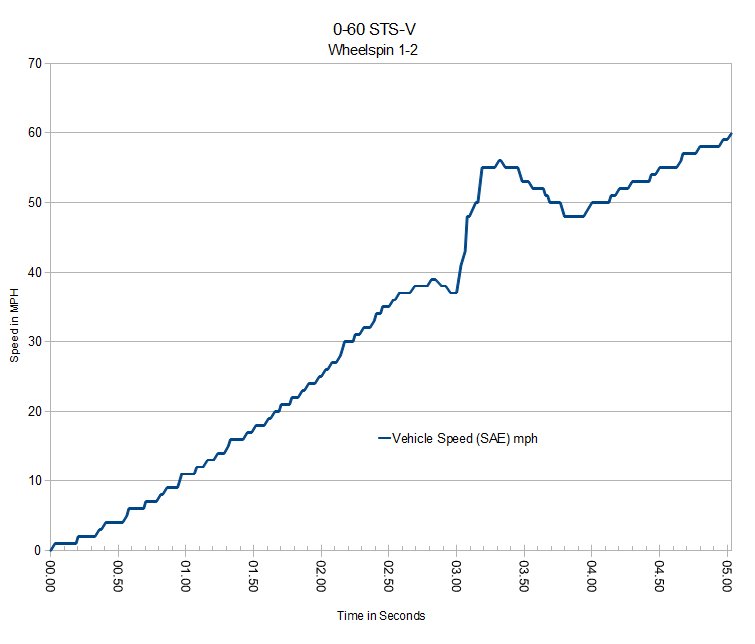
Update:  I see a source of delay in the 0-60 time — wheelspin after the 1-2 shift is a problem.

Mph Time
0 0
5 0.56
10 0.95
15 1.31
20 1.66
25 1.98
30 2.17
35 2.45
40 3.03
45 3.08
50 3.14
55 3.19
60 5.03
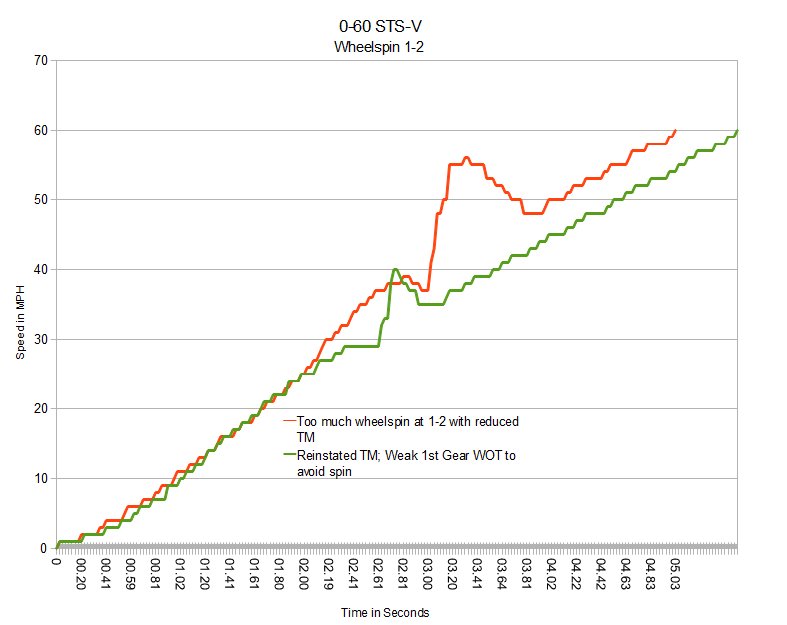
Too much wheel spin after the 1-2 shift at 3 seconds is causing a false mph indicator for a spike to 55 mph after the shift.
The 40-55 run in the middle is due to spinning tires.

run1at15accelerationgraph

Reinstated TM and retested.  Didn’t go WOT early enough in the retest to avoid the transmission shifting early 1-2 (shift commanded at 23 mph).

run1at15accelerationgraph2ReinTM


Cadillac STS-V Exact Shift Point Testing

This morning I made 2 runs to determine current shift points during acceleration from a standing start.

I ran the STS-V in “competition mode”; this mode apparently uses “Cruise mode” shifting, which was a surprise to me but means a different table for the transmission logic.

run1gearshift12

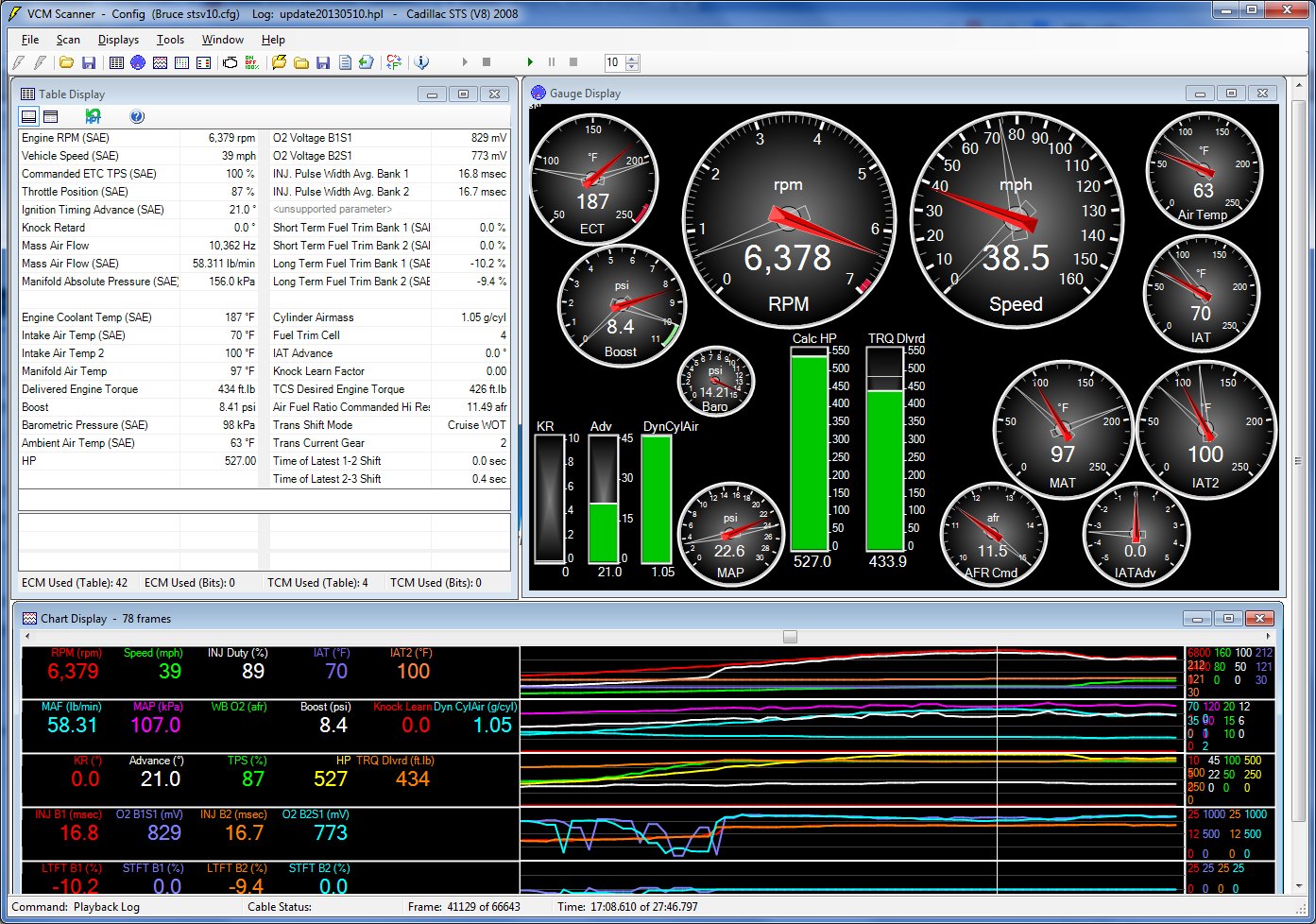
Run 1: From 1st gear the shift to 2nd started at 30 mph as programmed. The STS-V reached 6,180 rpm before shifting.  The shift took 0.2 seconds.  The 2-3 Shift started at 60 mph and the STS-V reached 6,310 rpm before shifting.

HP Tuners Information

HP Tuners Information

Run 2: From 1st gear the shift to 2nd started at 31 mph.  The STS-V reached 6,378 rpm before shifting.  The shift too 0.2 seconds.  The 2-3 shift started at 60 mph and the STS-V reached 6,240 rpm before shifting.  The latter is surprising since the logic appears to command the shift at 58 mph and not 60 mph.

With a goal of raising the shift points to 6600-6800 rpm, my plan is to increase the 1-2 shift speed from 30 mph to 31 mph.  In first gear, 140 rpm equates to 0.6 mph.  So a full mph increase in shift speed may raise the shift point by 230 rpm or so from 6,380 to 6,600 rpm. For second gear, 40 rpm is around 0.6 mph, so 200 rpm increase would be 3 mph, or 58 mph up to 61 mph.

I will plan to retest under similar circumstances to see how the changes effect the actual result.  What do you think?  The model predicts that hitting the proper shift points will produce a slight improvement in acceleration.  Have you done these type of adjustments to your car before?