Cadillac ATS LTG 2L Turbo vs BMW 328i N20 2L Turbo?

Cadillac has added this comparative info to the ATS site:

The BMW 328i uses the N20 engine (2L, 4 cylinder turbo) and appears to be clearly under-rated from the factory, making around 226-240 hp at the wheels in dyno tests. That makes it a 280+ hp engine as delivered; compare to the 270hp from the ATS LTG.  Some test drivers prefer the 328i to the 335i because the 328i has better balance and similar power.

Meanwhile, the upcoming ATS engine is a brand new 2L turbo version of the new 2.5L normally aspirated 4. But if the new ATS engine (LTG) is as tunable as its LHU and LNF cousins, it will quickly be tuned to 300+ hp as they are.  Of course the BMW engine can be tuned as well.

Same weight, similar engine power, BMW has an 8 speed transmission, while the Cadillac ATS arrives with the 6-speed because the 8-speed isn’t ready yet.

What about the Premium ATS and the BMW 335i?

On paper, the 318 hp Cadillac ATS engine also appears to have more power than the 3L Turbo 335i’s engine which is rated at 300 hp.   On paper.

Be sure that the BMW 335i’s engine output is also suspect, and likely makes 320+ hp.  The 335i uses the N55 3L V6, with a dual-scroll turbo instead of the dual turbos from the N54 3L V6.  In comparative tests, the 335i’s N55 V6 made 276 hp at the wheels on the dyno, or 320+ hp at the crank.

Stay tuned!

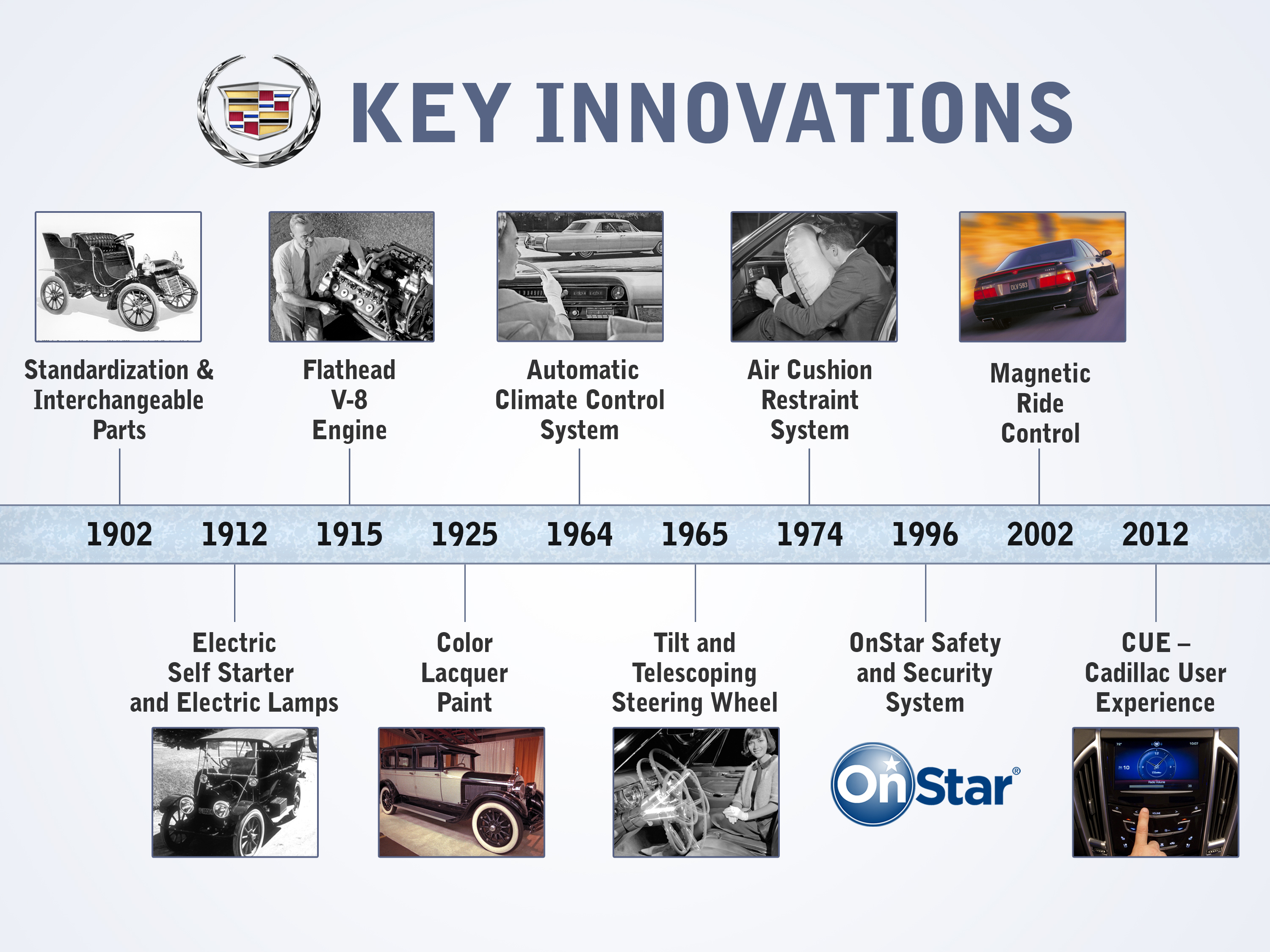
Cadillac’s Electric Self Starter Turns 100

DETROIT – With the turn of a key or push of a button, starting a car today is taken for granted. But a century ago, the electric starter that debuted in the 1912 Cadillac Touring Edition helped establish Cadillac’s reputation as a test bed of technology and innovation.

Before the electric starter, it took a hand crank, a lot of muscle, and a bit of hope to start driving.
“Hand cranking was the No. 1 injury risk in those early days of the automobile,” said Greg Wallace, director of the General Motors Heritage Center, referring to the kickback on a crank handle that could break an arm, or worse.

As cars grew larger and purposeful, so did the engines and effort required to start them. It was so difficult, in fact, that it gave rise to the term “cranky,” which often described someone’s mood after struggling to start a car.

Cadillac founder Henry M. Leland, who had already pioneered electric lights and electric ignition on his cars, worked closely with Charles F. Kettering, the inventor of the electric starter, to incorporate the device into his cars. The electric starter also was GM’s first electric motor – a core business today anticipating the growth in the electrification of the automobile.

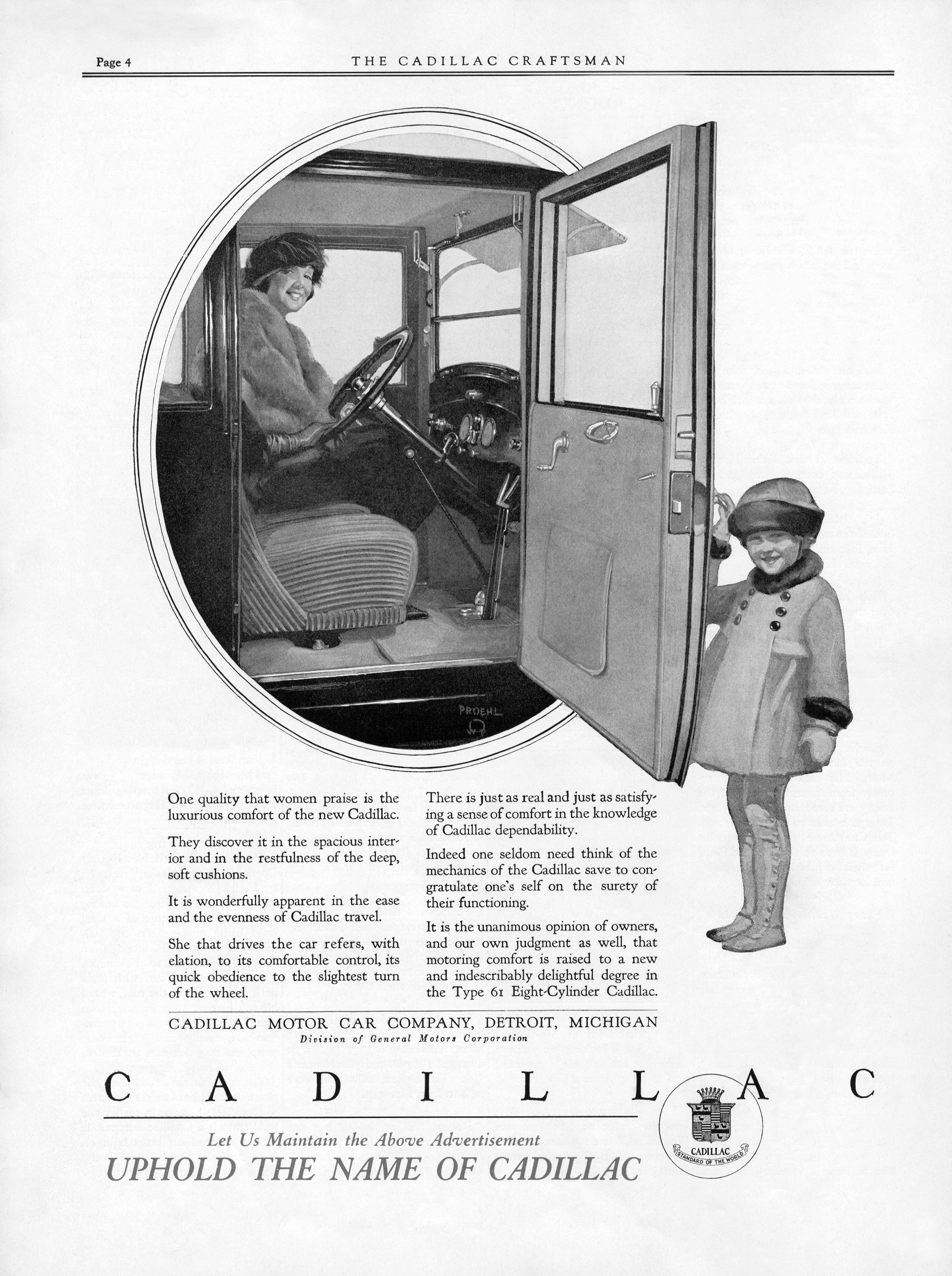
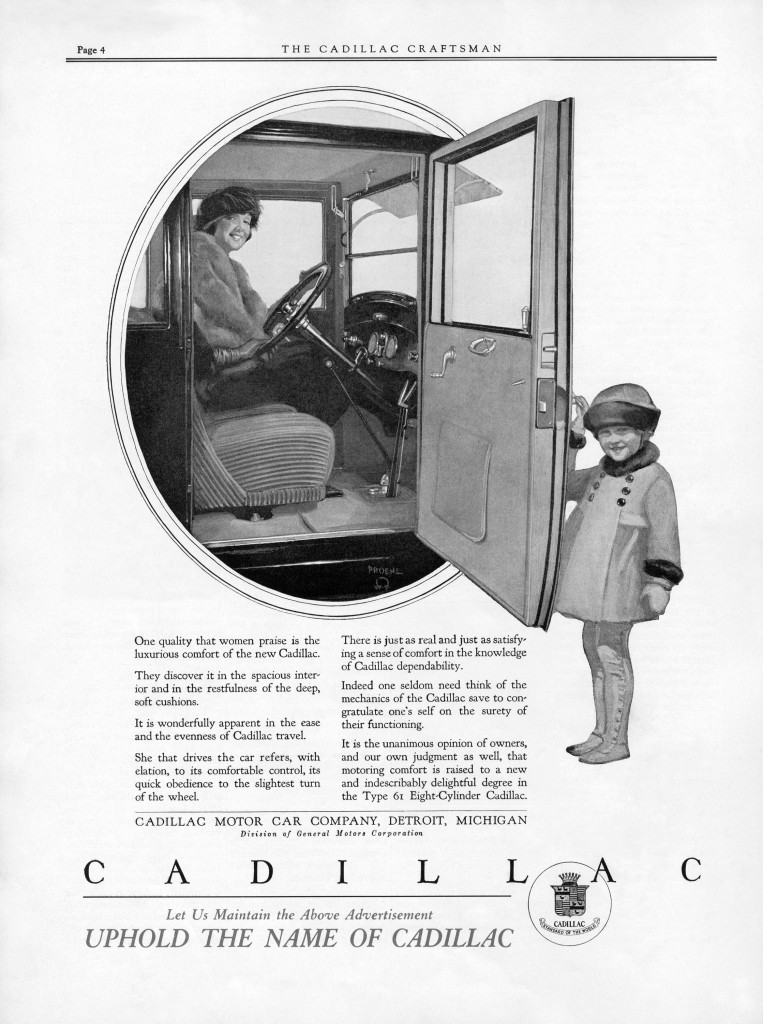
“It was one of the most significant innovations in the history of the automobile,” Wallace said. “It was a complete game changer. Within a few years, Cadillac featured women in their advertising showing them as drivers, instead of passengers or bystanders.”

Before the electric starter, Leland was an expert machinist and precision manufacturer. A few years earlier, he devised component standardization and interchangeable parts. Soon after the electric starter, Cadillac would be the first to introduce the V-8 engine and the synchromesh transmission for easier gear shifting.

Cadillac was also the first car company to offer a fully enclosed car body as standard equipment.

“As a premium brand even in its earliest days, Cadillac positioned itself as a technology and innovation leader as a way to set it apart from the dozens of other auto companies,” Wallace said.

Among the more visible Cadillac innovations beginning in the 1920s were designer bodywork and color lacquer paint. Later, Cadillac would innovate design with sleek, curvaceous body styles and jet-inspired tail fins.

Cadillac introduced the first automatic climate control and heated seats. Twilight Sentinel automatically turned on and off headlamps, and the first tilt-telescoping steering wheel helped drivers feel more comfortable behind the wheel. All were Cadillac firsts.

In more recent years, Cadillac was the platform for many high-tech innovations. It pioneered the air-cushion restraint system 1974 – a precursor to modern air bag systems. In 1996, Cadillac vehicles were the first to include OnStar, the leading on-board security, communication and diagnostic system.

In 1999, Cadillac introduced the first automotive night vision system. Magnetic Ride Control, the world’s fastest-reacting suspension technology, was introduced by Cadillac in 2002. Today Magnetic Ride Control is a crucial element in the performance of Cadillac’s CTS-V and Escalade models, as well as the upcoming XTS and ATS sedans. It’s been adopted by a few other automakers on a handful of elite sports cars.

Cadillac expands significantly in 2012, with new advanced technology elements CUE, a new user experience for in-car connectivity that will be a signature feature of the 2013 XTS and ATS. CUE recently received a Popular Mechanic’s Editors’ Choice Award at the 2012 International Consumer Electronics Show.
Cadillac has been a leading luxury auto brand since 1902. In recent years, Cadillac has engineered a historic renaissance led by artful engineering and advanced technology. More information on Cadillac can be found at media.cadillac.com.

Sensor Fusion Enables Cadillac Safety Advancements

DETROIT – The all-new 2013 Cadillac XTS, the most technologically advanced production car the luxury brand has ever offered, introduces an advanced active safety and driver assistance system, a significant milestone toward the development of self-driving vehicles.

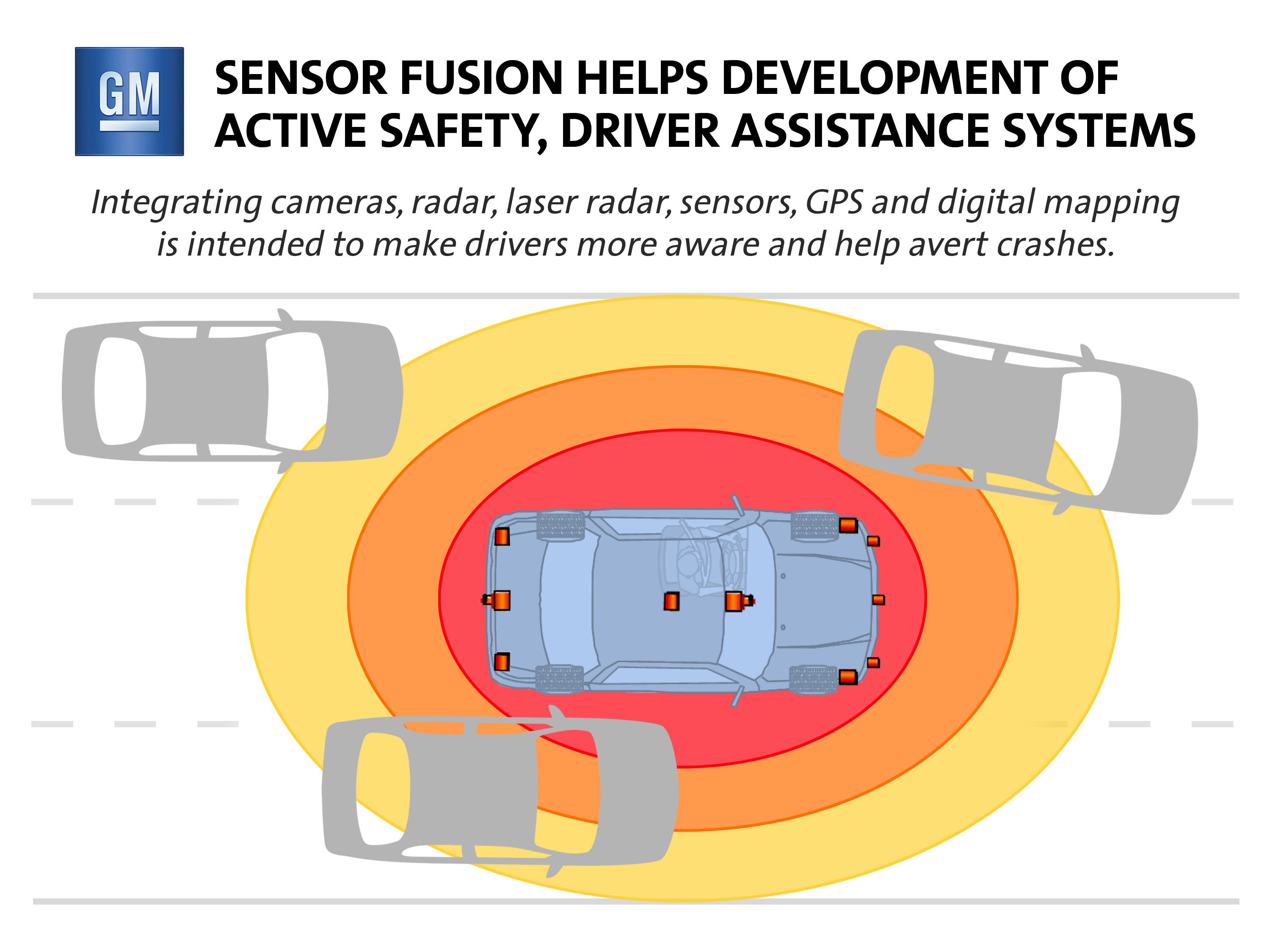
Coming this fall to XTS, the available Driver Assistance Package is the first General Motors system of its kind to use sensor fusion, which enables integration of a broad range of sensing and positioning technologies that can alert drivers of road hazards and help them avoid crashes.

The system’s use of radar, cameras and ultrasonic sensors enables advanced safety features, including:

  • Rear Automatic Braking
  • Full-Speed Range Adaptive Cruise Control
  • Intelligent Brake Assist
  • Forward Collision Alert
  • Safety Alert Seat
  • Automatic Collision Preparation
  • Lane Departure Warning
  • Side Blind Zone Alert
  • Rear Cross Traffic Alert
  • Adaptive Forward Lighting
  • Rear Vision Camera With Dynamic Guidelines
  • Head Up Display

“We believe sensor fusion will enable future active safety systems to handle a greater number of inputs to provide 360 degrees of crash risk detection and enhanced driver assist features,” said Bakhtiar Litkouhi, GM Research and Development lab group manager for perception and vehicle control systems.

“A system that combines the strengths of multiple sensing technologies and expertly manages those inputs can provide advisory, warning, and control interventions to help drivers avoid collisions and save lives,” Litkouhi said.

Sensor fusion also is a building block in the development of semi-autonomous and fully autonomous vehicles, which are designed to maintain lane position and adapt to traffic environments. It is envisioned that more sophisticated self-driving technology, that could enable semi and fully autonomous driving, will be available by the end of the decade.

GM’s leading-edge work on sensor fusion draws on its experience with The Boss, a fully autonomous Chevrolet Tahoe developed by GM, Carnegie Mellon University and other partner companies, and named for  GM R&D founder Charles F. “Boss” Kettering. In 2007, The Boss navigated 60 miles of urban traffic, busy intersections and stop signs in less than six hours to win the Defense Advanced Research Projects Agency (DARPA) Urban Challenge competition.

Sensor fusion development also is bolstered by GM’s work on the EN-V, three semi-autonomous electric concept vehicles unveiled at the 2010 Shanghai World Expo. By combining GPS with vehicle-to-vehicle communications, distance-sensing and object detection technologies, EN-V can be driven both manually and autonomously, the latter allowing it to automatically select the fastest route based on real-time traffic information.

Among the technologies that GM is looking to develop for future active safety systems is LIDAR, a light detecting and ranging technology that can measure the distance to a vehicle or object by illuminating it, often using pulses from a laser. Although LIDAR is no replacement for driver vision, it can become another set of eyes when visibility has deteriorated due to inclement weather or darkness. When combined with radar, cameras and ultrasonic sensors, LIDAR has potential crash avoidance capability.

A more advanced positioning system, using more accurate GPS and digital mapping, also is expected to play an important role on future active safety systems because it helps locate vehicles in relation to one another. While GPS effectiveness can be limited in urban canyon environments where high-rise buildings can interfere with satellite signals, the technology is still considered an asset when “fused” with other sensing and positioning technologies.

“No sensor working alone provides all the needed information. That’s why multiple sensors and positioning technologies need to work together synergistically and seamlessly,” Litkouhi said. “Sensor fusion will help facilitate that.”