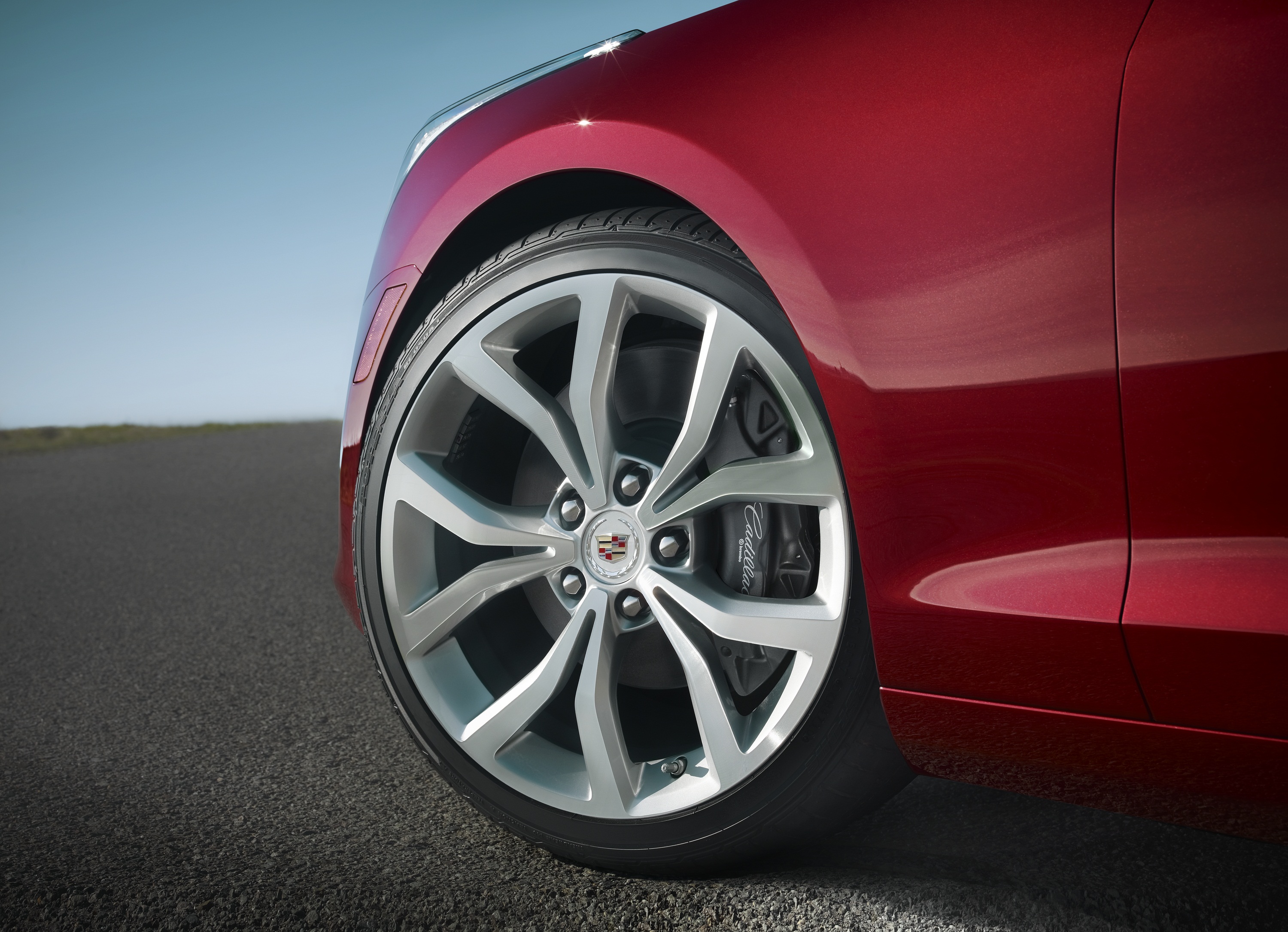
The Cadillac ATS brakes should be great — proven Brembo brakes and light weight make for good braking dynamics. Cadillac issued a nice release featuring the Brembo performance braking system on the upcoming Cadillac ATS. Good, makes sense to keep the chatter going until the ATS gets to the showrooms.
When equipped with Brembo brakes, ATS’s estimated stopping distance from 60-0 mph of 129 feet [sic] is among the best in the class
But the photo caption of the article mentions: “When equipped with Brembo brakes, ATS’s estimated stopping distance from 60-0 mph of 129 feet is among the best in the class,”
It is? No. The Cadillac ATS brakes take 109 feet to stop from 60-0, just like the BMW 335i.
Looks like the press release needs an update; the Cadillac ATS brakes are better than advertised. Go figure.
Brembo brakes are preferred because they are multi-piston caliper brakes. What that means is you can enjoy more even and predictable braking. It also means that the brakes can be more effective — leading to shorter braking distances.
Why do the Cadillac ATS brakes come from Brembo?
Brembo brakes were first used on the Cadillac V-Series, or high performance products. In fact, the Current Cadillac XTS and Cadillac ATS have a lot of V series characteristics — performance suspensions, performance brakes. So although an XTS-V is not planned, the premium model of XTS brings everything a traditional V series would except the power plant.
Now that the Cadillac ATS brakes, bring on that V-power
Cadillac does plan to bring out an ATS-V, perhaps as soon as next year. The ATS-V hopefully will bring the performance power and we’ll have another race car in the V-stable.
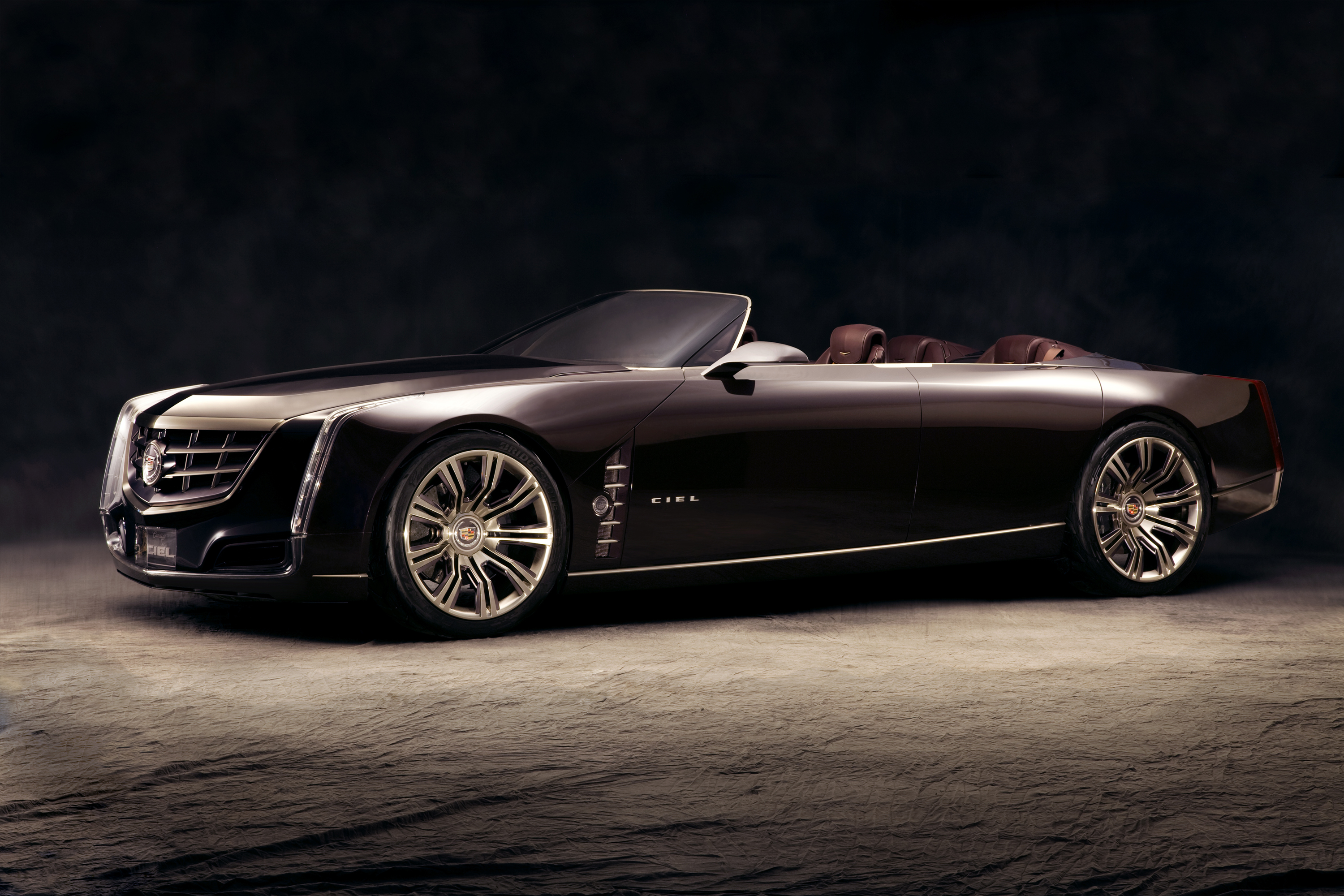
Cadillac Ciel Concept – GM was the first automobile manufacturer to single out automotive design. On June 23, 1927, the Executive Committee of General Motors approved the creation of a new department to Òstudy the question of art and color combinations in General Motors products. What was true 85 years ago is still true today: GM Design is united in its passion for creating vehicles that make an emotional connection with customers. X12SN_SN572 (06/13/2012)
General Motors created the art of automotive design when GM was the first automobile manufacturer to open a specific design studio assigned to make sure products extended beyond simple function. There have been some notable models that were not GM’s finest moments. But there have also been — and will continue to be — models that take your breath away.
“Our global team is united around its passion for designing vehicles that make an emotional connection with customers,” said Ed Welburn, GM vice president, Global Design. “What was true 85 years ago is still true today: A designer’s role is to create a beautifully executed exterior with great proportions to draw you in, and an interior environment that invites you into a relationship that develops and grows.”
Welburn, the sixth design chief in GM’s 104-year history and the first to have global vehicle design leadership responsibilities, will serve as honorary chairman of another visionary group at the 25th annual EyesOn Design Automotive Design Exhibition on Sunday, June 17. Proceeds benefit the Detroit Institute of Ophthalmology’s efforts to find scientific breakthroughs to help those with severe vision loss.
Under Welburn’s strategic eye, each of GM’s eight global passenger car brands is distinctive in form and vocabulary from one another as well as from other brands in the marketplace. Cadillac and Buick have each undergone a design renaissance, and Chevrolet has become a global brand with a globally recognized design language. Vehicle introductions that have helped propel GM’s resurgence include the Chevrolet Camarosports car, Malibumidsize sedan and Cruzecompact car; the Cadillac CTS Coupe, GMC Terrain, and the Buick Enclave and LaCrosse.
The award-winning Chevrolet Voltelectric vehicle with extended range went from concept to production in just three years. Volt won North American Car of the Year honors and, along with its European sibling, the Opel Ampera, the European Car of the Year award as well. GM’s other award-winning global brands include Holden in Australia and Wuling and Baojun in China.
Welburn and his global design team say their best work lies ahead. Tomorrow’s classic cars, he said, are on the sketchpads and computers of today’s designers. GM Design is at the forefront of an ongoing global product renaissance that will see 70 percent of the vehicle portfolio replaced within the next three years.
“Our global structure allows us to design more new vehicles and to dedicate more people using the latest technology and tools to bring them to market,” said Welburn. “The diversity of thought, experience, culture and perspective we foster here is unrivaled, and it fuels our creative process. Though we have multiple design centers, our mission is clear: Every new product we develop has to be a home run; each one has to be a great vehicle.”
GM was the first automobile manufacturer to single out automotive design. On June 23, 1927, the Executive Committee of General Motors approved the creation of a new department to “study the question of art and color combinations in General Motors products” and hired Harley Earl, a custom coach builder from Hollywood and the creator of the 1927 LaSalle, as its leader.
Earl’s entry into the auto industry doomed rival Henry Ford’s “the customer can have it any color he wants as long as it is black” motto. Among Earl’s numerous accomplishments are the development of concept cars; the yearly model changeover; the vehicle tailfins of the 1950s; the traveling Motorama auto shows and the development of the iconic Corvette. Earl also is credited with hiring the industry’s first female automotive designers.
Earl also was responsible for identifying architect Eero Saarinen to design the GM Technical Center campus, which is on the National Register of Historic Places and recognized around the world for its mid-century architecture.
GM Design vice presidents following Earl were William Mitchell (1958-1977), Irving Rybicki (1977-1986), Charles Jordan (1986-1992), Wayne Cherry (1992-2003) and Welburn (2003-present).
With a number of very important vehicle introductions in upcoming months (and a rapid pace of change to follow after) this seems a good time to get more organized in sales and service leadership. Today Mark Reuss made some line-up changes that look promising to add more depth to the leadership team and keep the right focus on Cadillac Sales and Service going forward. Chase Hawkins had been serving as the Northeast Region Director for Cadillac, and is now promoted to VP Cadillac Sales and Service. Lots to do with the ATS and XTS on the way and big opportunities for Cadillac in line leadership.
Chase has been in the automotive industry since 1990, with GM since 1996, and a GM Executive since 2007. He has lived around the world on various assignments for GM, including South Africa, Switzerland, Mexico, and the UAE.
DETROIT – In preparation for numerous product launches in the coming months, General Motors North America President Mark Reuss today announced the following changes for U.S. sales executives:
Alan Batey, 49, is appointed to the newly created position of GM vice president, U.S. Sales and Service. He will report to Reuss.
Don Johnson, 55, currently U.S. vice president, Sales Operations is named U.S. vice president, Chevrolet Sales and Service, replacing Batey.
Kurt McNeil, 48, replaces Johnson as U.S. vice president, Sales Operations. He had been U.S. vice president, Cadillac Sales and Service, since 2010.
Chase Hawkins, 43, regional director, Cadillac Sales and Service Northeast Region is promoted to the position of U.S. vice president, Cadillac Sales and Service replacing McNeil.
Ed Peper, 50, currently general manager, Fleet and Commercial Operations, is named U.S. vice president, Fleet and Commercial Sales.
Johnson, McNeil, Hawkins and Peper will all report to Batey, as will Brian Sweeney, who remains U.S. vice president, Buick and GMC Sales and Service. The moves are effective June 1.
Chase Hawkins U.S. vice president, Cadillac Sales and Service
“GM is playing offense with an aggressive rollout of new cars, trucks and crossovers,” Reuss said. “Strengthening our U.S. sales team will help take full advantage of these growth opportunities and continue delivering solid improvements in customer satisfaction, dealer profitability and resale value.”
By the end of 2012, GM will have all-new or freshened cars and crossovers in segments that represent 60 percent of the U.S. light vehicle market, and all four of GM’s brands in the United States are poised for growth. By the end of 2013, 70 percent of GM’s North American portfolio will be new or freshened vehicles compared with 2011.
Chevrolet will have transformed its passenger car, crossover and truck line up with new vehicles like the Sonic, Spark and Impala. Buick, with the Verano and Encore, and Cadillac with the XTS and ATS, are entering segments where they don’t compete today. And GMC will have one of the newest vehicle portfolios in the industry.
Batey began his career with General Motors in 1979 as a mechanical engineering apprentice for Vauxhall in the United Kingdom. He has held senior management positions in the U.K., Korea, Germany, The Netherlands, Switzerland, Australia and the United Arab Emirates. Prior to joining Chevrolet in 2010, Batey served as Chairman and Managing Director, GM Holden Ltd. Operations in Australia and New Zealand.
“As aggressively as we’re investing in new products, our dealers are likewise investing heavily in remodeled and new facilities,” said Batey. “We’re confident that this combination will make our customers’ dealership experience the best in the industry.”