Repeating Cadillac STS-V Intercooler HX Tests

I went back to rerun the test on the new Intercooler Heat Exchanger (Flexalite 45321) for confirmation of the original test, Initial IAT2 times with New HX – woops

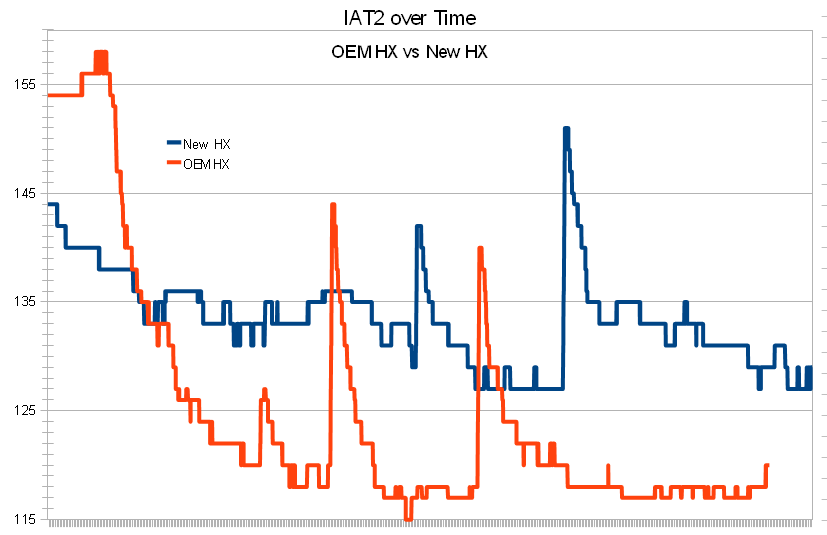
Here was the test data from that test, suggesting the new HX is not as effective as the original:
My method plan was to rerun the test this weekend after the car has had a week to work the air out of the intercooler loop.

Current configuration:  Flexalite 45321 heat exchanger in the place of the OEM radiator type heat exchanger, no other heat exchanger in the circuit, no inline tank added.

What I found today was that the intercooler IAT2 temp never got below 131F, which is worse than the baseline above.  Unfortunately, test1 today I fumbled the mouse at the end of the test and lost all the test data by accidentally closing VCM Scanner (doh).  The STS-V was heat soaked before the test, starting at 156F for the IAT2, and was able to cool down to 131F and was still dropping slightly on highway runs.  But it was not getting to a steady state of under 120F as the OEM did.

I also got the impression there is some interplay between A/C on or off and intercooler IAT2 temps although I am not clear why.  My intuition is that A/C on would run the radiator fans and improve air flow and so lower IAT2, but on the ‘back’ of the loop where I normally do acceleration runs, I noted that when I turned off the A/C the IAT2s fell 5F quickly.

Now I’m not worried about performance runs for the STS-V when heat-soaked, but this does give us a way to test the efficiency of the intercooler cooling system, since it is presented with the greatest heat load.

After a break I’ll get back on to test2 and try to bring back a data stream this time!  Stay tuned.

UPDATE

Okay, refueled and reran the test loop.  I have added the retest new HX data to the previous data table.  I have also added in some data lines from Jaimie’s STS-V.  Jaime has an 07 STS-V with the 45321 HX in place of the OEM, a Frozen Boost front-mounted heat exchanger, and he has an aftermarket intercooler pump instead of the OEM pump.
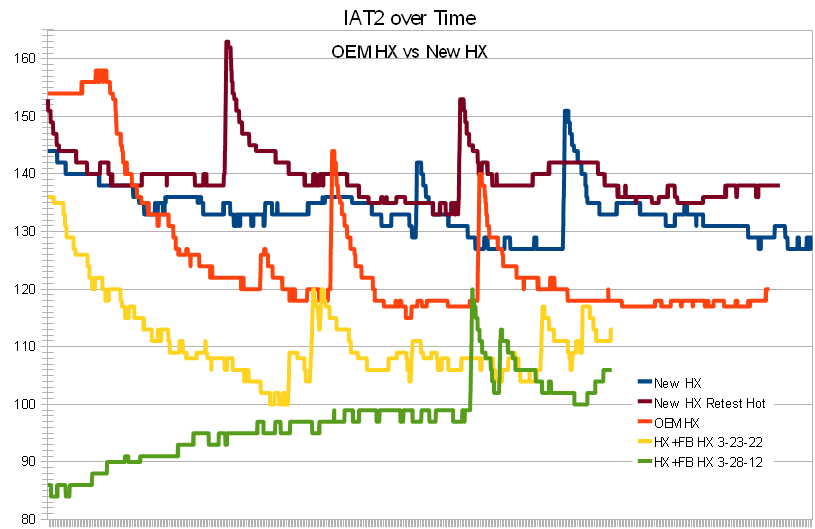
Retest of New HX appears to confirm previous test

My conclusion is that my config is still running hotter than I want.  My plan is to return to the OEM intercooler heat exchanger, and add a new ZZP S3 front mounted heat exchanger under the bumper in series with the OEM hx.  So, another install weekend then hopefully more data.

Also, I found on the retest that the area I was in led to a decrease in the IAT2, not turning the A/C off.  The issue is that there is a zone of cooler air at the top of my test loop due to getting off the highway and I saw a drop in IAT2s in that area with the A/C left on during the retest.
 

Cadillac STS-V RX Performance Products Intercooler Tank Project

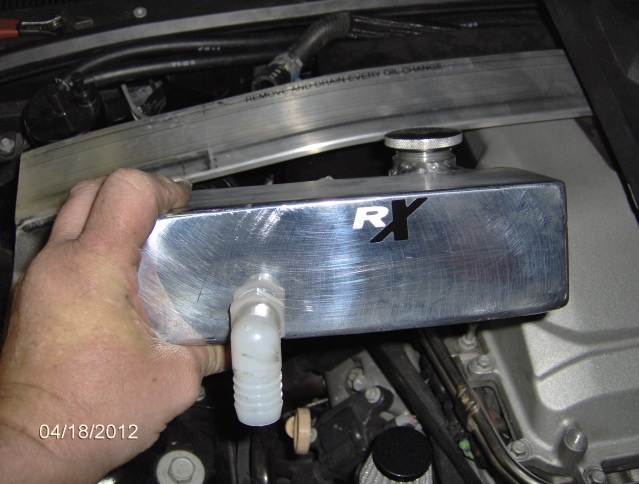
I have been exchanging fitment photos and details with RX Performance Products in Florida regarding a variant of their new Cadillac CTS-V intercooler expansion tank for the Cadillac STS-V.

Cadillac CTS-V supercharger expansion tank from RX Performance Products Image by RX Performance Products

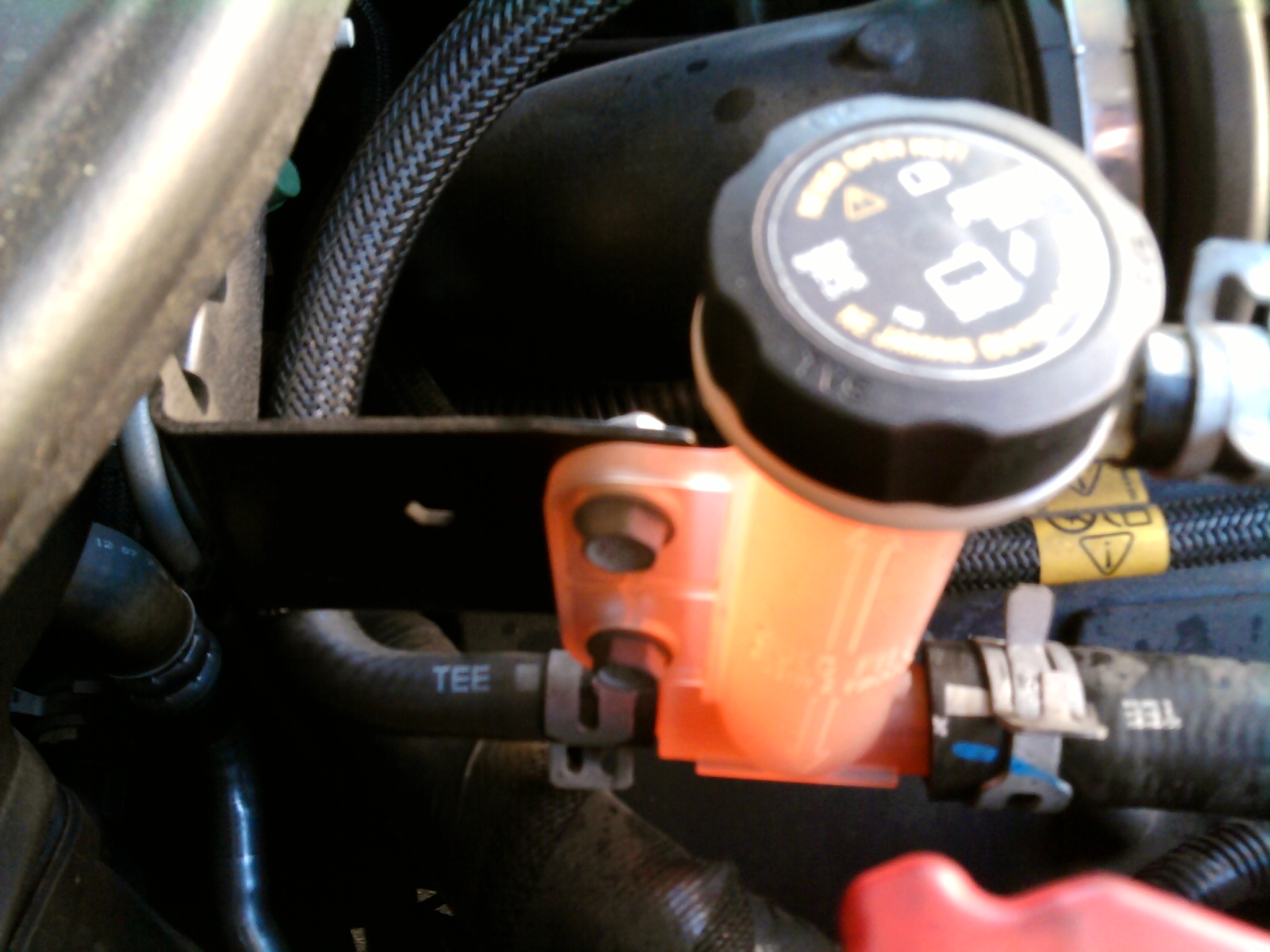
On the Cadillac CTS-V and the Cadillac STS-V there is an air escape (bleed) from the intercooler coolant system at a Tee-fitting, and this is where coolant may be added to the system when needed.  The idea RX Performance Products has had is to replace the T-fitting with a small tank and fittings.  This part of the intercooler coolant flow is on a ‘side-track’ to the main coolant loop.  If the intercooler coolant pump can’t pull fluid from its normal intake, for example when there is air in the system, it can pull coolant down this side-track and the air can escape up the side-track.

STS-V T-fitting fill tube

When one does need to add coolant to the system, the T-fitting tube will only accept a tube full, or under a pint of fluid.  Once the intercooler pump pulls that into the system you can add a bit more, rinse, repeat.  Each time even with a funnel there is some spillage during the add process.

With the small tank — the CTS-V tank is 1 quart– it will be easier to add fluid, and “overfill” the system a bit so that as the system does bleed air there is plenty of coolant to replace it.

The CTS-V T fitting is slightly different from the STS-V T-fitting; the CTS-V one has the same size in and out flow fittings, while the STS-V has a larger in than out.

I have emailed images along to RX Performance Products of my STS-V engine bay with various measures in order to help them to fab a tank for the STS-V.   In this photo I cut a granola box to 4″ x 4″ x 10.5″ to try to model what size tank might fit under the strut brace on the STS-V where the T-fitting is.

RX Performance Products
2200 US Hwy 301N
Ste 6
Palmetto, FL 34221

Based on the pictures and measurements we are hoping to size a tank for the STS-V similar to the CTS-V tank.  Stay Tuned.

Cadillac STS-V Intercooler cooling – gathering more parts

Tim C keeps working on his STS-V — he has done a turbo kit then returned it to stock at this point.  His product offerings include a front mounted heat exchanger, an upper supercharger pulley service, and a new product on the way, a cold air intake.  He has a new website coming for sales and info; stay tuned.

As the next experiment in my intercooler cooling quest I have decided to try the ZZP S3 front mounted heat exchanger.

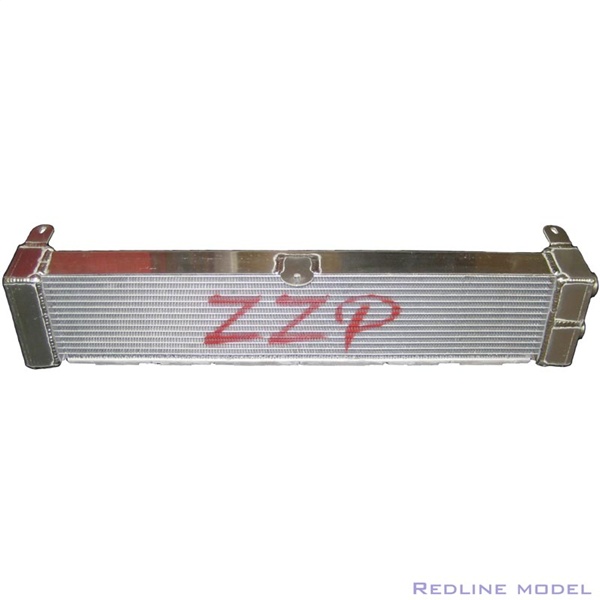
ZZP S3 Intercooler Front-Mounted Heat Exchanger

Here is the ZZP info on this part:

Intercooler heat exchanger (radiator) for your liquid to air intercooler system. This HE is the largest most well thought out radiator we’ve produced to date. With a 1.8 liter fluid capacity, it holds more liquid than any HE in the Redline/Cobalt market and with 4000 sqare inches of fin area it cools better than anything currently available!

  • All aluminum construction
  • Drill 4 holes into existing bumper support
  • Overall measurements of 32.5×6.5×2.25
  • Core measurements of 28×6.5×2.25
  • 2 row, dual pass
  • Maximum cooling, minimum weight, fully tig welded and pressure tested
  • 2 stainless bolts and nuts
  • Includes 2 fittings and 4 hose clamps
  • 49″ of 3/4″ hose
  • 6.4 pounds

Here is a link to a tech article ZZP did on the S3 comparing to OEM and a competitor.  Their conclusion was that almost any 2nd HX works about the same, but it is a nice write-up nonetheless.

A different popular choice would be the Frozen Boost 101, but I really like the ZZP info and research, and I like that Tim is doing so much experimentation on what works for these cars, so I would like to test out the S3 on my STS-V.

I’ll have to decide whether to put the OEM HX back in and then use the S3, or stay with the 45321 and S3.  Best would be to test each set, but I am not sure I am up for those installs; we’ll see.

My current tests suggested the system is at a higher equilibrium temperature with the 45321 than it was with the OEM HX.  This week I am continuing to monitor the fluid level and then hope to retest after it has burped air for the week.