
Quest for Intercooler heat exchanger air flow

I’ve been thinking about how to make my intercooler heat exchanger more effective before I add more parts.

The intercooler heat exchanger on the 2008 Cadillac STS-V is a small radiator in front of a line of other coolers and the main radiator – item 29 below.
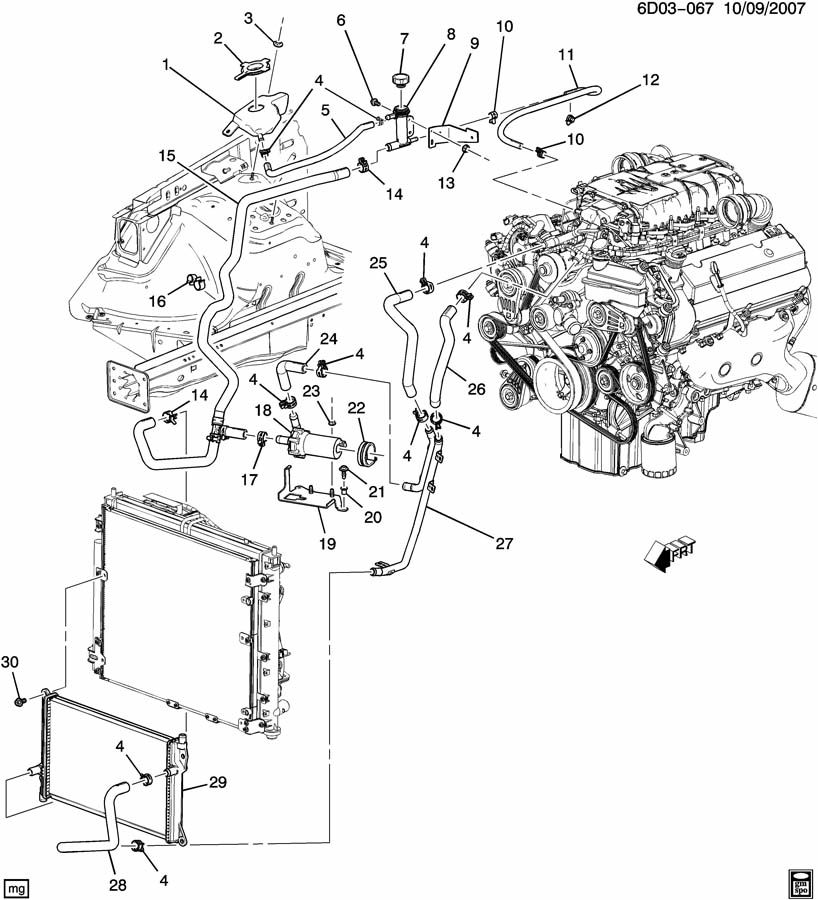
STS-V LC3 Intercooler Flow path & Parts

Air flow paths are key to the performance of any radiator type cooling system. In this case the heat exchanger is facing cool air.

I intended to study the ducting to see what minor improvements could be made — such as sealing air flow to the bottom of the heat exchanger.  However, I was surprised to find that although Cadillac engineered exactly for this item, the plan for my STS-V is not working at the moment.
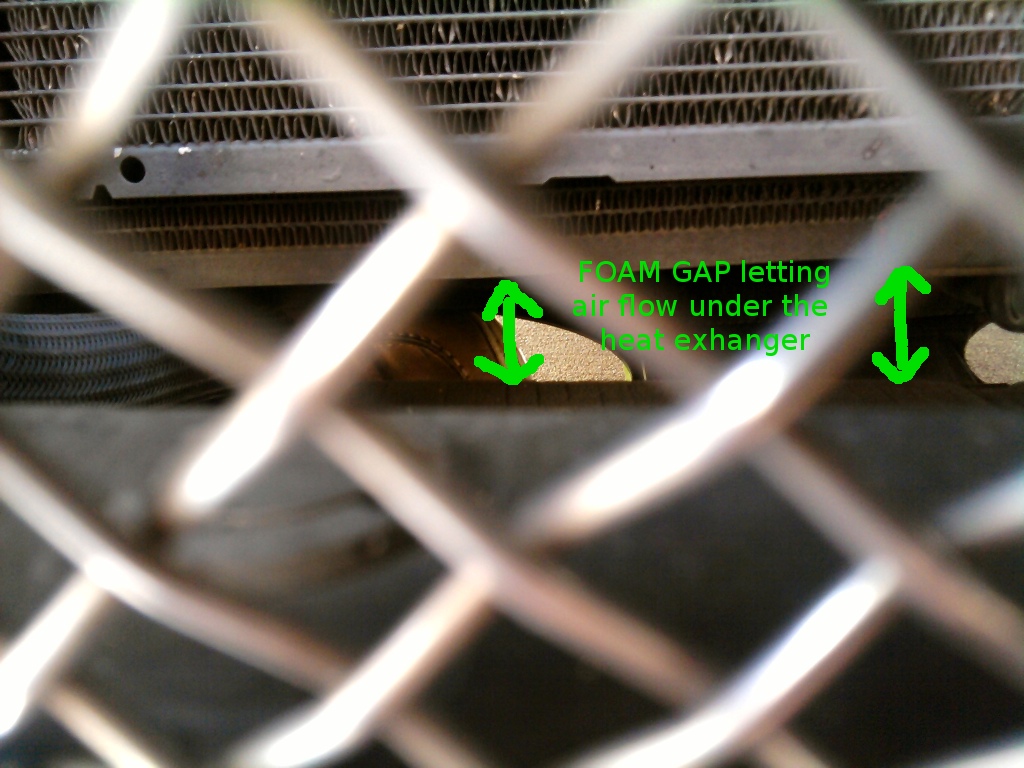
The way it is supposed to work is that there is a plastic belly pan below the nose of the car, running below the intercooler heat exchanger.  On top of the plastic belly pan is a long rectangular piece of foam that will nicely seal the air flow under the heat exchanger but still allow the water hoses to and from it to pass through.  However, on my STS-V the belly pan is sagging in the middle, and the foam is no longer sealing the lower part of the heat exchanger but rather allowing 2-3 inches of gap for air to flow through.  Since air will always take the path of least resistance, every bit that can is sliding under the car and away instead of cooling my intercooler.
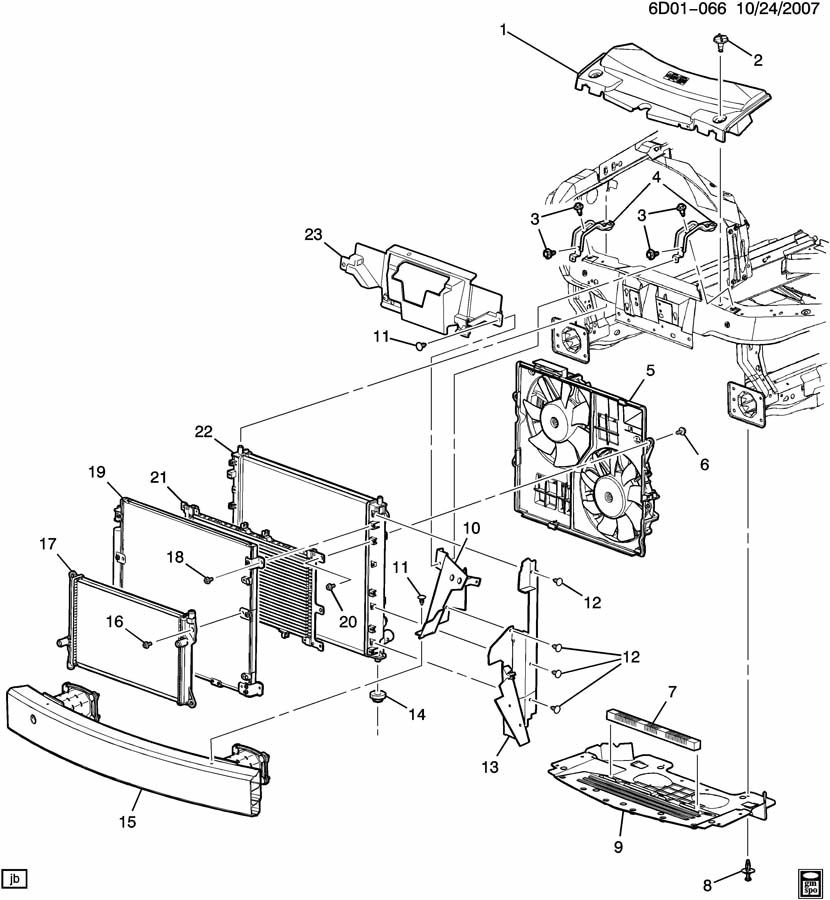
Cadillac STS-V radiator air deflector

My belly pan (item 9) is missing any fasteners #8, which appear to be 14093088 although not shown in this diagram  — so that item 7, the foam bar, fills the gap there.

25802477 DEFLECTOR. Radiator Air
DEFLECTOR,FRT AIR. Required: 01For: DX (2006-2009) (2008 – 2009).

15248340 SEAL. Radiator Support Mounting
SEAL,RAD AIR LWR. Required: 01For: D29 (2005-2011) (2008 – 2009).

14093088 RETAINER; RETAINER FRONT. RETAINER. Front Fender Inner Wheel House. Air Cleaner Intake. Bumper/Fascia. Bumper/Fascia Energy Absorber. Capsule/Headlamp Washer/Wiper. Chassis/Engine Wiring Harness. Cowl Top Vent Louver. Engine Coolant Recovery. Folding Top Compartment. Front and Rear Bumper/Fascia Face. Front Compartment Pan. RETAINER FRT. Grooved. License Plate. Main Wiring Junction and Fuse Block. Mobile Telephone Radio. Radiator Air. Radiator Baffle and Shroud. Radiator Fan Shroud. Radiator Grille and Front End Panel. Rocker Panel Molding. Roof Headlining.

So tomorrow I will check with Pep Boys and Crest and see if I can get 2 retainers and put my intercooler heat exchanger back in the air flow.
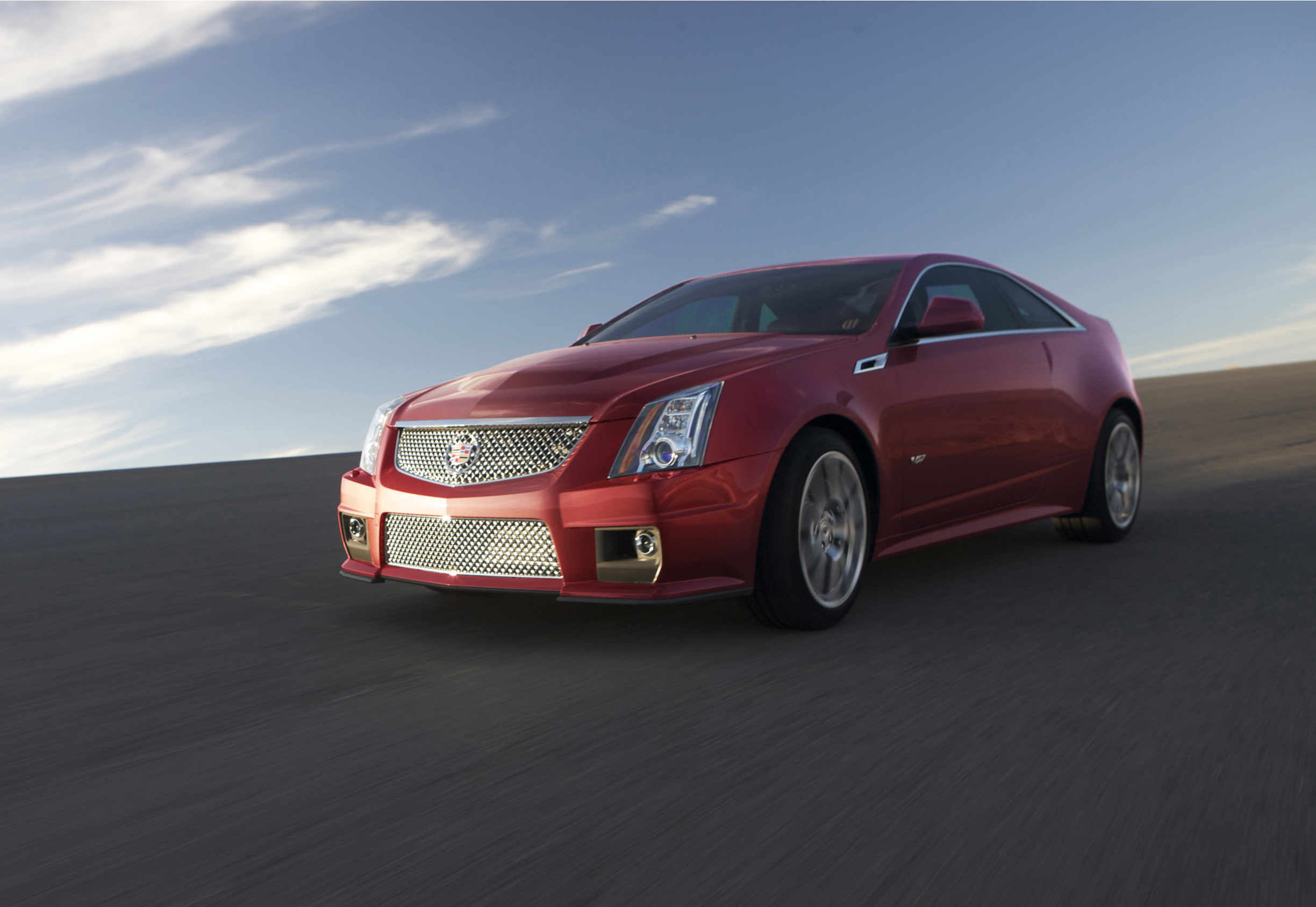
Cadillac CTS-V Wins About.com Best Performance Car Award 2012

NEW YORK — The Cadillac CTS-V is the winner of About.com’s 2012 Readers’ Choice Award for Best Performance Car.

Now in its fifth year, the About.com Readers’ Choice Awards honor the best products, features and services across more than a dozen categories, ranging from technology to hobbies to parenting and more, as selected by its readers.

“This year’s Readers’ Choice Awards program had a record number of nominations submitted across dozens of categories and featured hundreds of finalists,” said Margot Weiss, managing editor, About.com. “We are thankful to all our readers for their participation and congratulate Cadillac on their success.”

Cadillac CTS-V was selected by About.com readers over other finalists including the Ford Mustang Boss 302, Chevrolet Corvette, BMW M3 and Lotus Evora.

The family of CTS V-Series performance models includes a sedan, coupe and wagon – all powered by a supercharged 6.2L V-8 that delivers 556 horsepower (415 kW) and is backed by either a six-speed manual transmission or a six-speed automatic. A collection of technical and performance elements complement the powertrain, including Magnetic Ride Control, Brembo brakes and Michelin Pilot Sport PS2 performance tires mounted on 19-inch forged aluminum wheels.

“It’s no surprise to me that readers chose the CTS-V — its blend of outlandish power, precise handling, and breathtaking styling, especially in coupe form, make it one of the best performance cars in General Motors history,” said Aaron Gold, Guide to Cars, About.com.

Minor adjustments and temperature trends Cadillac STS-V

Making more room for fast revving at gear changes:

  • Raised Cutoff by 200 rpm: Engine Fuel Cutoff DFCO Cutoff vs RPM
  • Raised cam disable by 300 rpm: Engine Airflow Variable Camshaft Hi RPM Disable
  • Lowered Transmission torque management by 50% at WOT — Transmission Torque Management — Adder Modifier -0.50 at RPM 4500

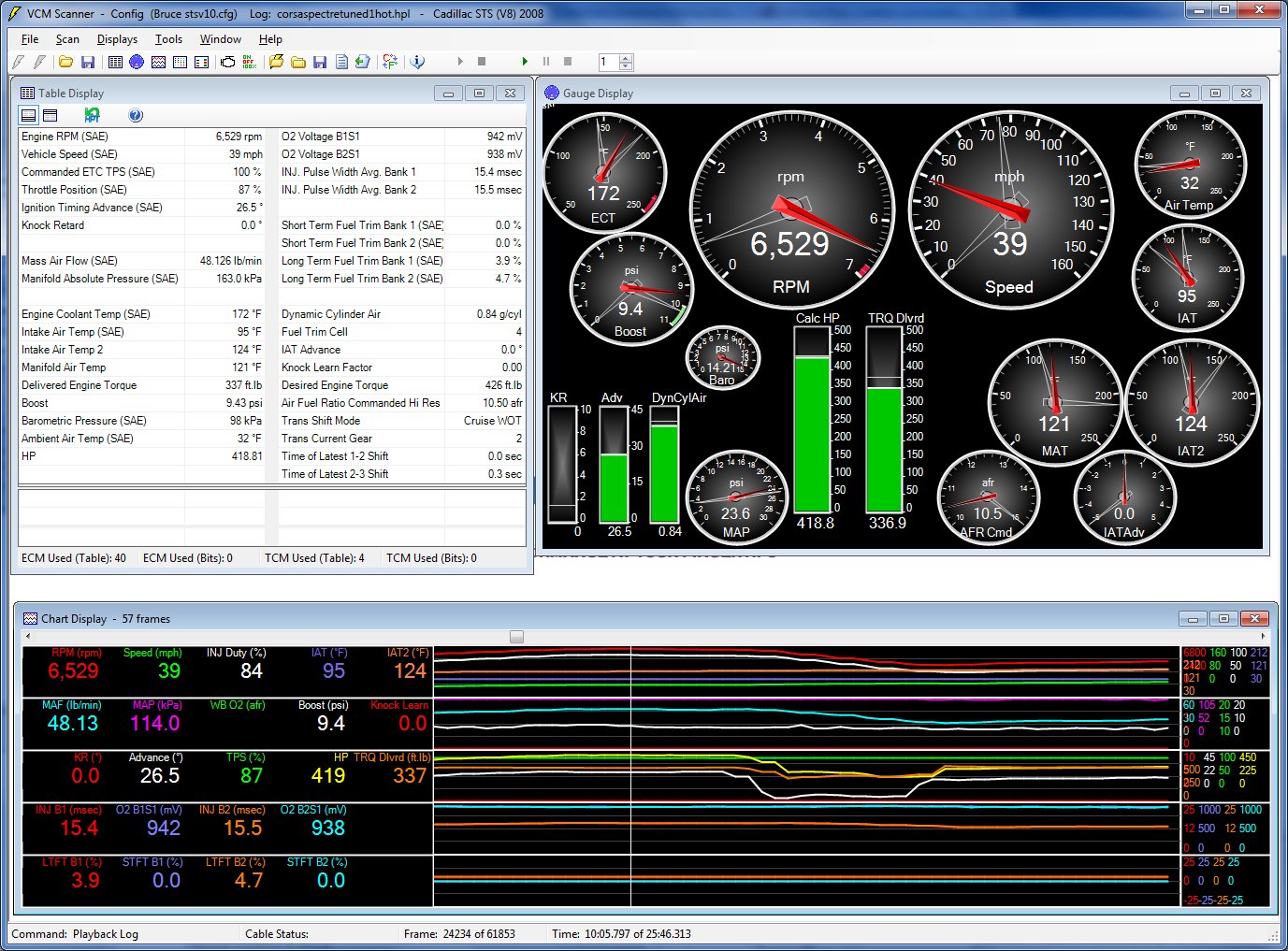
1-2 Shift max rpm 6529 (target 30 mph / 6500 rpm)

Resulting shift 1-2 took 0.3sec then 0.4s on 2nd test. Need to retest cold due to the engine making more power cold.

Temperature trends hot / heatsoaked versus cold:

Corsa Cold Baseline Mar 25 2012 2nd Run


Down Delta MPH (Temps in Deg Fahrenheit)
Item 0 30 45 60 Across Run Heat Add
Ambient 55 55 55 55 0
6 IAT1 61 63 63 63 2 8
32 IAT2 93 93 100 106 13 43
0 MAT 93 93 107 129 36 23
Corsa Hot Run 1 3/26


Down Delta MPH (Temps in Deg Fahrenheit)
Item 0 30 45 60 Across Run Heat Add
Ambient 82 82 82 82 0
8 IAT1 90 95 95 93 3 11
30 IAT2 120 120 127 135 15 42
1 MAT 121 120 126 159 38 24
Corsa Hot Run 2 3/26


Down Delta MPH (Temps in Deg Fahrenheit)
Item 0 30 45 60 Across Run Heat Add
Ambient 82 82 82 82 0
9 IAT1 91 93 91 90 -1 8
27 IAT2 118 118 126 131 13 41
1 MAT 119 118 125 152 33 21

Interesting consistency that IAT2 uniformly starts ~30F and ends ~40F hotter than IAT1 regardless of ambient.  This suggests a way to check effectiveness of changes to the intercooler cooling system.  Other runs show a end range of 40-47F.