Cadillac STS-V Intercooler Heat Exchanger install

As I  planned, today I replaced the heat exchanger for the intercooler on my 2008 Cadillac STS-V.  The stock or OEM heat exchanger is a radiator type single pass (one row) heat exchanger.  Each drop of water goes past the cool air 1 time.
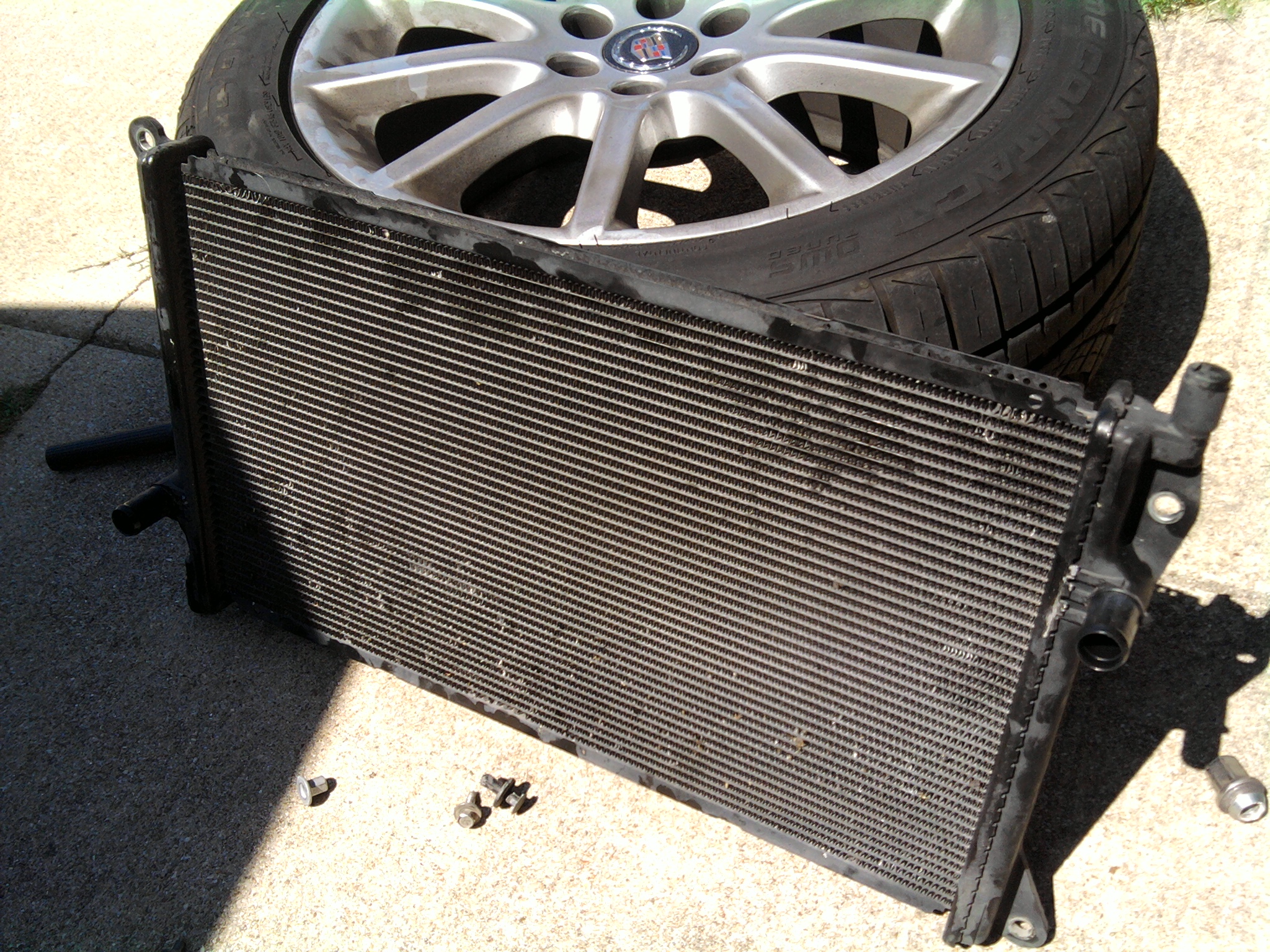
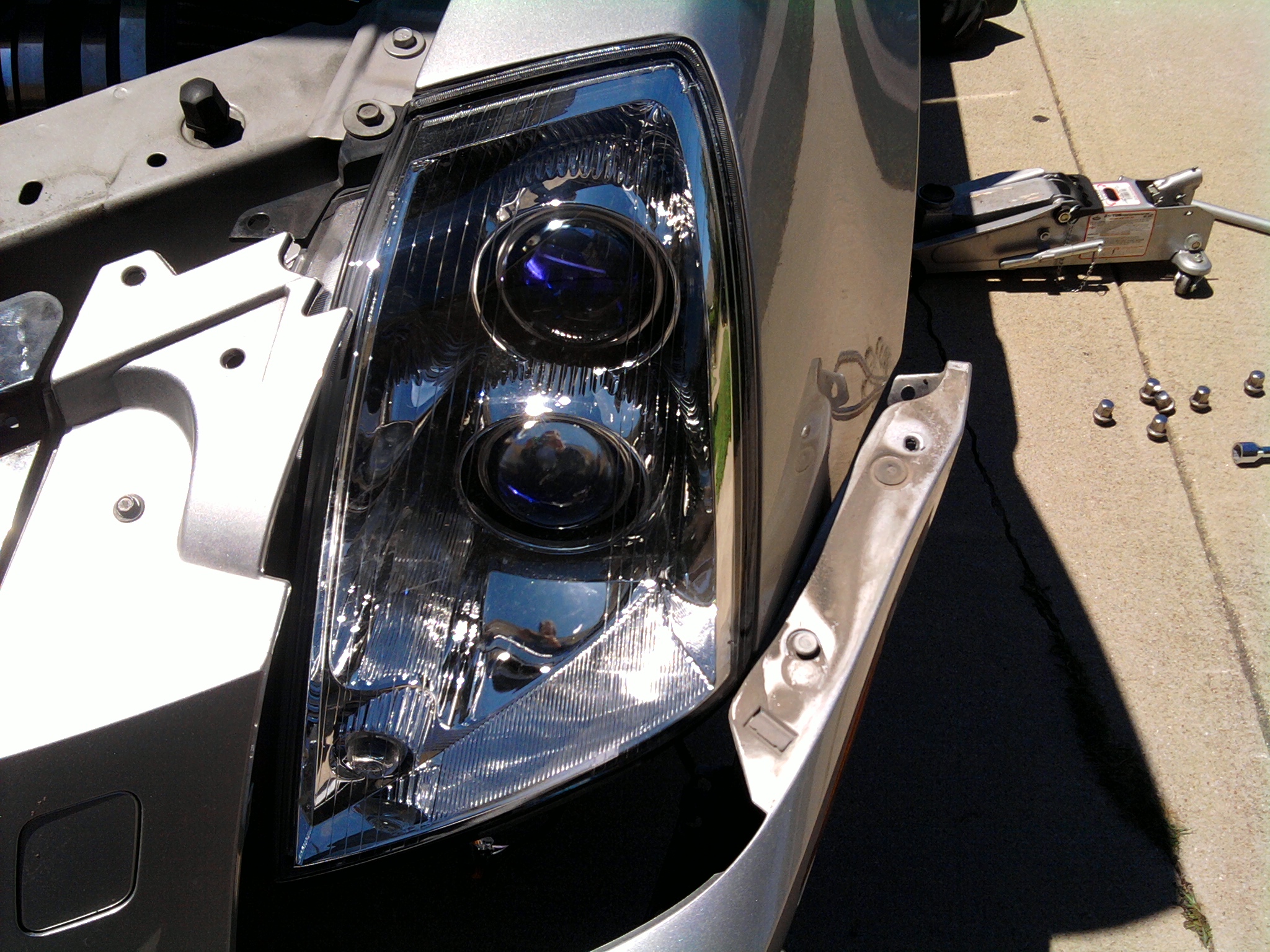
Here is a shot of the front end of the STS-V removed and the stock Heat exchanger in place:
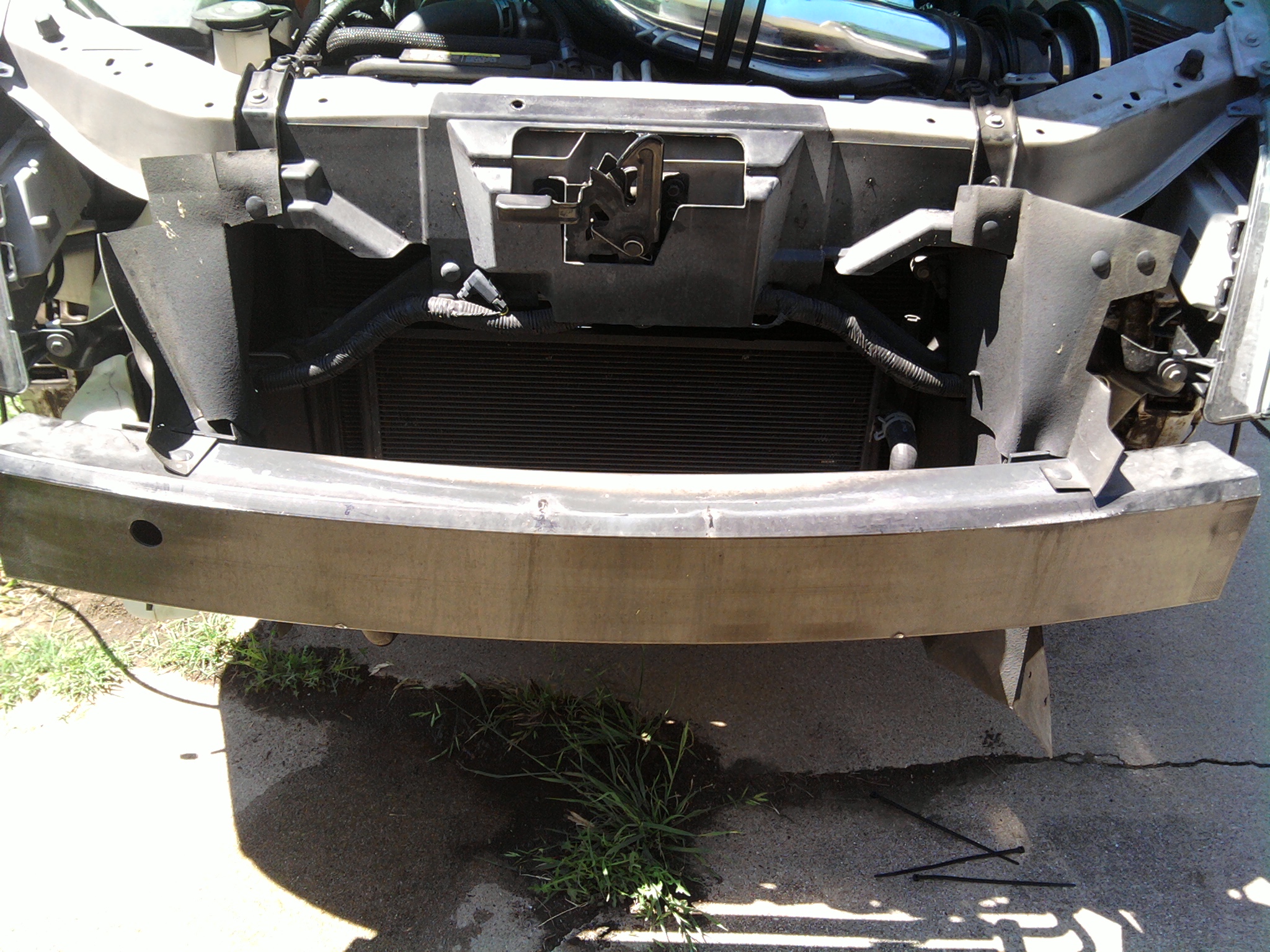
My replacement choice was a Flexalite 45321 oil cooler used here as a intercooler heat exchanger.  It is a tube and fin type heat exchanger, and has 6-passes but one flow tab instead of the multiple rows in the radiator type OEM unit. I ordered this one from Amazon for $120.  Here is a view installed:

Although I considered running the two units in series, after studying fitment I decided it was best to simply replace the stock unit with the Flexalite.

The only tricky area of the install was that the Cadillac needs to have the front end in the air and both front wheels off to reach every plastic rivet to get the various mud shields and air deflectors off to get in to do the work.  That and a portion of the bodywork on each side actually slides a tab in a slot then can be removed from the car.
The flexalite comes with a bag of mounting parts, but none were very useful.  I picked up some brackets with holes at the hardware store and was able to use those to get the new heat exchanger installed where I wanted it.  Although I was able to re-use the hose leading from the heat exchanger, the hose for the flow to the heat exchanger was not long enough and had to be replaced with heater hose.  The hose was 1″ outer diameter and 3/4″ inner diameter.  I also purchased 1/2 NPT to 3/4″ hose barb fitting to adapt the heat exchanger for hose fittings.

The instructions suggest running the engine for 10 minutes to check for leaks.  My intercooler pump is set using HP Tuners to run when the car is on battery power, so I was able to keep it running and let it slowly push the air out of the system, which allowed me to add more 50/50 dexcool as the system burped itself.  No leaks were observed.
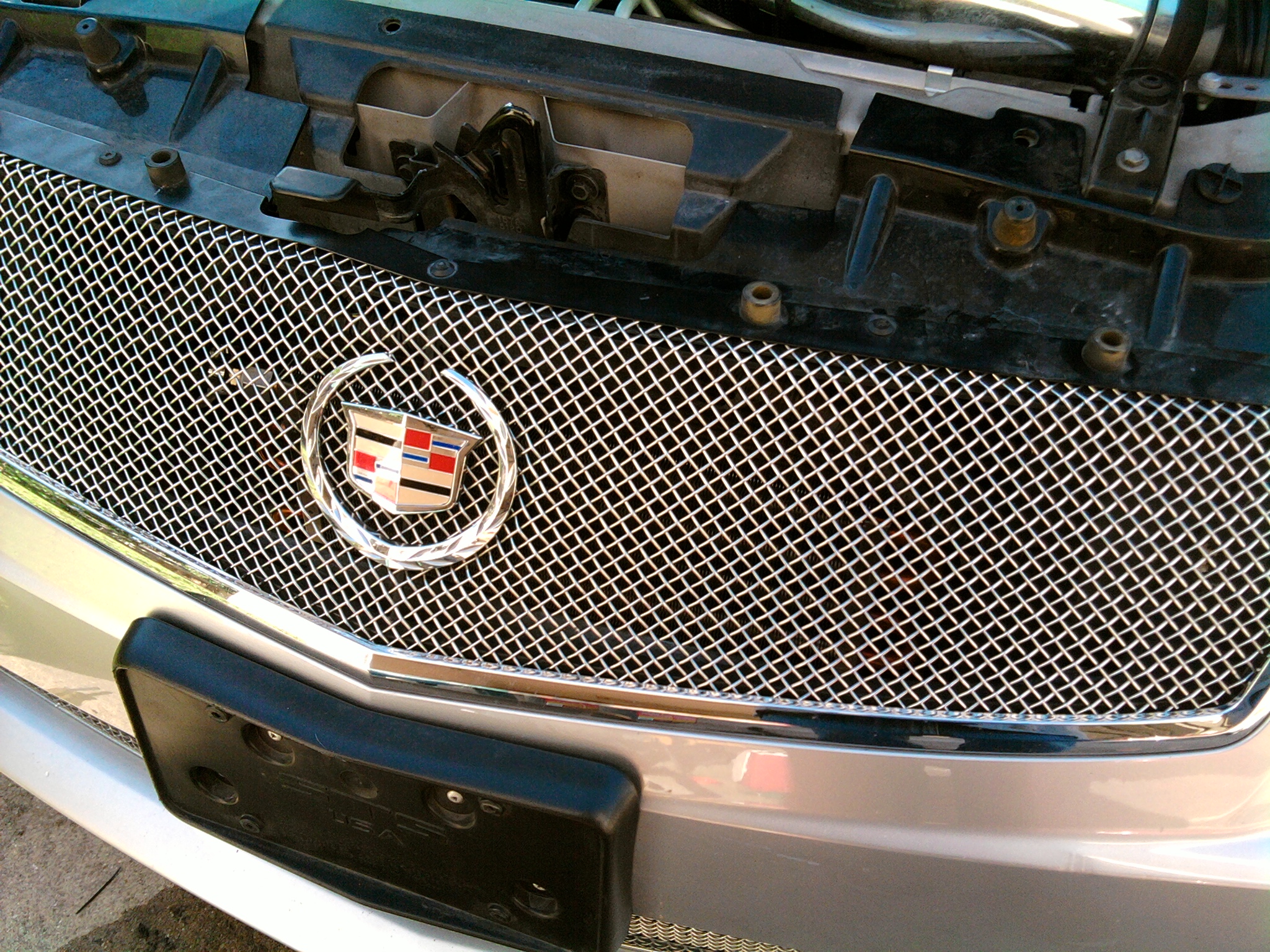
Once everything is buttoned back up the new HX is invisible

Unfortunately I did not have time to do any tests today, so we’ll have to wait to see how the unit performs.

Project list:

  • Flexalite 45321 heat exchanger
  • 1/2 NPT to 3/4 inner diameter hose barb (2)
  • Heater hose (5 ft although ~3 were used), two hose clamps
  • bracket material, various miscellaneous screws and bolts to use to attach brackets depending on design
  • Dexcool — if you catch the dexcool in the system when drained, you can perhaps re-use.  I purchased multiple gallons premix 50/50 dexcool/water but only used part of one to refill so far.
  • teflon tape to seal the fittings to the heat exchanger
  • Tools:  floor jack, jack stands (both wheels need to be in the air and off), screw driver, ratchet set, hose cutter

Overall not a difficult job comparatively, although it took me way too long to do because I had not taken off the front end before, so lots of figuring things out as I went, and I tried to avoid taking off the front wheels.  You probably can, but need to run the car (for power steering) and turn the wheels to get them out of the way on this side, then that side, to get all the plastic rivets out of the wheel wells.  Once I gave up and put the car up I made a lot more progress.

I still have the bottom air deflector to sort out tomorrow, and then hopefully we’ll get some IAT2 test and trend info with this setup.
Final Cadillac ATS power figures?

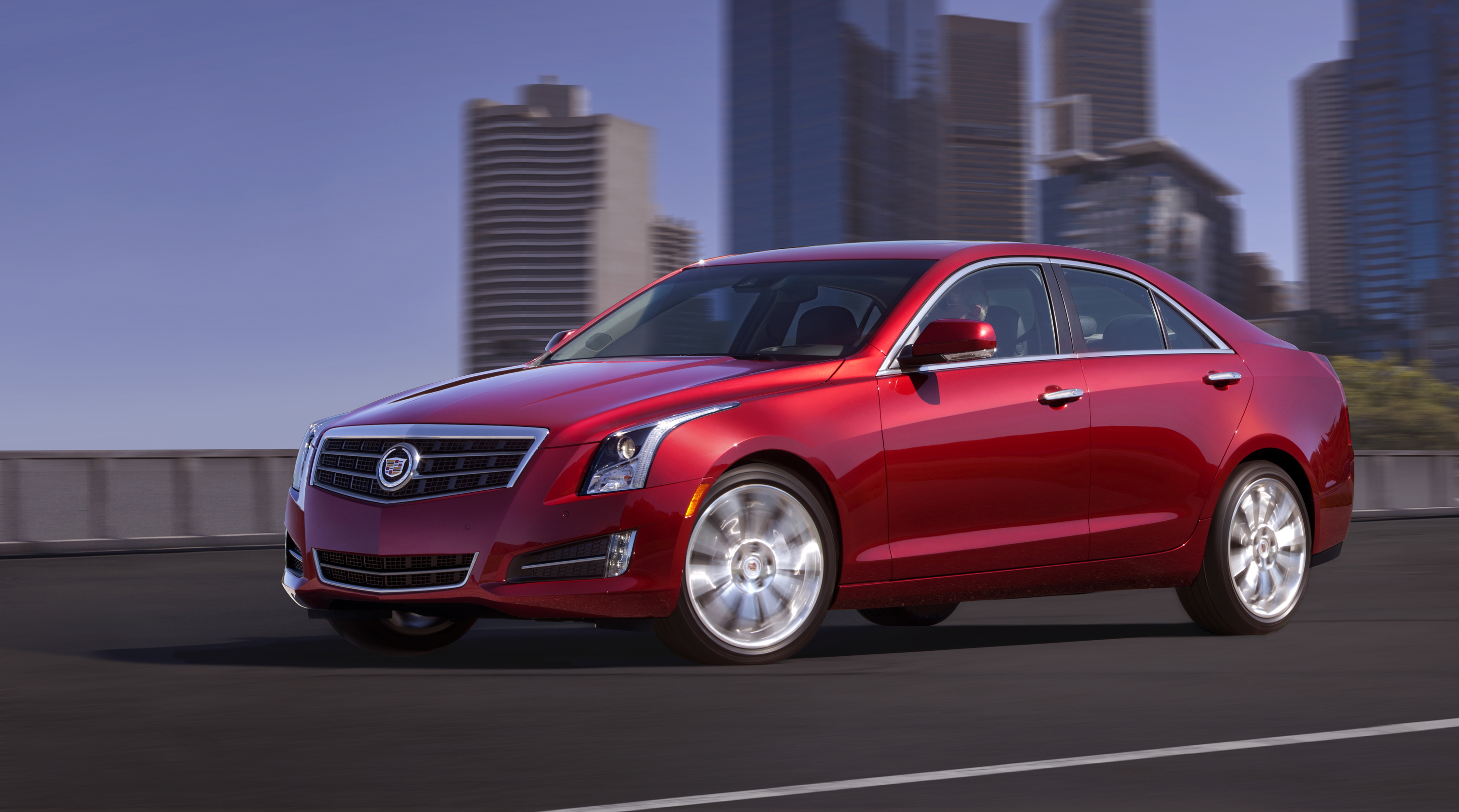
The Cadillac Dealer Order Guide is online and although the ATS info still seems pretty preliminary, it shows the initial figures for the Cadillac ATS power trains:

LCV Engine, 2.5L I4, DI, DOHC, VVT (202 hp [150.6 kW] @ 6300 rpm, 190.3 lb-ft of torque [258 N-m] @ 4400 rpm)
LTG Engine, 2.0L Turbo, I4, DI, DOHC, VVT (272 hp [202.8 kW] @ 5500 rpm, 260 lb-ft of torque [353 N-m] @ 1700-5500 rpm)
LFX Engine, 3.6L V6, DI, DOHC, VVT (321 hp [239.4 kW] @ 6800 rpm, 274.4 lb-ft of torque [372 N-m] @ 4800 rpm)
  • 2.5L Four cylinder LCV: The new standard equipment ATS will get the new 202 hp inline 2.5L four cylinder.  It wasn’t that long ago that the 4.9L OHV Cadillac V8 was rated at 200 hp, and that Cadillac weighed more than the ATS will.  The 2.5L ATS should have plenty of power.
  • 2L Turbo Four LTG: The LTG 2L turbo was spec’d at 270 hp but has settled up to 272 hp.  This is likely to be the surprisingly balanced choice for an overall package, and offer a lot of room for upgrades and modifications.
  • 3.6L Six LFX: The Cadillac ATS LFX 3.6L variant gets a Camaro-like 321 hp.  This is a good selection, as it could have been the 304 hp flex-fuel variant or the 318 hp version from the CTS.  Out of the box this will be the ‘hot’ choice for the ATS.

The planned wheels are 17″ and 18″ wheels which are ideal for weight and performance.  This also highlights the choice of tires:

RB7
Tires, P225/40ZR18 all-season, blackwall
QFN
Tires, P225/40R18 front and P255/35R18 rear, 90W blackwall RF4

The 17″ wheels will have 225/40 tires, and the 18″ will sport staggered 225/40 and 255/35 tires.

Some packages will include steering wheel-mounted Magnesium paddle shifters for the automatic, so no matter which transmission  you choose there will be complete control over gear selection.

2008 Cadillac STS-V Spectre CAI + Corsa 394.3 whp 380.4 lb ft

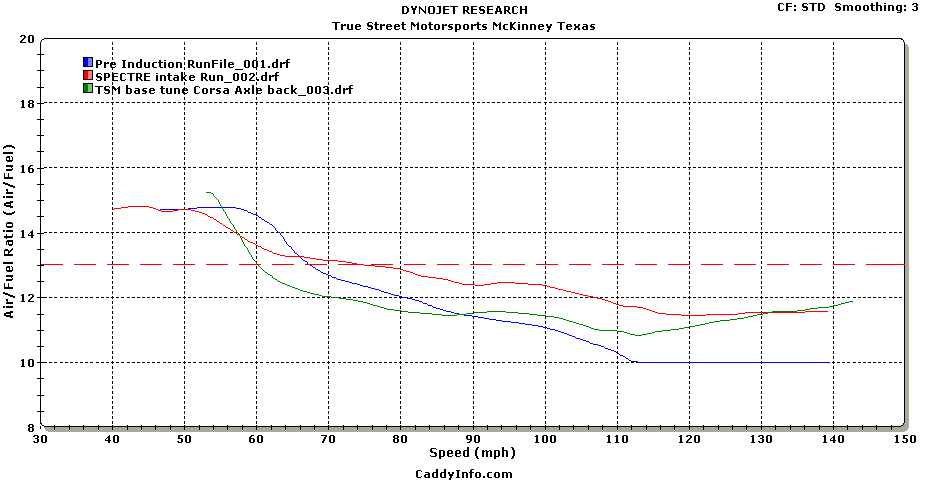
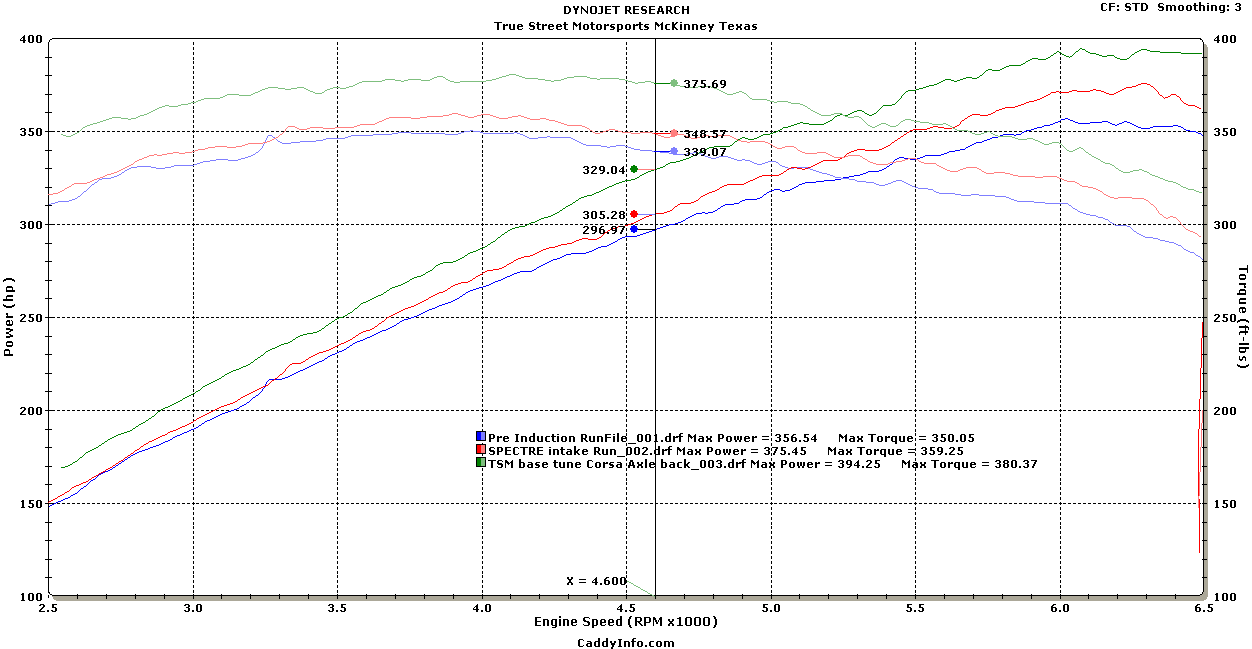
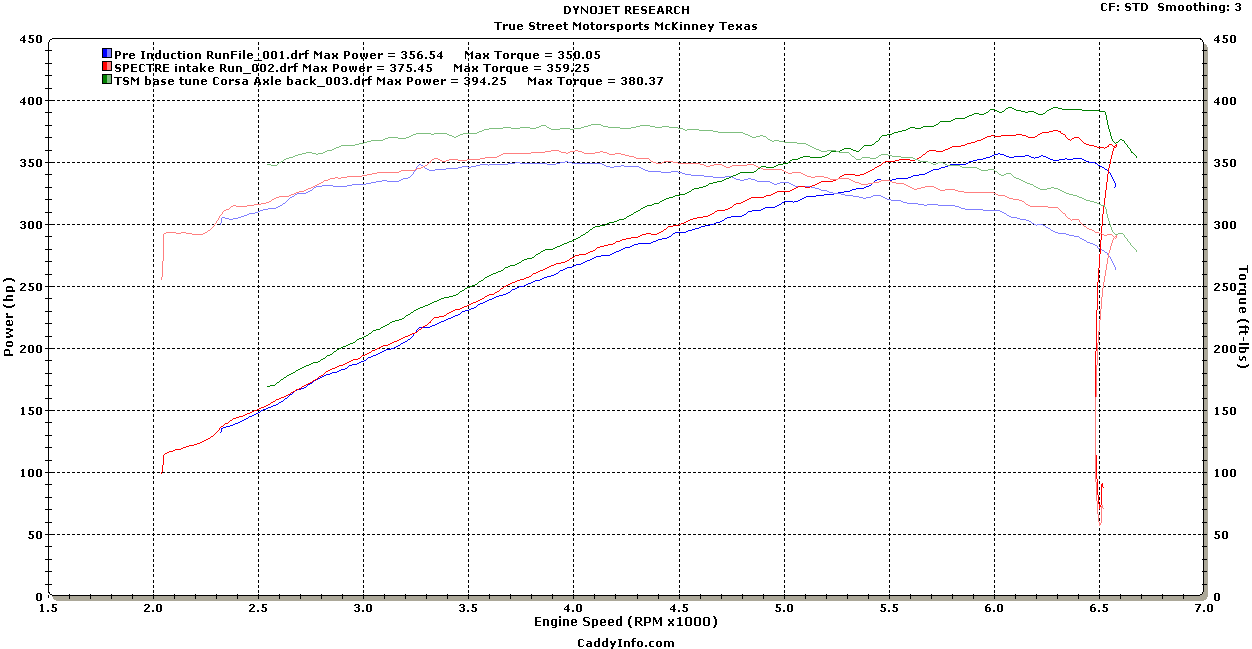
Today I headed back to True Street Motorsports in McKinney Texas to get some dyno time in and check my air fuel ratios after the addition of the Corsa axle back exhaust.  Click on the graph to zoom in, then hit back on your browser to get back.

STS-V WHP and Torque vs Engine RPM

Coincidentally, the Spectre Cold Air Intake (CAI) added 19 wheel horsepower (whp) over the baseline pre-Spectre CAI, and the Cora axle-back with the Spectre added another 19 whp for a total of 38 whp.  The Corsa addition opened up a nice 20 ft lb of torque.

A dyno measures horsepower at the wheels, or whp.  This is always less than the manufacturer’s advertised engine horsepower, or hp at the crank of the engine.  WHP is hp after losses through the transmission and drivetrain.  A reasonable figure for these losses on the STS-V’s 6L80e transmission is 20-24%.  On my STS-V, the stock car was rated for 469 crank hp and made 356 whp on the dyno, or  a 24% loss.  if we use 22% as an average then the V originally made 456 hp stock.  The addition of the Spectre got the car to 375 whp or +24 crank hp, and the addition of the Corsa with the Spectre CAI got the STS-V to 394 whp or +49 crank hp.  Overall a nice gain for two easy bolt-ons, and the STS-V is now making 394 whp which at 20-24% losses equates to 492-518 hp at the crank.

Air Fuel Ratios

Part of the point of the visit was to ensure the Air Fuel ratio was in the right range and stayed there throughout the Wide Open Throttle dyno run.    The resulting fuel levels are safe and consistent with commanded.

This graph shows the same info zoomed in a bit and with a detail point showing that the new exhaust at key points actually adds +27 lb ft of torque:

I am close to my power goal of over 400 whp on the dyno at 394 whp.   I want to run a new baseline on the dyno with the car cool and not heat-soaked for comparison.  In fact, our 3rd run was at the same whp as the initial run today, but with the intercooler Intake Air Temp 2s (IAT2) hitting 150F+ due to the stress of repeat dyno runs on the original,  stock intercooler cooling system.    That suggests that the V may put down 400 whp when not heat soaked.

Fun day, and as always the True Street Motorsports team is easy to work with and helpful.