As we wind down 2009, let’s review highlights for the last decade of Cadillac luxury and performance automobiles. The decade had some very interesting Cadillacs. The reference articles at the end of the post contain a more complete listing of year by year changes that address each model for that year.
I tried to pick out what I consider to be highlights for each year; you may have different favorites. Please add your year:highlights in the comments below.
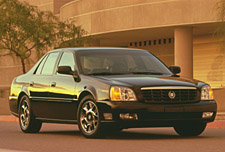
2000 Cadillac DeVille DTS
2000: Deville redesigned. The new DeVille is a trimmer, nimbler execution of a spacious luxury sedan. It is 3 inches shorter and 2 inches narrower than the car it replaces, giving it a trimmer, more athletic appearance. But its wheelbase is actually 1.5 inches longer, and its interior space is virtually as roomy as the 1999 model. The 2000 DeVille is still classified as a large car by the EPA.The Northstar powerplant is redesigned to accept regular unleaded.
2001: Final year for Catera. STS gets HID option, Sport Package
2002: Escalade redesigned, Escalade EXT arrives. For 2002, Escalade expands its offerings with three distinct versions: all-wheel drive, two-wheel drive and a Middle East export version. The eight-passenger Escalade, based on GM’s 1500 Series SUV, debuts in 2001 as a 2002 model. The ’02 Escalade will be the first Cadillac to wear the updated wreath and crest emblem. The five passenger Escalade EXT, with reconfigurable Midgate™ debuts as an ’02 model. It enters at the forefront of the new sport utility truck segment.
MR suspension available late in the model year on STS. Escalade adds the ESV extended model.
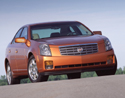
2003 Cadillac CTS
2003: Cadillac CTS 1st Generation arrives. The CTS is fashioned from Cadillac’s edgy, tailored new design vocabulary. Its lean, chiseled body features sheer forms, sharp edges and crisp intersecting lines that at once honor Cadillac’s storied past and point toward its bright future. Built on an all-new rear-wheel-drive architecture, the CTS features a new 3.2L V6 engine and was the first North American vehicle to be rigorously tested at the famed Nürburgring track in Germany.
Last year for front-wheel drive Seville SLS.
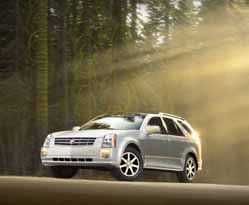
2004 Cadillac SRX
SRX arrives: SRX is the latest model to express Cadillac’s bold new design form vocabulary, and echoes the crisp, creased look of its concept vehicle predecessor, Vizón (2001). As the first of Cadillac’s S-series of models, SRX foreshadows and shares automotive DNA with future vehicles like the all-new 2005 STS sedan.
Available in both rear-wheel-drive (RWD) and all-wheel-drive (AWD) applications and based on GM’s acclaimed new Sigma architecture, SRX is designed to deliver superior driving dynamics.
“SRX is a true driver’s utility, an innovative entry in a crowded segment,” said Jay Spenchian, marketing director. “SRX is unlike any of the luxury utilities out there. It offers a great look, precise road manners and unprecedented utility.”
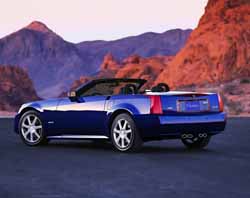
2004 Cadillac XLR
2004: Cadillac XLR arrives: Made in Bowling Green Kentuky on a new assembly line in the Corvette factory, the new XLR used a Corvette C6 suspension with a Cadillac Northstar rear-wheel drive engine making 320 hp. The XLR features a Cadillac first, a hard-top convertible that automatically folds into the trunk. The XLR lasts until 2010, when it is discontinued.
CTS gets 3.6L VVT V6.
2004 Cadillac CTS-V
Cadillac CTS-V arrives: The CTS-V provides high-performance driving enthusiasts with a serious, credible alternative to imports in the highly competitive, low-volume luxury performance segment, including the BMW M-Series, Mercedes-Benz AMG Series and Audi S-Series. The V-Series has been designed to take Cadillac’s performance credentials to an entirely new level. With 400 horsepower (298 kw), CTS-V is the most powerful production model Cadillac has ever offered. Based on Cadillac’s performance-oriented rear-drive Sigma architecture, CTS-V is a highly refined high-performance luxury sedan designed for performance enthusiast drivers. Like the original CTS, CTS-V was refined and validated at Germany’s famed Nurburgring racetrack to meet the expectations of the world’s most avid driving enthusiasts.
2005: New rear-wheel drive STS arrives: Based on GM’s rear-wheel-drive Sigma architecture, which also is the foundation for the Cadillac CTS, CTS-V and SRX, the STS is designed to compete squarely with world-renowned prestige sedans in global markets.
2006: STS-V, XLR-V arrive:
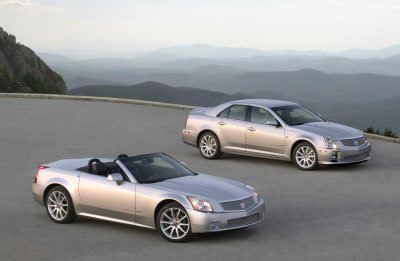
2006 Cadillac STS-V and XLR-V
STS-V. The STS-V carries the craftsmanship and sophistication of its STS sibling, but at an entirely different level. Designed for everyday driving, the STS-V delivers supercharged, rear-drive performance with an elegant design statement that is unmistakably Cadillac. Its 4.4L supercharged, dual overhead cam Northstar engine produces 469 horsepower (350 kw) at 6400 rpm and 430 lb.-ft. (583 Nm) of torque at 3600 rpm (power and torque figures estimated). Numerous interior and exterior design changes brand it as one of the V-Series performance models.
XLR-V. The 2006 Cadillac XLR-V ultra-luxury, high-performance roadster sets new standards in power, performance and personal amenities, combining distinctive, bold styling with contemporary luxury, ingenious technology and rear-wheel drive performance. Powered by the Northstar V-8 SC (supercharged), the XLR-V produces 440 horsepower (328 kw) at 6400 rpm and 425 lb.-ft. (576 Nm) torque at 3600 rpm – and the engine’s power is underscored by its ability to deliver 90 percent of its peak torque between 2200 and 6000 rpm. The Northstar SC also features variable valve timing that enables outstanding top-end performance while maintaining the expected refinement and quality associated with a luxury marque. The XLR-V also features numerous performance, chassis and design enhancements.
2007: Escalade Redesign Based on General Motors’ all-new full-size SUV platform, the ’07 Escalade features new powertrain, chassis, safety and interior systems. These integrated systems deliver the most powerful, efficient luxury SUV in the segment, led by a new 6.2L all-aluminum V-8 engine with variable valve timing technology delivering 403 horsepower (301 kW)* and 417 lb.-ft. of torque (565 Nm).*
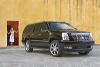
Escalade
SRX received a redesigned interior. The all-new cockpit is more luxurious and spacious, featuring a new instrument panel, hand-wrapped upper trim, console, center stack, door trim, wood trim, analog clock and steering wheel.
Passion Red Limited Edition XLR. All XLRs, STS receive the 6-speed Automatic.

2008: Cadillac CTS 2nd Generation arrives with 3.6L direct injection engine making 304 hp; all new design with styling hints from the Cadillac Sixteen showcar. CTS gets 6 speed transmission.
DTS platinum available. Lane departure warning and side blind zone alert systems available on top line STS.
Alpine White Limited Edition XLR.
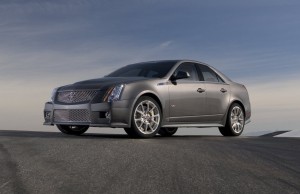
2009: “V2” Cadillac CTS-V arrives: Supercharged CTS-V with 556 hp. John Heinricy in an automatic transmission CTS-V Sedan sets a new WORLD record for sedans around the Nurburgring in Germany of 7 minutes, 59 seconds. Cadillac and Bob Lutz host the Cadillac CTS-V Challenge at Montecello Motor Club (MMC) in New York, where CTS-V’s outrun all challengers.
Last model year for the sigma-platform SRX, which is redesigned for 2010.
Reference Articles:
2003 Cadillac Product Line Highlights
2004 Cadillac Product Line Highlights
2005 Cadillac Product Line Highlights
2006 Cadillac Product Line Highlights
2007 Cadillac Product Line Highlights