This text was written in 2006, and captures the heart of the Cadillac V-Series Effort at the time. It was written by one of my favorite Automotive Voices. I have not heard from him in a long while but I hope he is well. CaddyInfo regular Readers will doubtless instantly recognize the Author.
Authentic enthusiasm — personal involvement and passion for a product — is contagious. Exposing the insights and enthusiasm of the Design Team is one of the very best ways to generate and communicate excitement.
This piece is perhaps a part of my high regard for the Cadillac STS-V:
The R&T article is pretty good for some of the details of the car as well as the pictures and such. The GM Performance Division worked closely with Cadillac and R&T to come up with the “reveal” in the February R&T issue since the STS-V will officially be unveiled in person at the Detroit Auto Show in early January. This will be the magazine cover on the newstands during the Detroit show so it is particularily timely….
Since GM worked very closely with R&T the article has pretty good info and is fairly accurate.
Basically, I cannot imagine any descriminating motorist being unhappy with the STS-V. It is an excellent blend of track level performance and refined elegance in the same car. The STS is an excellent starting point and the HPVO group in the GM Performance Division was allowed free rein to incorporate the modifications necessary to make the car perform at that level, make it track capable off the show room floor and add the uplevel luxury befitting a car like that.
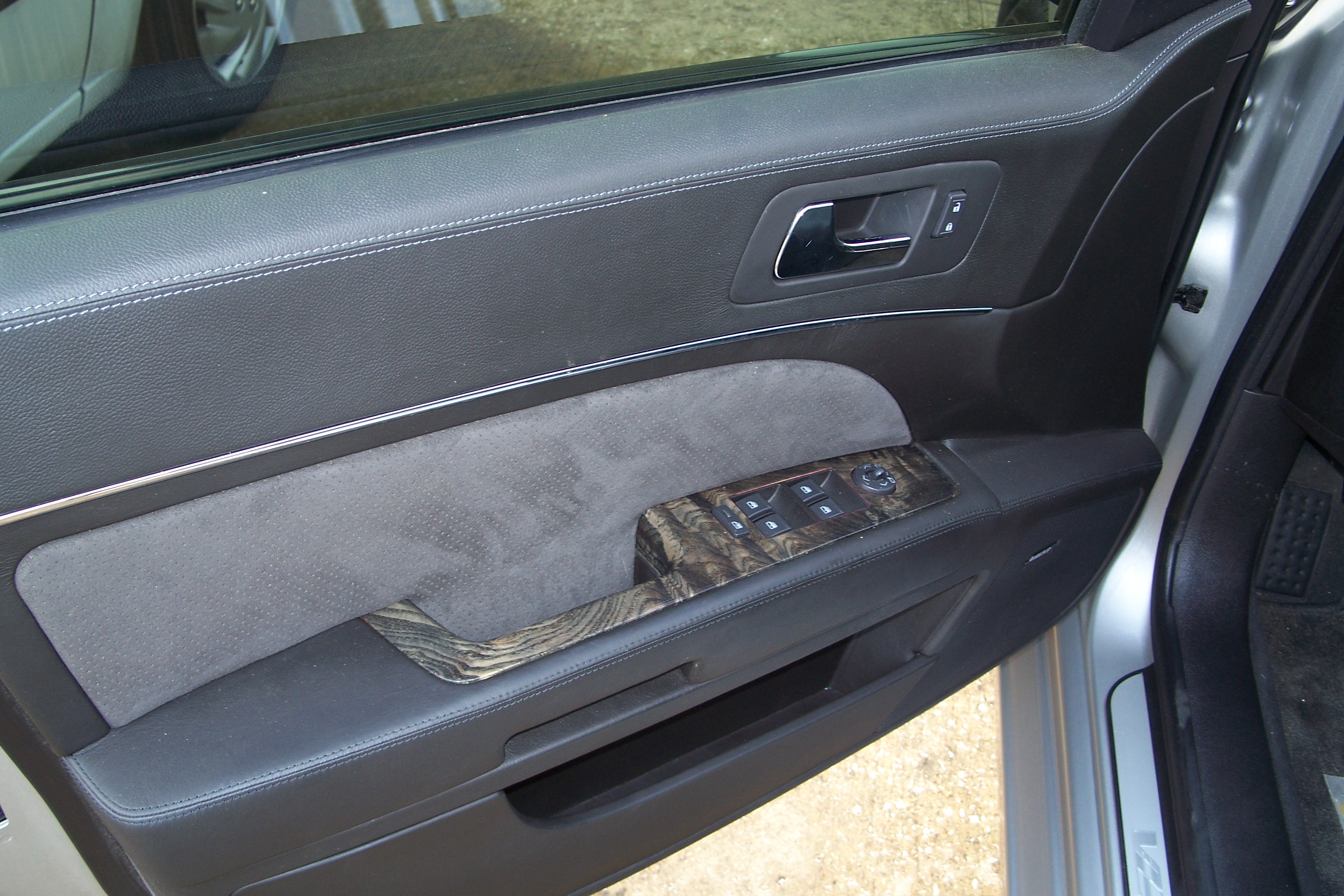
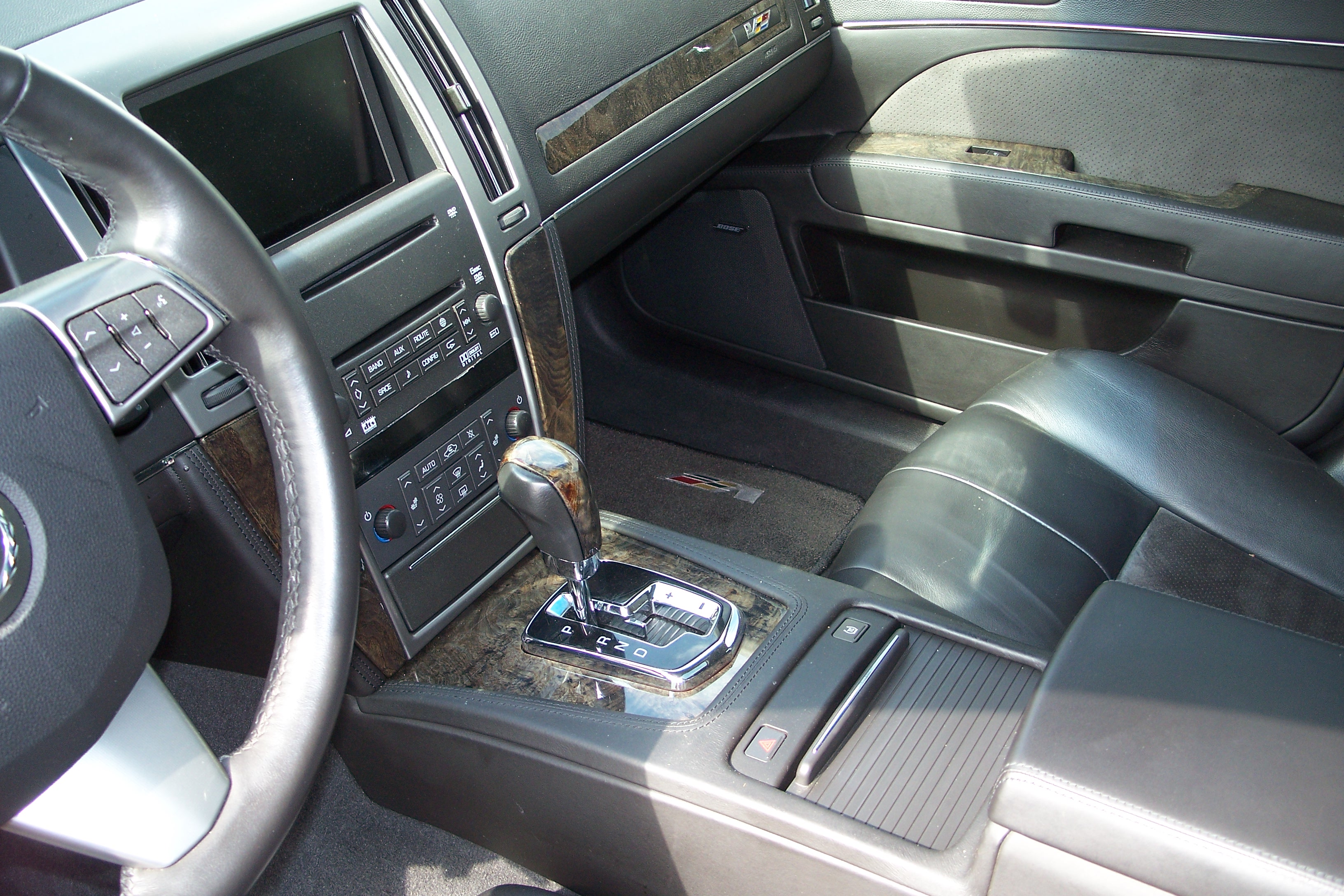
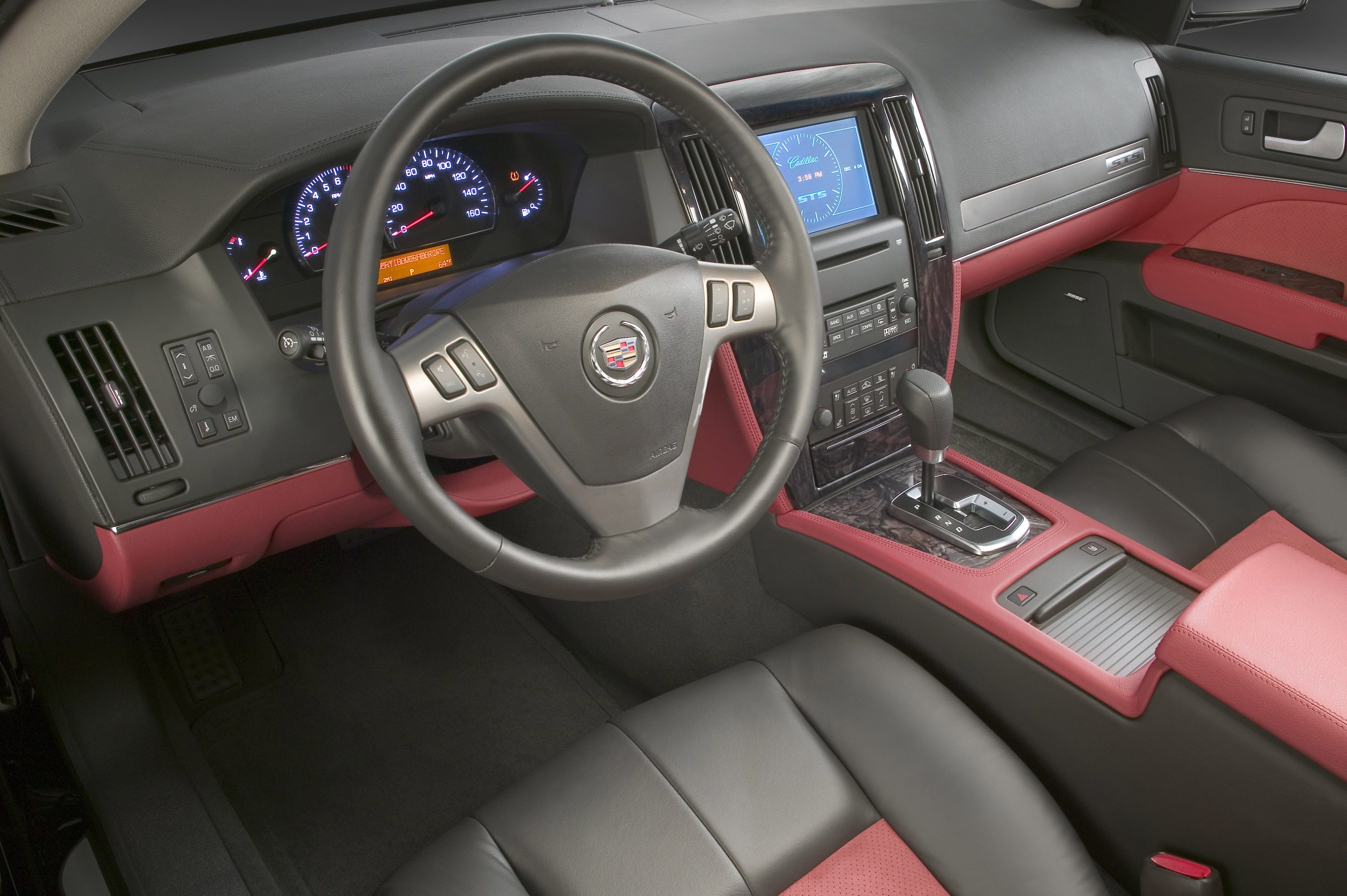
The “leather wrapped” interior has to be seen/touched/smelled to be fully appreciated. It basically blows away most anything else regardless of “value” or “price point”….
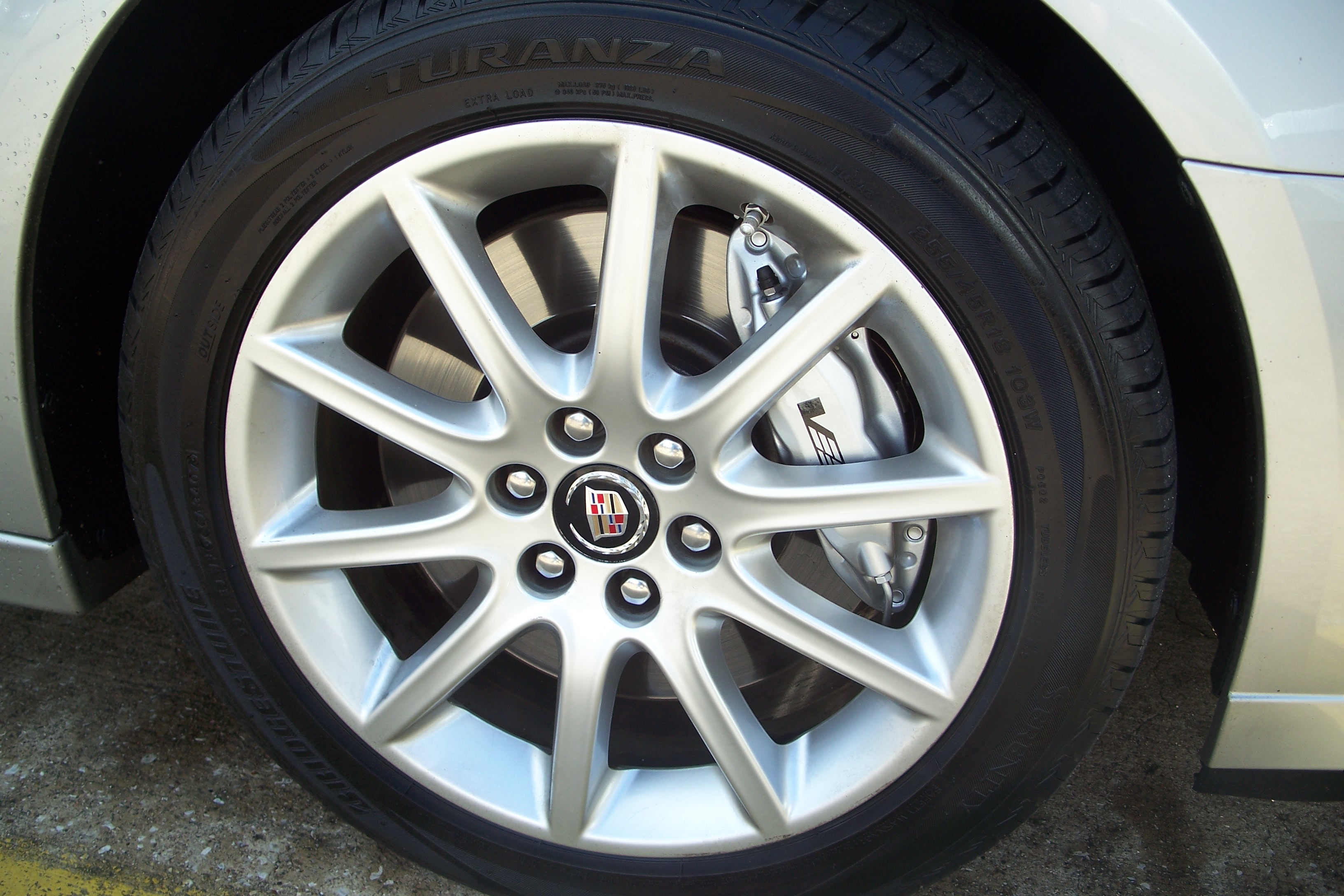
The entire suspension/brakes/driveline has been replaced with re-engineered parts to significantly increase the performance level of the car. This is not just a bolt on of other parts from other GM cars. These are new parts specifically designed for the STS-V. An example is the engine placement in the car. The engine is actually lowered almost 2 inches in the chassis compared to the production STS…a modification that would be unheard of years ago…yet one that was deemed necessary regardless of the expense for vehicle balance and packaging so it was incorporated into the STS-V.
The goal of the car was unquestionable performance on the track where it will be judged next to the competitors. One example of the dedication to this was the use of the more conventional mono-tube shock absorbers rather than the magna-ride system. Given a specific endeavor, such as track work, the monotube shocks can be developed to a higher absolute level than the magnaride system at the moment…so the decision was made to go with the monotube design. The magnaride allows a far greater range of chassis control in terms of smooth and soft ride quality at the one end of the extreme but, within the narrow performance band, the monotubes were still judged to be better after much evaluation and tuning so they were used. Everything in the car was subjected to this type of scrutiny to make sure it was the best available for the purpose of the car.
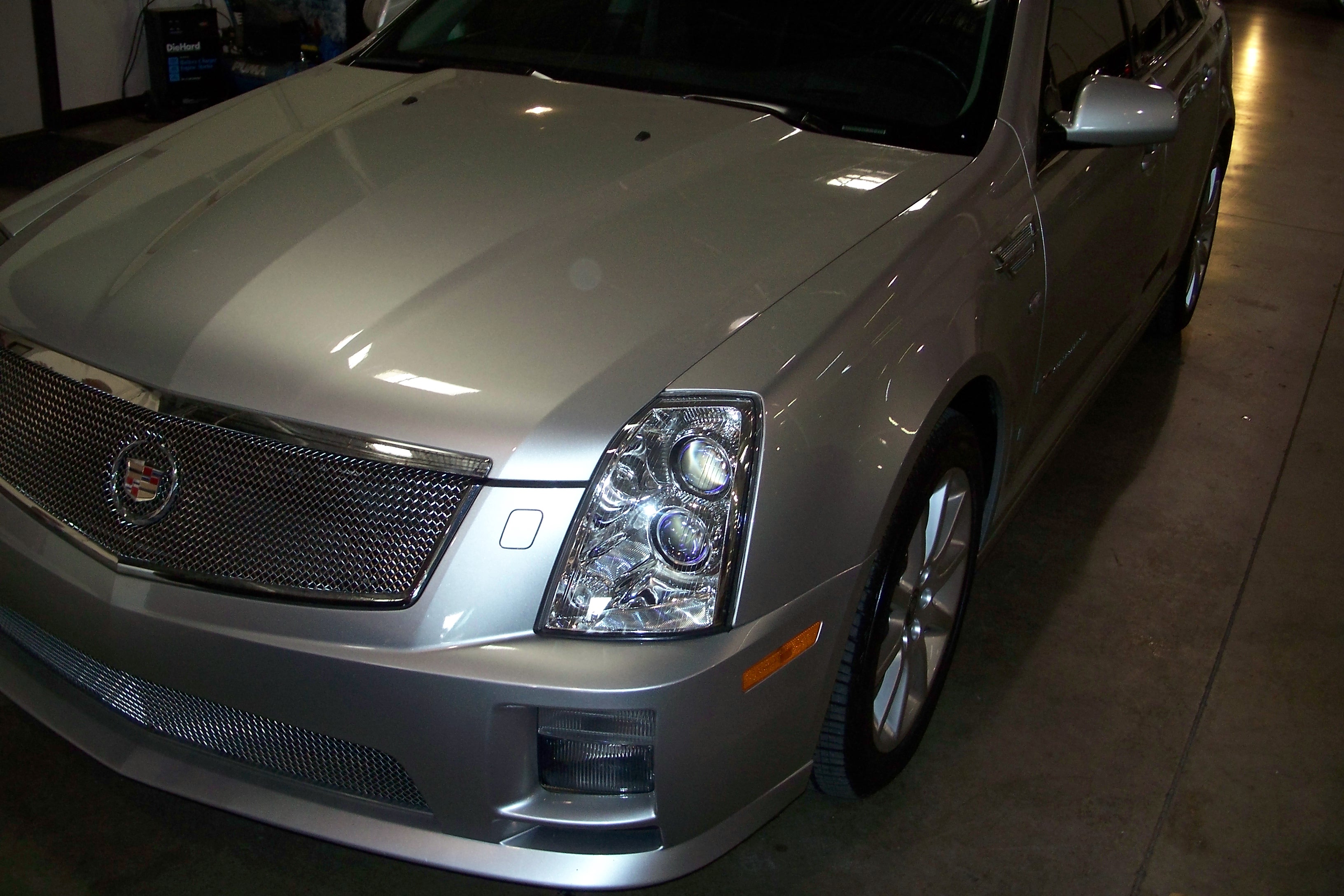
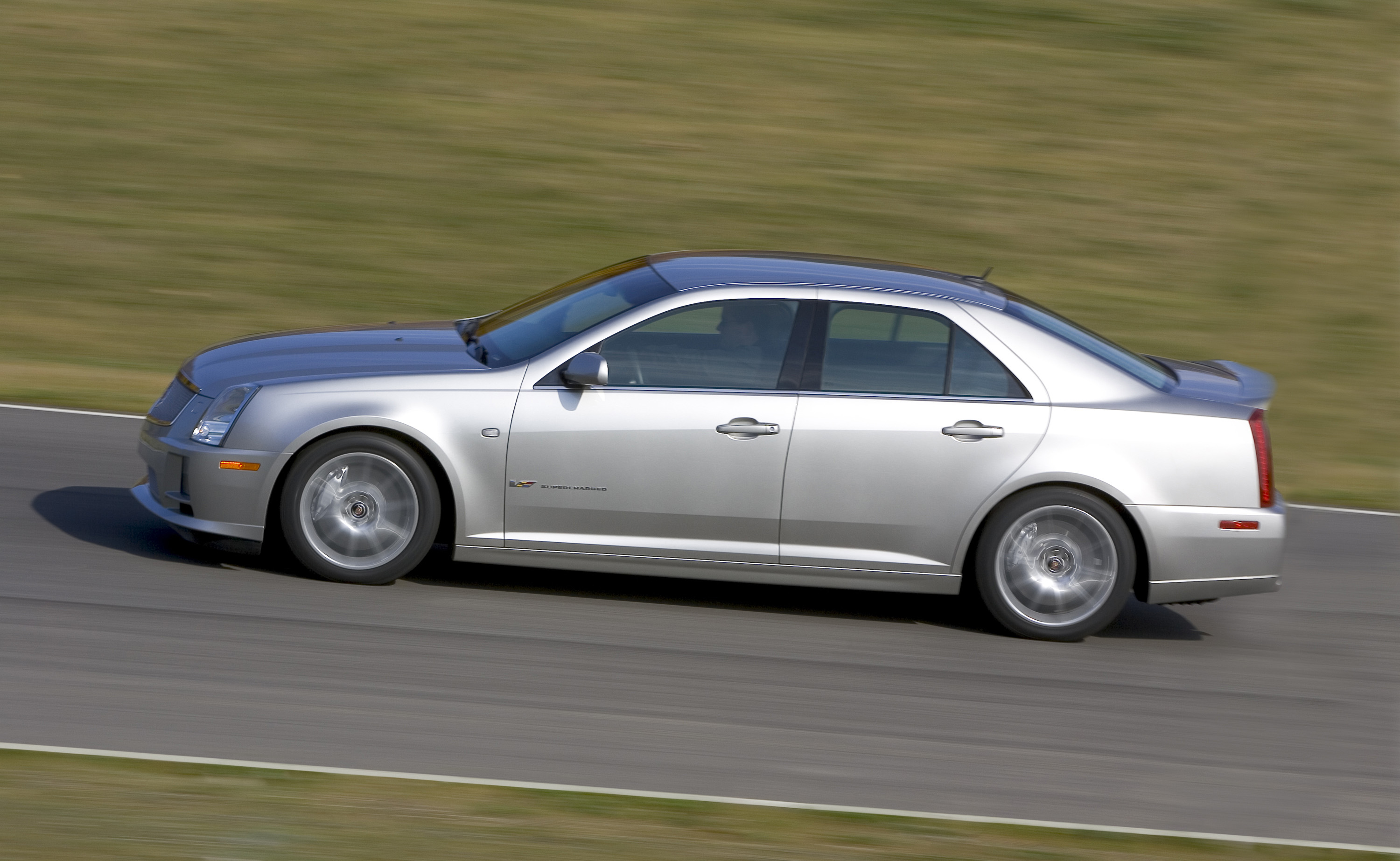
The outside body panels include a new, composite hood with a slight “power bulge” to clear the supercharger, fascias, valence panels, etc. including the wire mesh grill. ALL the body panel changes were developed in the wind tunnel to improve vehicle aero balance, cooling, duct cold air to the front brakes, duct air to the differential cooler, etc… All of it is funtional and none of it is “rice”…
The six speed auto trans is a new piece that will set the standard I feel for normal automatic trans operation and track oriented “tap shift” or manual control. The trans has the heavily developed Performance Algorithm Shifting logic built into it and it really works on an autocross track or the racetrack if you decide to leave the tap shift alone. With 6 forward speeds the trans can match the perfect engine speed at any vehicle speed which almost completely negates any advantage a continuously variable trans would have while allowing the launch capability of a torque converter combined with the traction control system.
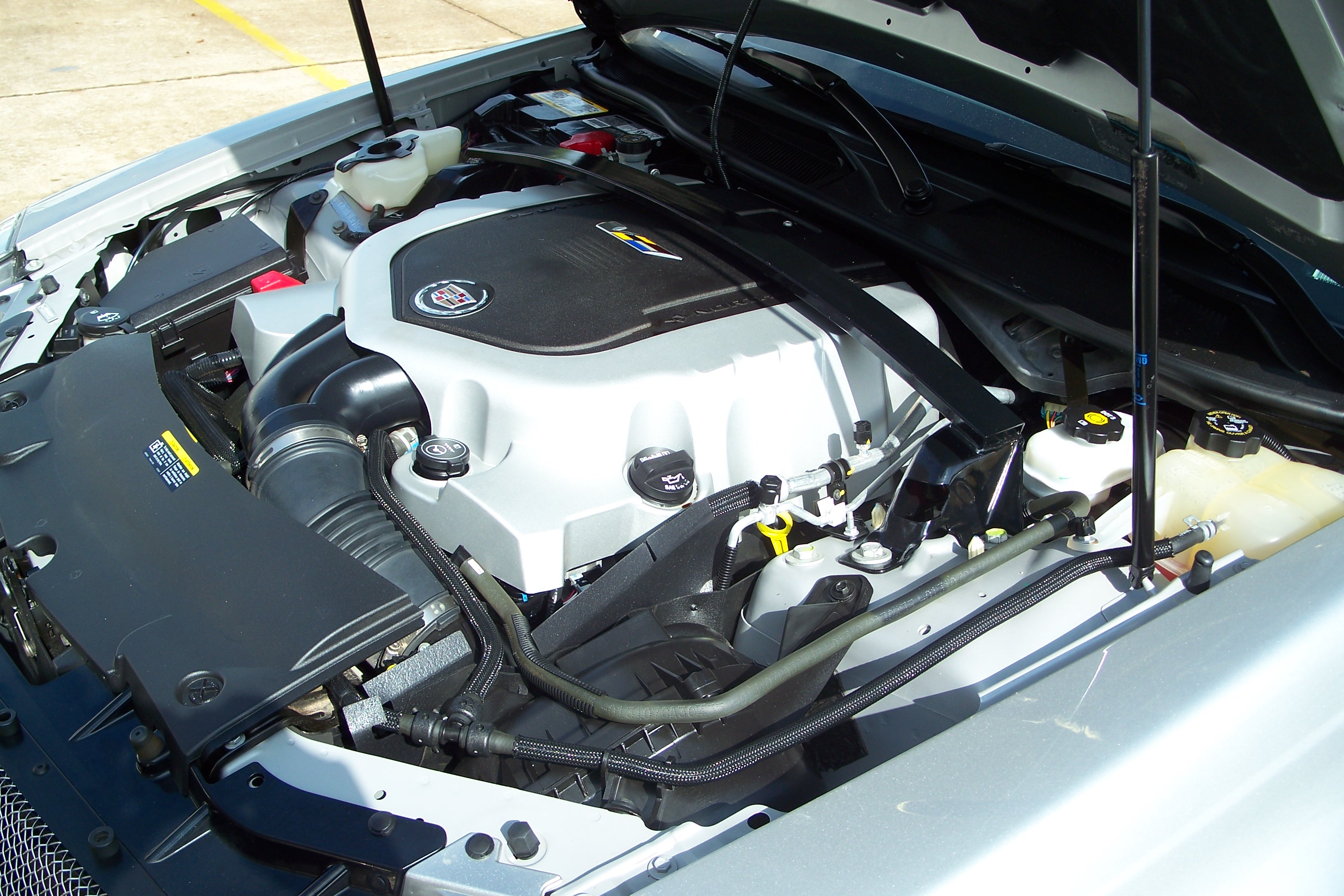
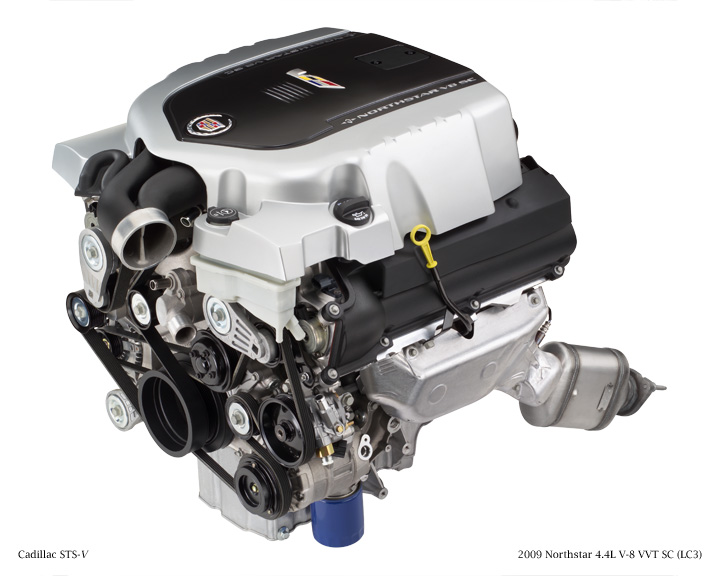
The engine is a supercharged, 4.4 liter version of the VVT rear wheel drive Northstar. Just about every part in the engine is new, however. The basic architecture of the engine is based on the rear wheel drive Northstar but virtually every part and fastener is specific to the supercharged engine. The block is a precision sand cast part with a closed deck design which is the first time a Northstar engine did not have a die cast block with an open deck. Lower crank case, heads, etc… are all unique castings for the supercharged version.
The supercharger/induction system on the engine incorporates several patented features that were developed by Cadillac for the engine. The air intake to the supercharger is at the rear of the engine and underneath the supercharger and the supercharger blows pressurized air upwards thru the intercooler tubes on the top. The air then makes a single, smooth 180 degree turn down into the individual induction tubes along the outside of the supercharger housing.
The performance of the engine is very exciting. At 440 HP* @ 6400 the engine is making 1 HP per liter of displacement….a specific output that is better than most any engine on the market…even some of the exotics…and much better than the E55 which has a screw compressor, even. Better yet, the 1 HP per liter is obtained at 6400 RPM….not the 8500 RPM required by some of the competitors. Reading between the lines this means that the engine has huge torque and a very very wide torque curve that is what will really move the STS-V. About 90% of the engines peak torque is available from 2800 RPM thru 6500 RPM meaning that it pulls like a locomotive no matter what gear you are in. The engine is rated at 430 lb.ft. of torque at 3600 RPM.
The engine will be built at the dedicated Performance Build Center in Wixom, Michigan by trained engine builders. Each engine will be built by a single assemblers to insure ownership and quality of the powerplants. The PBC is representative of the commitment of GM to competing with the best in the world in specialty cars and engines. There was a need for a facility to build very low volume engines that require special assembly techniques and care so the PBC came into being. It combines all the error proofing and fastening techniques of the normal assembly process with dedicated assemblers in a low volume atmosphere. Here, each engine can be assembled by one person and appropriate care and time devoted to each engine to ensure that it is done correctly without the demands of high volume production and the necessary automation restricting what can be done in the engine design and manufacturing techniques.
I have seen quite a few drivers that are used to some very fast and high output engines drive the prototype STS-V cars and I have yet to hear one that was dissatisfied with the performance.
Both the intake and exhaust sytems are specific for the STS-V and heavily developed for low restriction and high flow…. No “cold air intake” from the aftermarket required….LOL. The engine group set some extremely aggressive targets for inlet restriction and exhaust backpressure to obtain the 1 HP per liter goal and the targets ended up being exceeded by the induction and exhaust groups. Amazing little inlet restriction, excellent induction noise control and low backpressure still meeting the passby noise targets.
Keep in mind that a supercharged engine has to overcome the parasitic load of the supercharger…..so…in this case the engine is actually making over 500 HP when you consider what it takes to drive the supercharger at peak power. That means that the fuel system, cooling, etc… all are actually handling 500 HP….
The various STS-V mule vehicles and prototypes have lived on the Milford Road Course , the Nurburgring and several other race tracks around the country since the program started. I cannot imagine a vehicle (aside from the Corvette) that would have accrued as much track time during development as the STS-V. Actually, within the past 2 years any time there was a Corvette track test there were STS-V cars there also so it probably has more track time per vehicle than the Corvette mules given the number of laps turned.
BTW….the cars are being driven by very competent test drivers. One of the aspects of HPVO is to train and certify drivers against some of the best in the world so that vehicle performance is accurately rated. To say that some of the drivers of the STS-V program are “good” is an understatement. John Heinricy, who is very well known as a racing driver outside of GM, is the head of HPVO so he serves as the gold standard for driver performance. This really raises the bar in terms of vehicle performance and capability as the driver level is good enough to as to tax the car to the very limit.
The racetrack is certainly not the final answer for any car but a lot can be learned about the durability and performance of things like the powertrain, cooling capacity, fuel system (fuel pickup during slosh), etc… so the advantage of being able to test the STS-V almost daily on the MRC was huge.
The vehicle is track capable off the showroom floor with adequate brake cooling to ensure fade free performance at the performance limit for a full tank of fuel on the track. There are dedicated coolers for the radiator, engine oil, trans, power steering, intercooler heat exchanger, air conditioning, final drive, etc… that all meet track performance requirements in hot weather.
One of the main goals with the car was to provide this level of absolute performance while maintaining complete “street-ability” and requiring no compromises on the driver in daily traffic. This is one place the 6 speed automatic trans shines. It performs like a racing transmission on the track yet allows for simple stop and go traffic on the commute. The engine power level and power band is important here, also, as a high revving, peaky engine can get pretty tiresome in traffic and has low real world “cut and thrust” performance without constantly shifting. The supercharged Northstar comes to life with just a slight nudge of the pedal. NVH tuning was especially critical for the real world phase of operation as induction roar, droning exhaust booms, etc…would really detract from a world class car and would not be acceptable. All these types of things make the STS-V a world class luxury performance sedan that requires no special compromises by the owner/driver. One nice feature is the acceleration performance of the package. The engine power band combined with the torque converter/auto trans and launch traction control put the sub-5 second 0-60 times in the hands of every driver every time… no special clutch slip or launch procedure required for best times. Just stab the accelerator…but be sure you are pointed in the correct direction first.
*After some final tweaks the 4.4L Northstar was tuned to 469 hp versus the 440 hp mentioned in the text for the STS-V.
DETROIT, MI – Cadillac’s upcoming 2006 STS-V not only enhances the performance of the current STS sedan, it also has eclipsed the goals set during its development. With testing now complete, the STS-V is certified at 469 horsepower, significantly more than the 440 estimated at the car’s world debut earlier this year.
Performance testing for the STS-V has been completed at the Nordschliefe circuit of Germany’s famed Nurburgring, widely recognized as one of the world’s most demanding tracks. The STS-V clocked lap times of approximately 8:30, a blistering pace for most any production vehicle, let alone a luxury sedan.
With production scheduled to begin this fall, the STS-V is the latest edition of Cadillac’s V-Series, the growing family of vehicles expressing the full extension of the brand’s performance and luxury credentials. The STS-V features the new 4.4-liter Supercharged Northstar V-8 engine and GM’s new Hydra-matic six-speed automatic transmission.
The official power ratings for the 2006 STS-V — 469 hp at 6,400 rpm and 439 lbs.-ft. of torque at 3900 rpm – are certified by the Society of Automotive Engineers (SAE.) SAE’s new voluntary power and torque certification procedure (J2723) ensures fair, accurate ratings by allowing manufacturers to certify their engines through third-party witness testing. GM was the first auto manufacturer to begin using this procedure to certify power for its new engines.
The Northstar V-8 supercharged engine represents the most output ever for a production Cadillac. In the final stages of development, GM Powertrain engineers found more opportunities to push the boundaries of the Supercharged Northstar engine.
“Cadillac’s V-Series is founded on the idea of taking the strong performance and luxury of our core vehicles and reaching even higher,” said Jim Taylor, Cadillac General Manager. “The result is that Cadillac’s V-Series family will consist of three serious performers, all going zero-to-sixty in under five seconds.”
The Supercharged Northstar V-8 will also power the upcoming V-Series edition of the XLR luxury roadster slated for production in early-2006. XLR-V is certified at 443 hp at 6,400 rpm and 414 lbs.-ft. of torque at 3900 rpm. The Supercharged Northstar generates more peak power for the STS-V, compared to the XLR-V, due largely to the greater underhood space of the STS that allows more induction and exhaust capacity. On the other hand, the XLR-V will be a quicker car than the STS-V, given its superior power-to-weight ratio.
When luxury performance Buyers are exposed to the passion behind the products carefully engineered and sculpted by the Cadillac Team is when the magic happens. It is when people realize that Cadillac is a luxury AND performance brand. It is when real Drivers start to picture themselves in a Cadillac.