Cadillac and the V4 Escalade

The 2010 Cadillac Escalade L94 V8 engine features Active Fuel Management which allows the engine to seamlessly operate in V8 mode or in V4 mode.  All 8 cylinders are online when power is needed, and the Escalade is sport-sedan quick, able to sprint 0-60 in around 6.5 seconds.   Under the right conditions of steady state cruise, the Escalade operates on four cylinders to maximize fuel economy.

This is not a new idea, and Cadillac fans will instantly think of the V8-6-4.  The Cadillac L62 8-6-4 engine was produced in 1981 to achieve peak fuel economy while maintaining big block Cadillac family power.  In theory the engine would provide V8 power when needed, and 4-cylinder fuel economy under low load conditions.    The engine was ahead of its time, and perhaps a bit ahead of its technology.  Owners found that the mode changes unsettling, and perhaps took too long.  Cadillac tried 13 different calibrations throughout the year to find the ‘right’ mix.  Later owners report that the system works effectively, but perhaps was misunderstood in its modes of operation and responses.  Regardless, the system was only in production for a year, and only on the 368 cubic inch (6.0 L) engine.

Cadillac has not been specific about exactly how much power is available in the 2010 Cadillac Escalade V4 mode. With 403 hp on tap in V8 mode, the new Escalade L94 engine likely makes more power in V4 mode than the L62 6L made in V8 mode!

2010 Vortec 6.2L V-8 VVT (L94) for Cadillac Escalade

Details on Modern Active Fuel Management

The L94 engine features GM’s Active Fuel Management (AFM) technology. AFM temporarily de-activates four of the 6.2L engine’s cylinders under light to moderate load conditions to help enhance fuel economy by approximately 6 percent under the federal government’s required testing procedure and potentially more in certain real-world driving conditions.

Active Fuel Management stems from a simple premise: most V-8 engines offer more power than owners demand in all conditions. With AFM, drivers save fuel by using only half of the 6.2L’s cylinders during some driving conditions and reactivates them on demand when necessary.

Managed by the sophisticated E38 engine control module (ECM), AFM automatically shuts down every second cylinder, according to firing order, during light-load operation. In engineering terms, this allows the working cylinders to achieve better thermal, volumetric and mechanical efficiency by reducing heat loss, combustion loss and friction, and lowering cyclical combustion variation from cylinder to cylinder. As a result, AFM delivers better fuel economy and lower operating costs. Perhaps the most sensible aspect about AFM is that it harnesses the engine’s existing capabilities, starting with the potential designed into the E38 ECM. The only mechanical components required are special valve lifters for cylinders that are deactivated, and their control system. The incremental cost for the customer is nominal per engine. Active Fuel Management relies on three primary components: De-ac (for deactivation) or collapsible valve lifters, a Lifter Oil Manifold Assembly (LOMA), and the ECM.

One of the most sophisticated engine controllers in the industry, the E38 ECM measures load conditions based on inputs from vehicle sensors and interprets that information to mange more than 100 engine operations, from fuel injection to spark control to electronic throttle control. AFM adds an algorithm to the engine control software to manage cylinder deactivation and reactivation. When loads are light, the E38 automatically closes both intake and exhaust valves for half of the cylinders and cuts fuel delivery to those four. The valves re-open to activate all cylinders when the driver demands brisk acceleration or full torque to move a load. The engine’s electronic throttle control (ETC) is used to balance torque following cylinder deactivation or reactivation. The transition takes less than 20 milliseconds.

Valve lifters are operated by the engine’s camshaft, and lift a pushrod that operates the valves in the cylinder head. In the Gen IV 6.0L (L76), the De-Ac lifters are installed in cylinders 1, 4, 6 and 7, while the remaining cylinders use conventional lifters. The hydraulically operated De-Ac lifters have a spring-loaded locking pin actuated by oil pressure. For deactivation, hydraulic pressure dislodges the locking pin, collapsing the top portion of the lifter into the bottom and removing contact with the pushrod. The bottom of each De-Ac lifter rides up and down on the cam lobe but the top does not move the push rod. The valves do not operate and combustion in that cylinder stops. During reactivation, the oil pressure is removed, and the lifter locks at full length. The pushrods, and therefore the valves, operate normally.

The final AFM component is the LOMA. This cast-aluminum assembly is installed in the valley of the 6.2L (L94) in place of a conventional engine block cover. The LOMA holds four solenoids, control wiring and cast-in oil passages. The solenoids are managed by the ECM, and each one controls oil flow to a De-Ac Lifter, activating and de-activating the valves at one cylinder as required for Active Fuel Management.

The fuel injectors in the 6.2L (L94) are identical for all cylinders; those feeding the de-activated cylinders are simply shut down electrically by the ECM during de-activation. When the cylinders are deactivated, the engine effectively operates as a V-4. AFM operation is load based, as measured by the ECM using dozens of inputs, overlain with the driver’s demand for power as measured by throttle application. AFM’s response time varies with oil temperature, but in all cases is measured in milliseconds. Operation is always transparent to the driver. The engine returns to V-8 mode the instant the controller determines that acceleration or load requires additional power.

The benefits are substantial. Active Fuel Management does not affect exhaust emissions, and it will reduce overall emissions significantly, including greenhouse gases such as carbon-dioxide, to the extent that less fuel is used. Further, the savings reflected in EPA numbers may not account for AFM’s full impact. Owners who primarily travel long distances at steady speeds will see substantially greater fuel-economy improvements. Because of the mass differences the GMC Yukon and Cadillac Escalde models have compared to trucks and cars, the calibrations for switching to V-4 are specific and tailored to optimize efficiency.
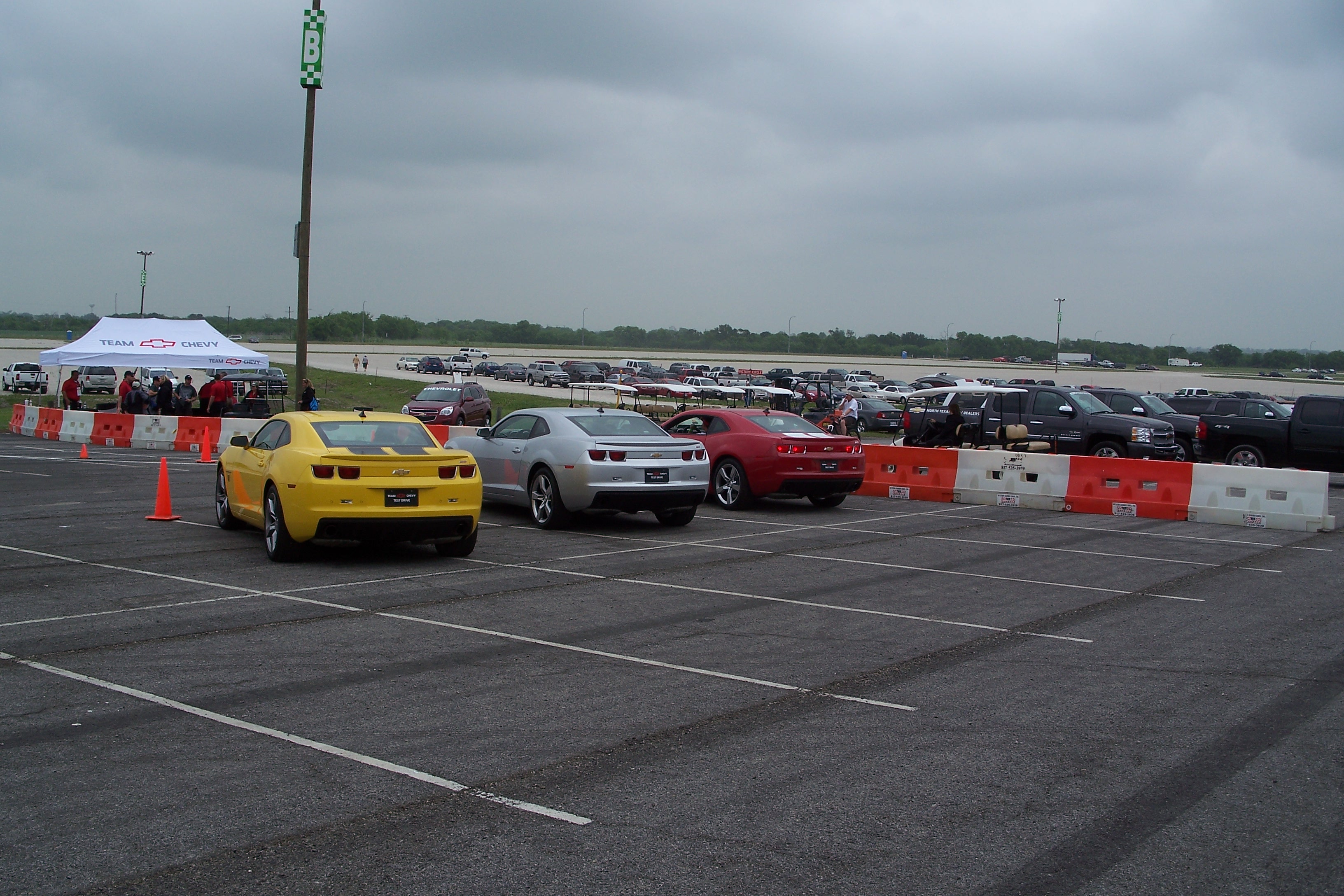
Friday at TMS with Chevrolet #ChevyTMS

Chevrolet was nice enough to invite a friend and I to come out to spend the afternoon Friday at Texas Motor Speedway, then stay for the Rattlesnake 150 ARCA race Friday night.  After a conflict nicely cleared up, my friend Rick Barr was luckily able to join me for the afternoon.

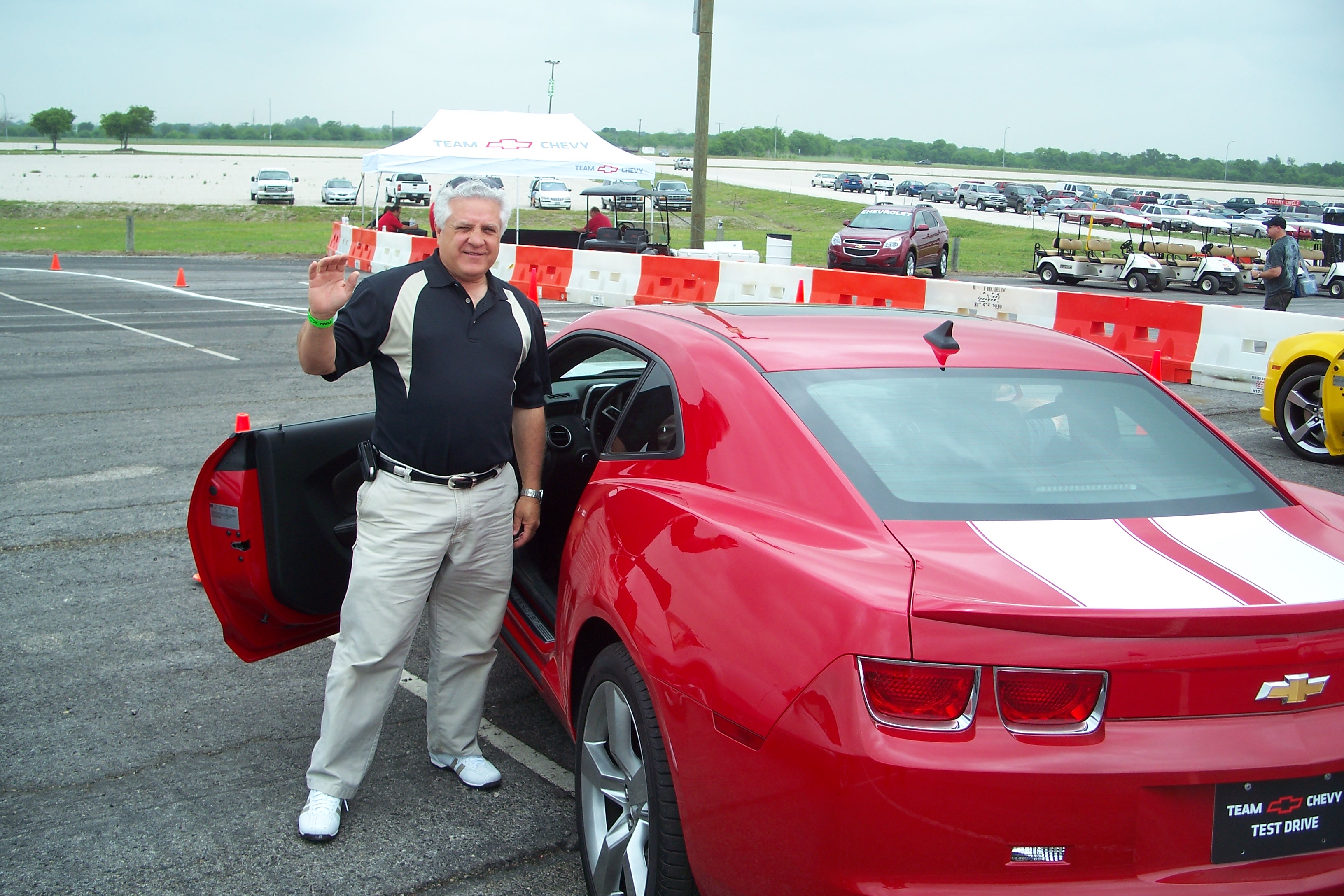
Rick Barr test driving a Chevrolet Camaro

Traffic was light and we arrived early, so we headed over to test drive new Chevrolet models first.  They had a short course setup and you were invited to test drive any of several Chevrolet models, including several Camaros with V6s and V8s in the mix.

I think this is a great low-stress way to expose people to the current Chevrolet models.

Next we checked-in and went on a tour of the tire facility, then the transports and garages behind the scenes at Texas Motor Speedway.

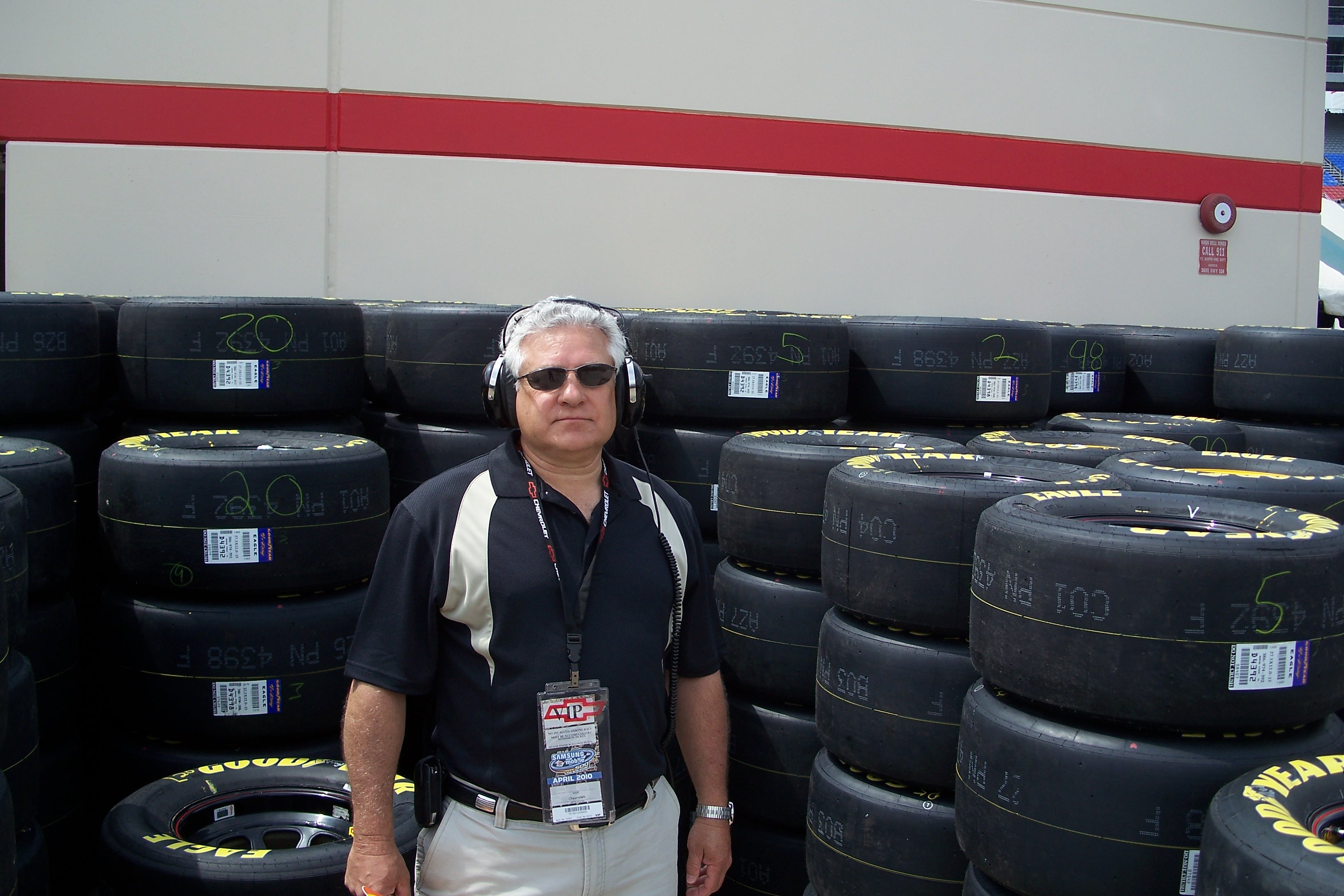
Rick considers which tire to pick for racing

There were stacks of Goodyear tires waiting to be called into action. The race teams lease tires from Goodyear for the weekend. Each tire has an identification chip, so no one can sneak ‘special’ tires in, and none wander off to be resold for another venue.  Goodyear actually tests, in concert with selected Drivers, tires for all of the cars in the series to use at each venue.

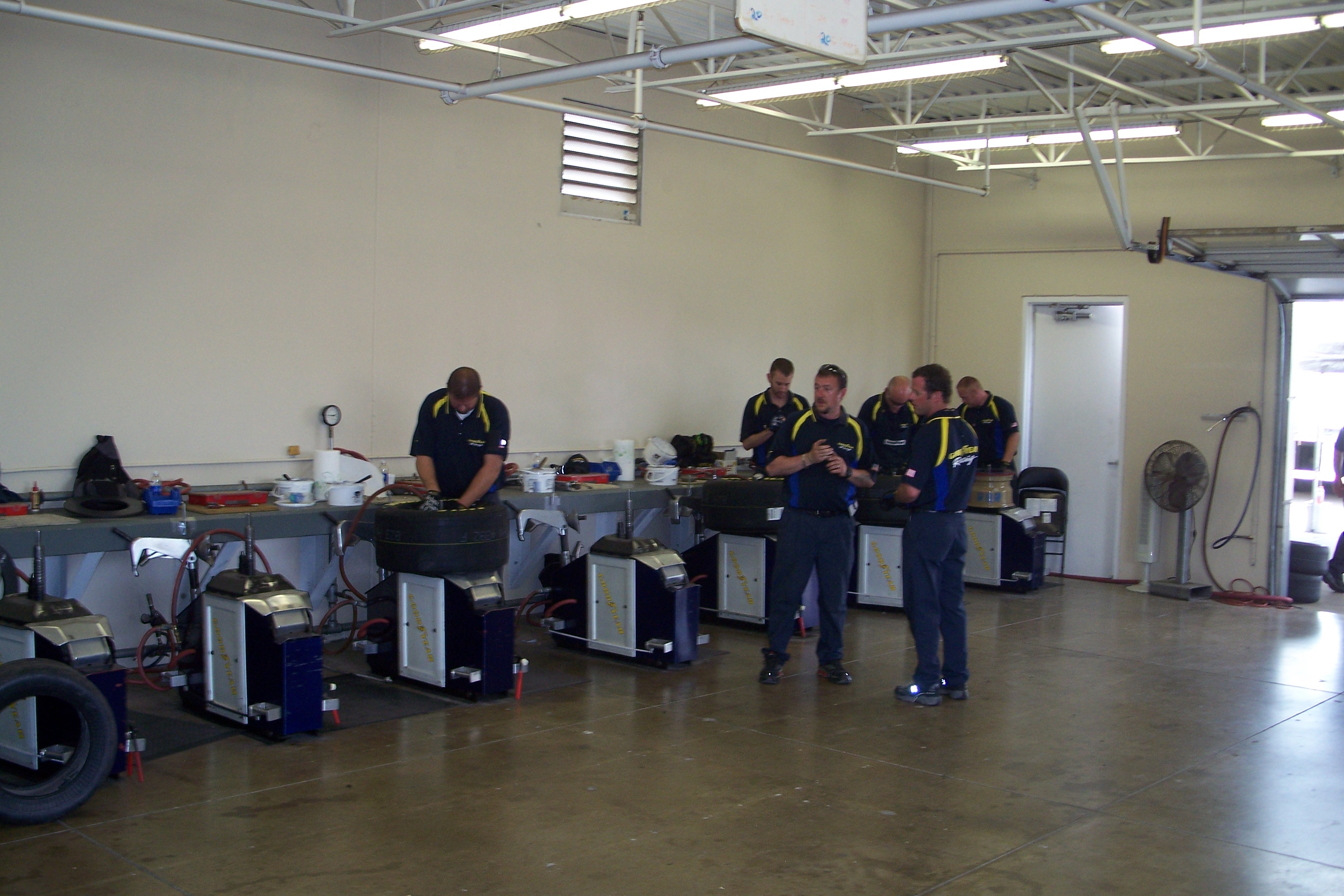
Goodyear tire mounting stations

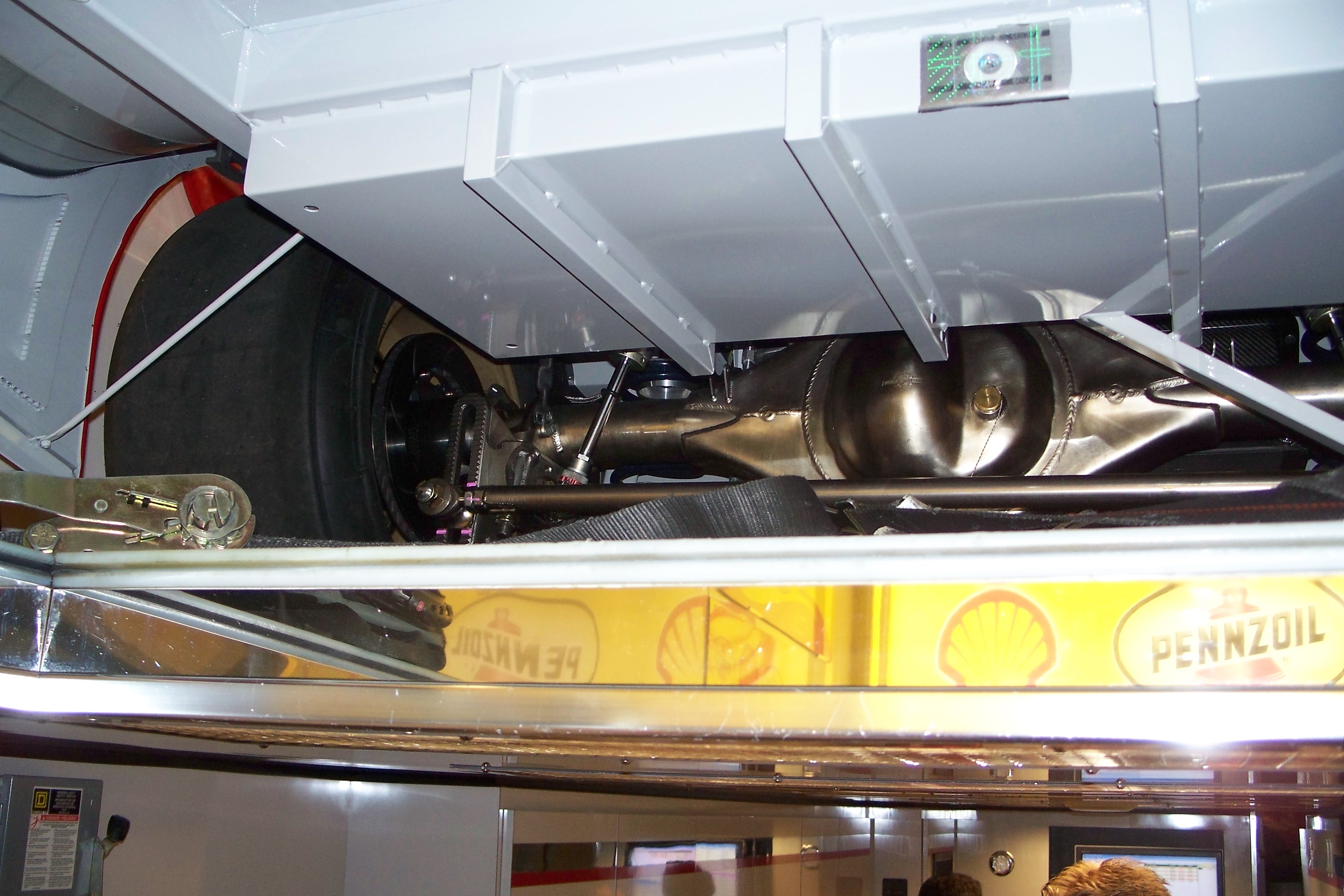
Our next stop was a trip to the race transports. Each transport carries 2 race cars, primary and backup, tools, and spares parts and equipment to assist with repairs, as well as food and snacks for the race teams.

Backup race car stored in the attic of the transport

It was quite interesting seeing what the racing teams travel with and the garages.

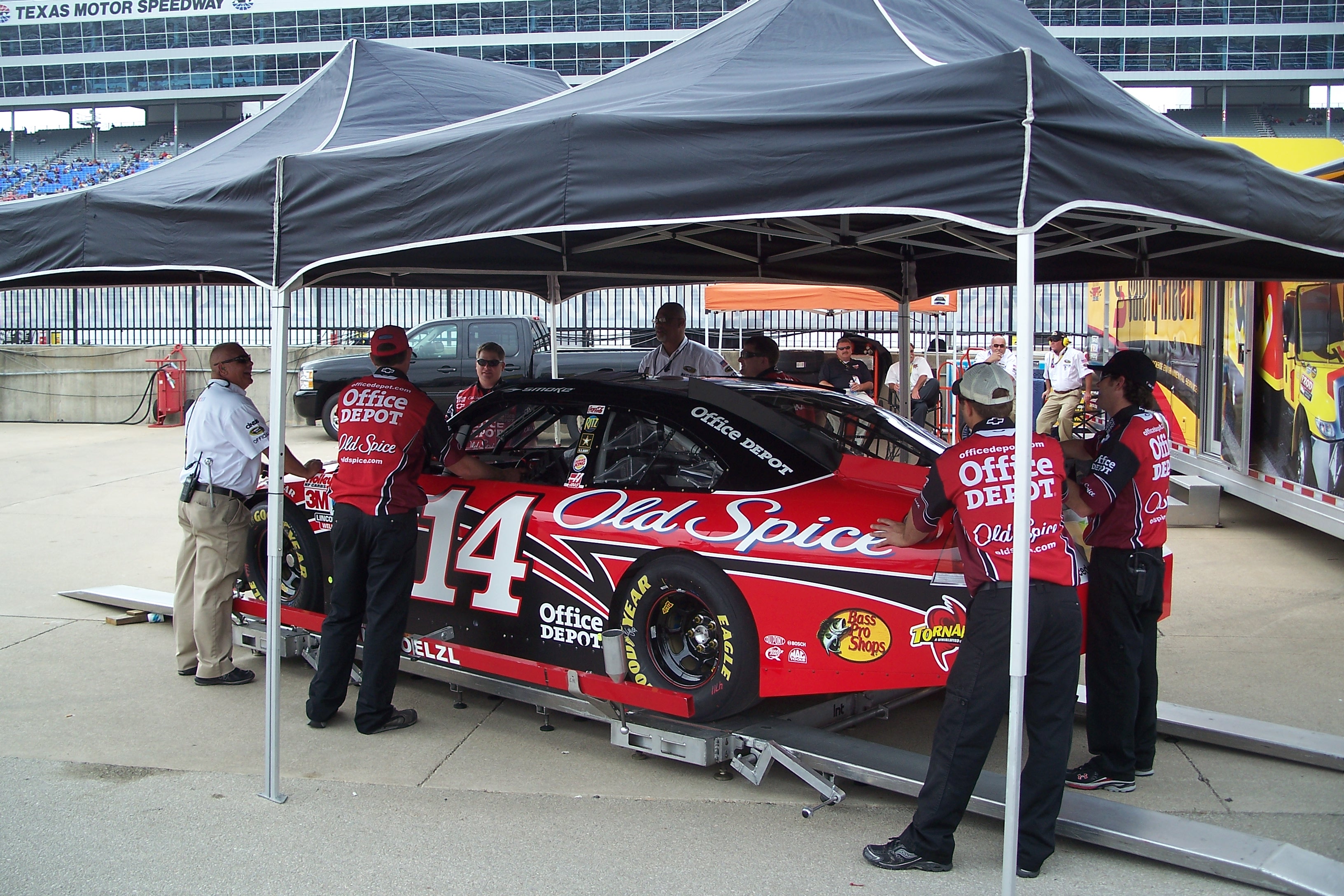
Tech Inspection

We also saw the cars undergoing technical inspection.  This was a prime opportunity to see a lot of behind the scenes things that one does not get to see normally when attending the race.  I like all the details and insight on how the teams prepare, technical inspections, and fueling, so it was all interesting to me.

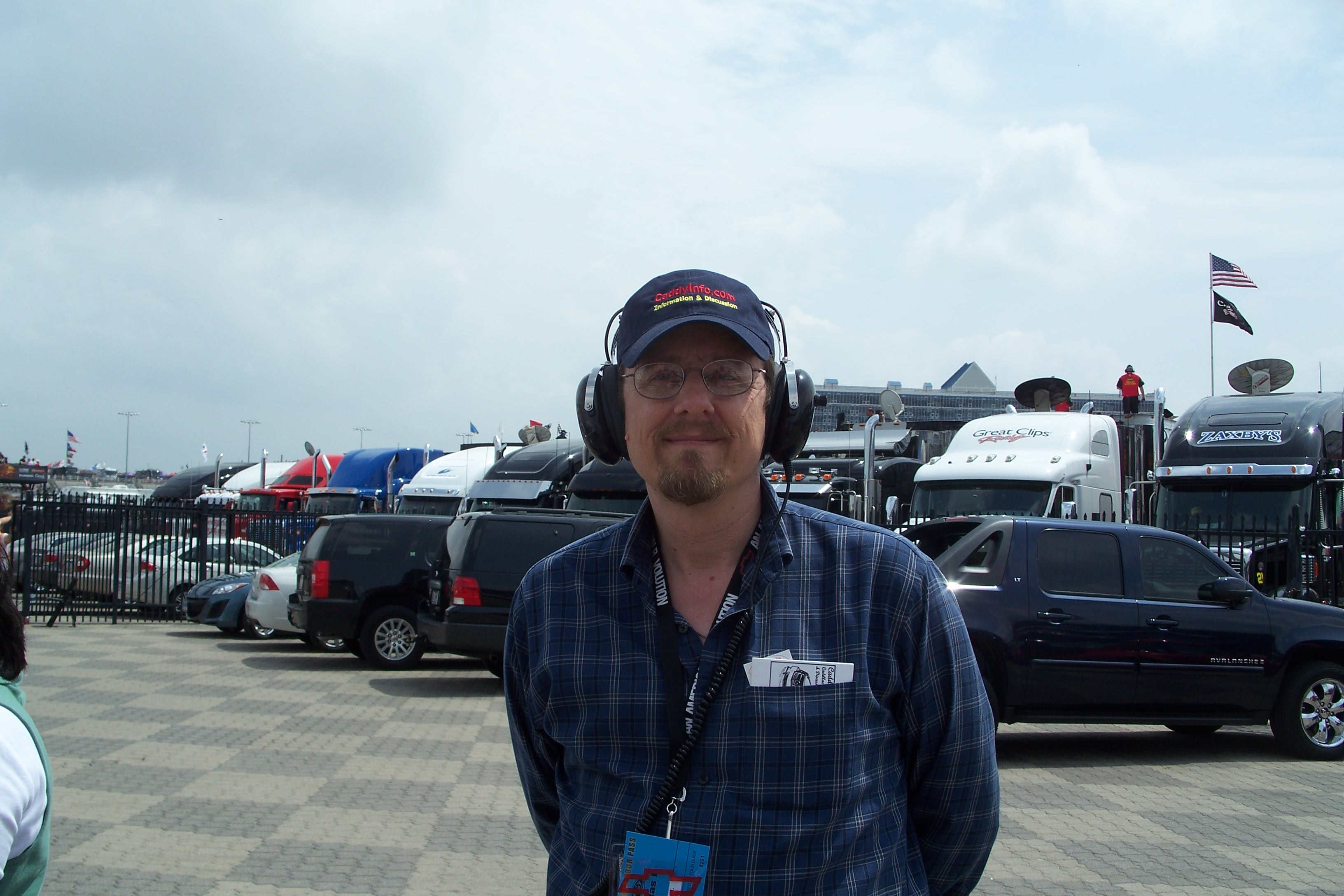
Photo of the author during a lull in the proceedings

After a deluxe dinner of Pizza out of the bed of a couple of Silverado’s, we headed in to the infield drive opportunity.  For this event we each drove a Chevrolet Silverado pickup trucks on the actual Texas Motor Speedway, with one of the Racing Drivers for the evening’s race standing in the bed of each Silverado waving to the crowd.    The truck I drove was brand new, with 2.5 hours of operation time and almost no miles on it before this weekend.

Finally, we attended the Race itself.  The Friday night race was the ARCA Rattlesnake 150.  After we got some ear plugs it was a fun race to watch.  In fact, my number one input for NASCAR would be to consider muffled vehicles, but many perhaps feel that the roar of the cars is an important part of the experience.    Easy enough to bring or buy hearing protection I suppose, but since they have to throttle the cars anyway, why not require mufflers?

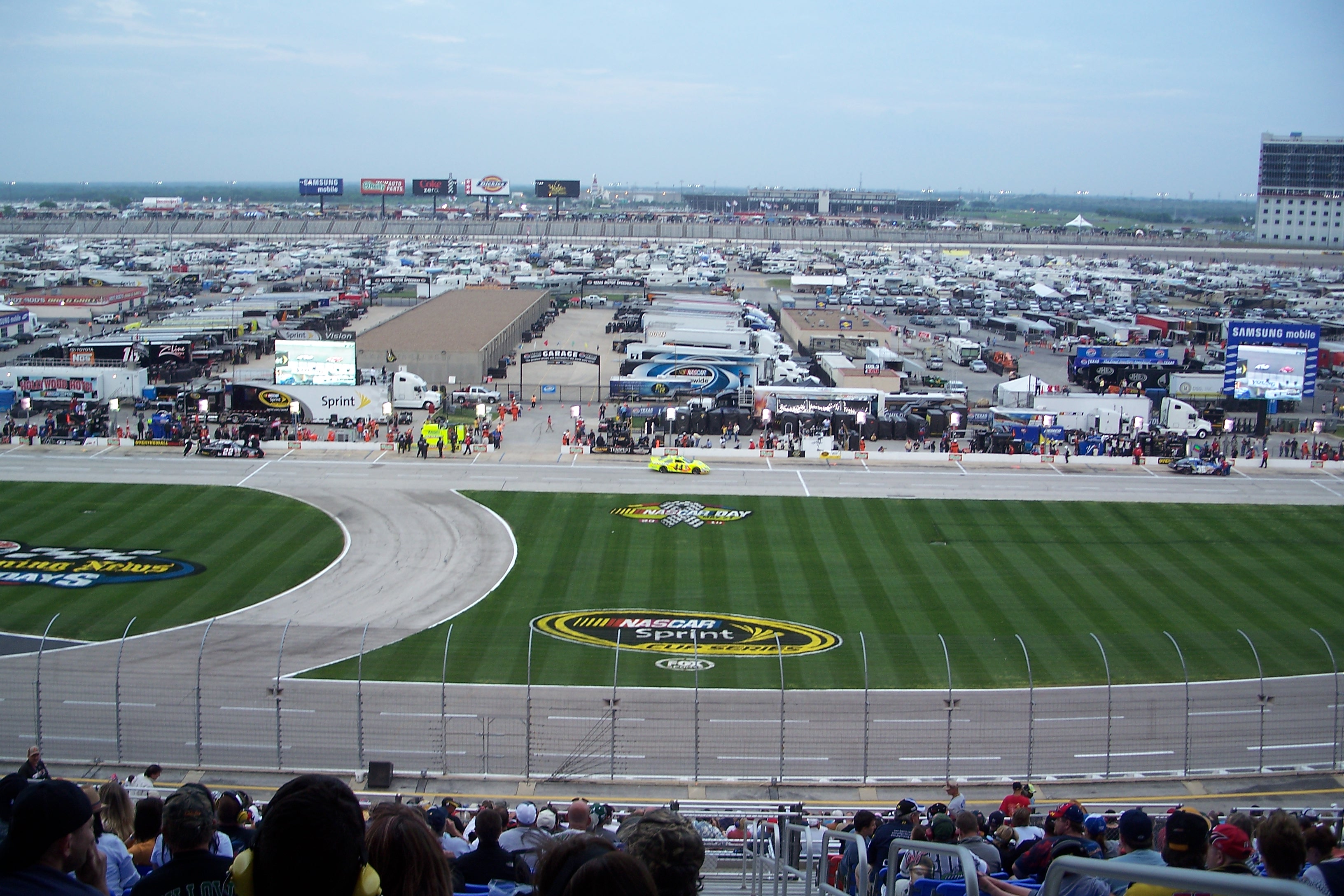
Texas Motor Speedway

All in all it was a remarkable day.  I was very glad of the opportunity at the ride & drive for some hands-on seat time in the Camaro, and in the displayed cars some opportunities to examine trunk space and other details.  The behind the scenes tour of the hauler and garages was unique, as was driving a lap of the raceway with a Driver in the bed of the truck.

All of the Chevrolet staff were friendly, nice, and efficient.  The entire day was well planned and coordinated without seeming stressful or strident in the least.  I definitely recommend bringing a guest or a friend to the event, as there were a lot of opportunities for discussion / visiting throughout the day.  One reason I wanted to attend the Friday session was that traffic was light going in and out of the TMS area, and we had no problems whatsoever with the commute there or back.

I would like to see more Cadillacs at this event, but it was very much a Chevrolet Event, and I appreciate them inviting me.  Do we know the lap time for a non-speed limiter equipped Camaro V8 or for the 2010 Cadillac CTS-V at TMS?  Don’t we want to know?

In pursuit of the perfect $30K Cadillac

The total cost of owning a car includes a variety of factors.  The actual price of the car is not directly a factor, unless you keep the car forever.

The difference in price of a car between when you buy it and when you sell it form the simple depreciation of the car while you owned it.   For example, if you were to purchase a car (we’ll call it car1),  for $45K, drive it for a year, then sell it for $40K, you might say that car1 cost you $5K to drive for a year.  On the other hand, if you purchase car2 for $25K, drive it for a year, then sell it for $18K, it cost you $7K to drive car2 for a year.  So although car1 had a higher price, car2 had a higher depreciation, and so cost more to drive for the year.

For my next Cadillac I plan to target an expense range of $400/month for the car.  I plan to drive it for 60 months.  At the end of the 60 months I anticipate that the residual value of the car will be no greater than $5K.  This means I will be looking for a vehicle that has a purchase price of $24K (60 mo x $400) plus $5K, or $29K.

Since the new CTS starts at $35K, that seems difficult as a budget for a Cadillac.  But I will not be shopping for a new car this time out, but rather for a 2 year old model with under 25K miles.  I also know that I drive an average of 15K miles per year.  Keeping in mind my 5 year horizon, if I purchase a car with 25K miles, after 5 years it would have 5×15=75K + 25K = 100K miles, and should still be in relatively good shape, and not require excessive maintenance or repairs.

My favorite target that is just coming into the 30Ks is the 2008 Cadillac STS-V.  As I have previously noted, the STS-V with every option known to man and a 469 hp supercharged DOHC Northstar V8 seems an amazing value, and it a high-weather mark in STS development.  I am hopeful that by this summer I will be able to find an excellent example within my price range.  Alternates would be to shop a fully loaded 2008/2009 CTS Sedan, or STS V8 Sedan, but the power and suspension tuning of the STS-V fit my idea of fun better.

2006 Cadillac STS-V

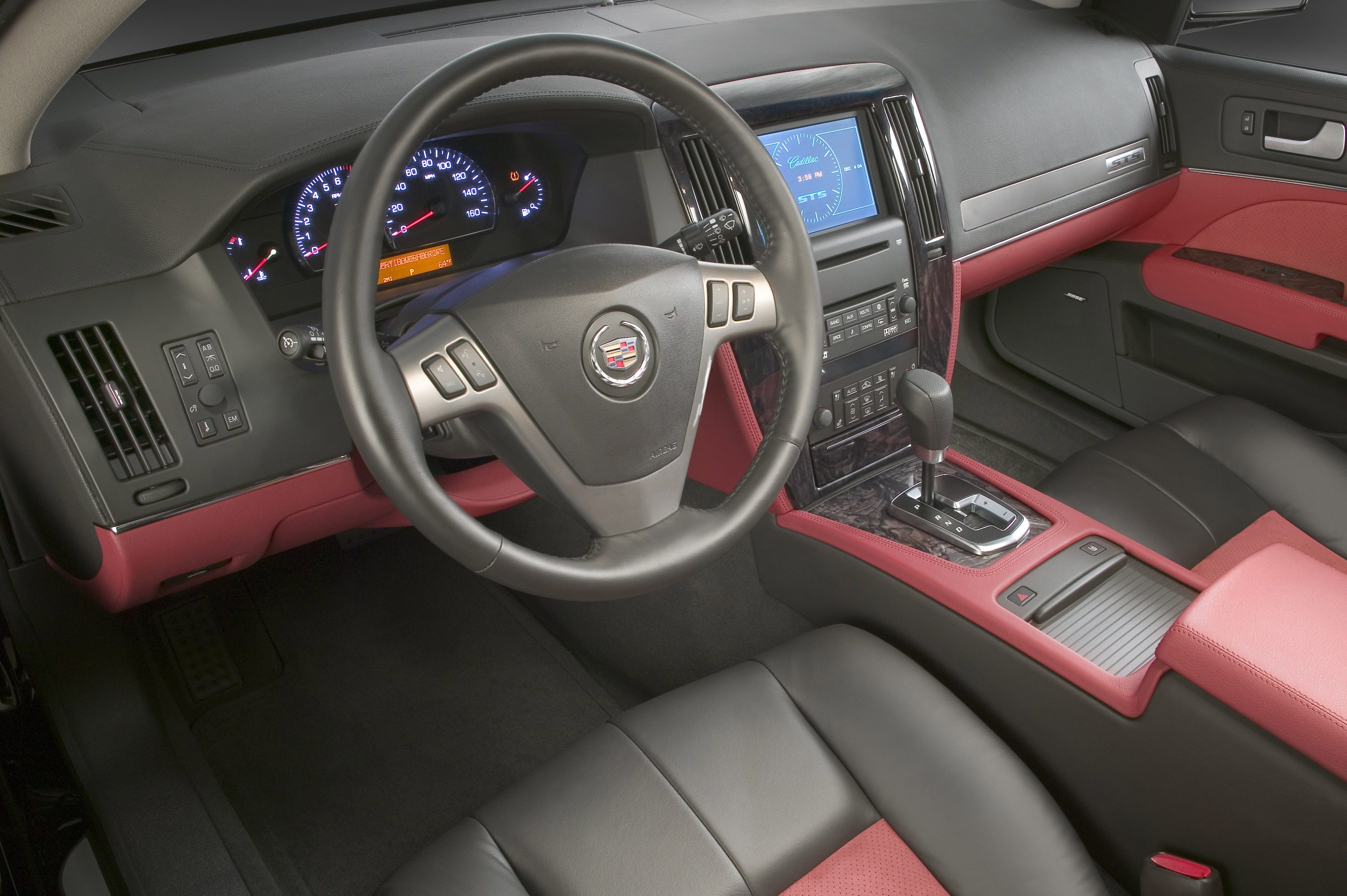
STS-V Interior Tango Red option shown

Now it is just the matter of finding the right STS-V. Total sales in 2008 of this model was under 500, but as the V-Coupe arrives this summer hopefully more of the STS-Vs will be coming out of the woodwork.

I have not lost my love for the new 2nd Generation CTS-V of course, and once prices for the Super Car CTS-V are in the mid to low $30Ks I will be looking very hard at them for the next Cadillac V.