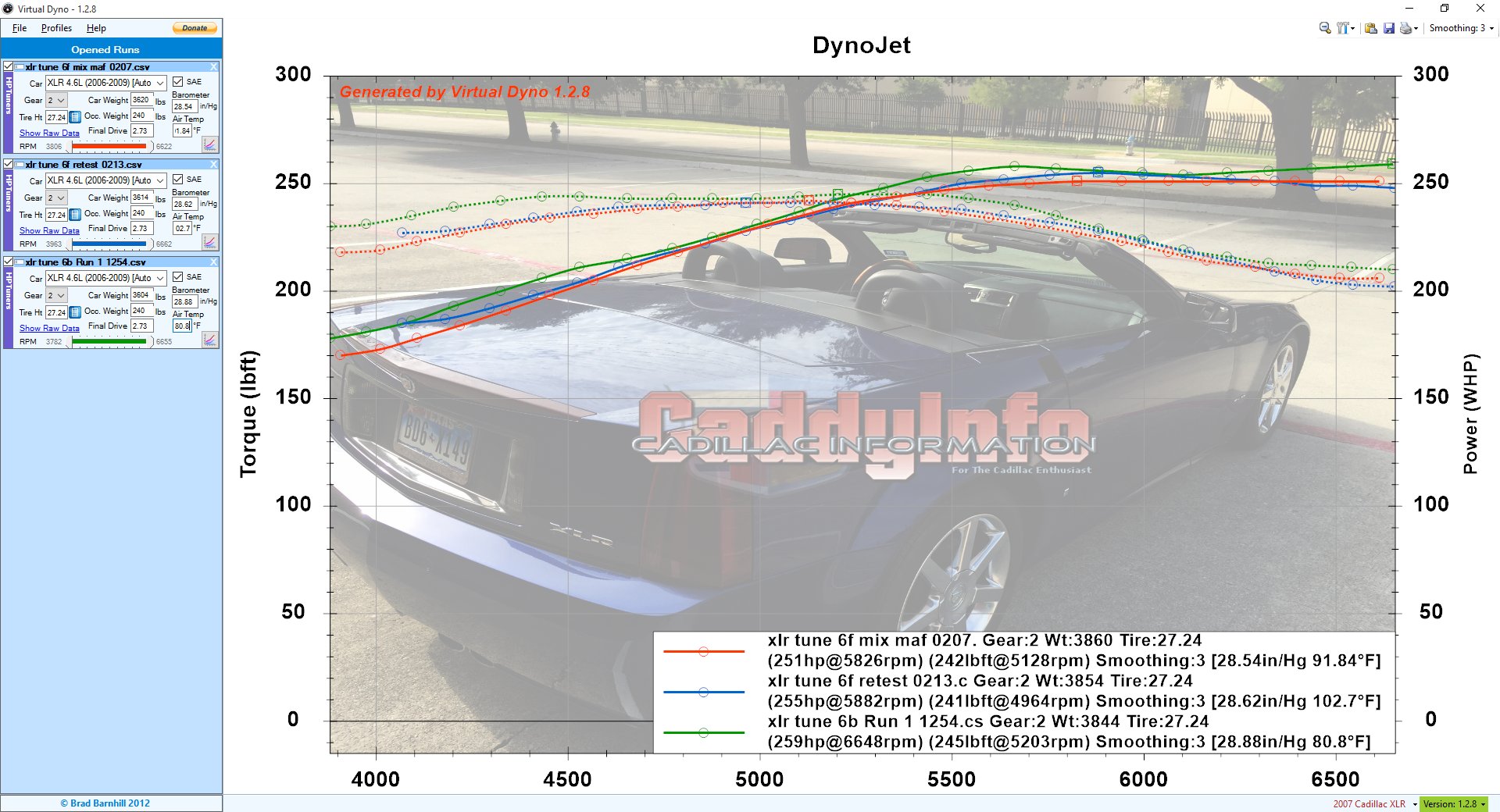
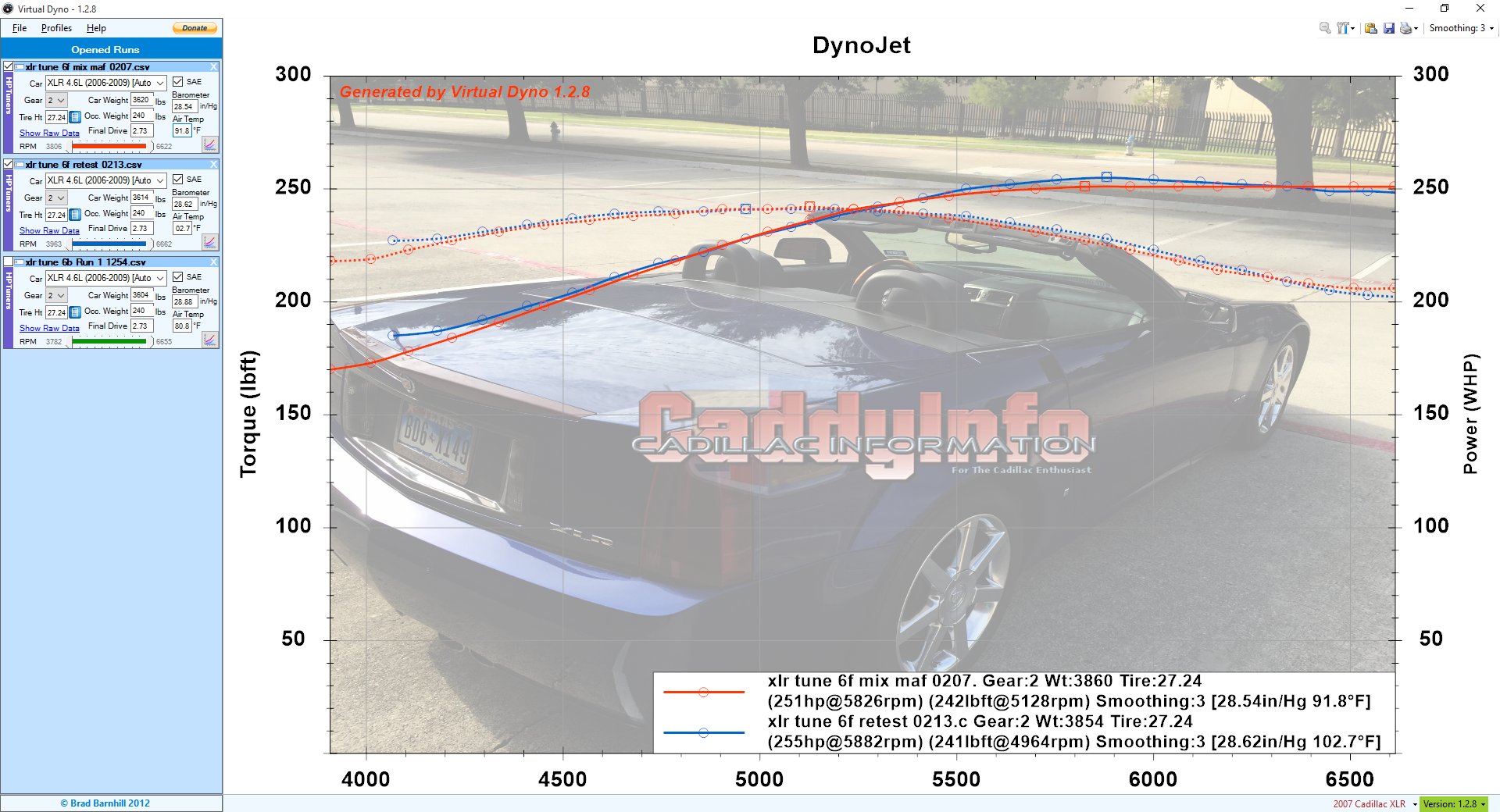
Instead of running more 6F baselines I decided to retry the early intake VVT and late exhaust retard from Tune 6C along with the other current settings from 6F. 6C was a confusing test result, as it was intuitively an improvement to 6B but tested worse. Because of the reset on Virtual Dyno, and method to correct for Humidity, and analysis that the 6B result was better than baseline for Tune 6B, (or any repetition since), I moved forward to 6G.
Compared to the Factory calibration, Tune 6G retards the intake and exhaust cams more earlier, from 4800 rpm – 5600 rpm (effecting 4400-5800) and above 6400 rpm. The MAF is tuned for the Volant air intake. The Top speed is adjusted to 186. Piston protection is delayed from 6000 rpm to 8192 rpm. PE ramp in is adjusted from 0.1 to 1.0. TUTD is adjusted to shift to the next higher gear at redline instead of holding for manual shift. The engine cooling fans some on stronger earlier.
The scanner froze before test 6G-0203, but easily reset and the XLR didn’t tilt.
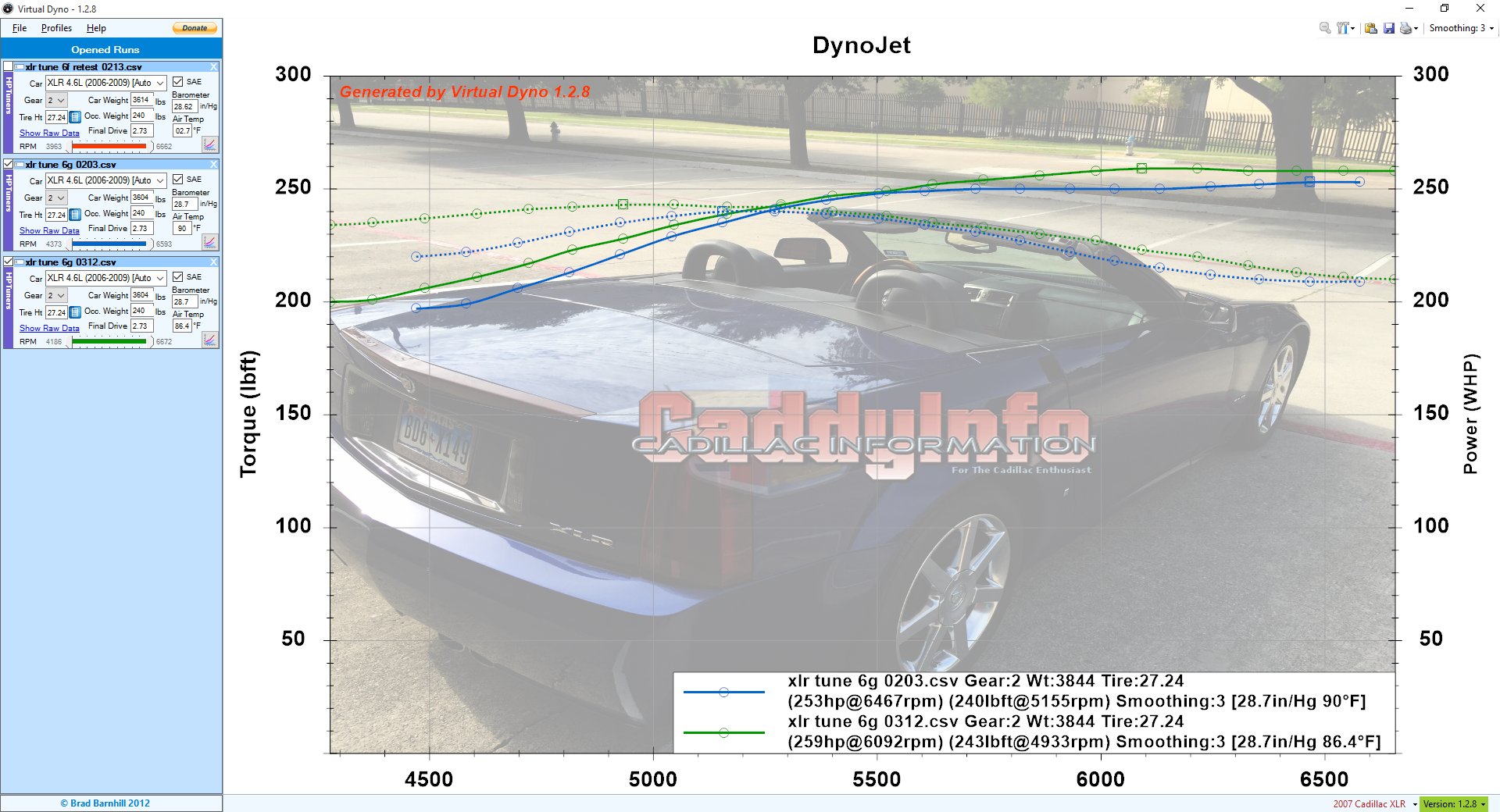
I did two runs for 6G, a practice I think I will return to as a way to understand run to run variation.
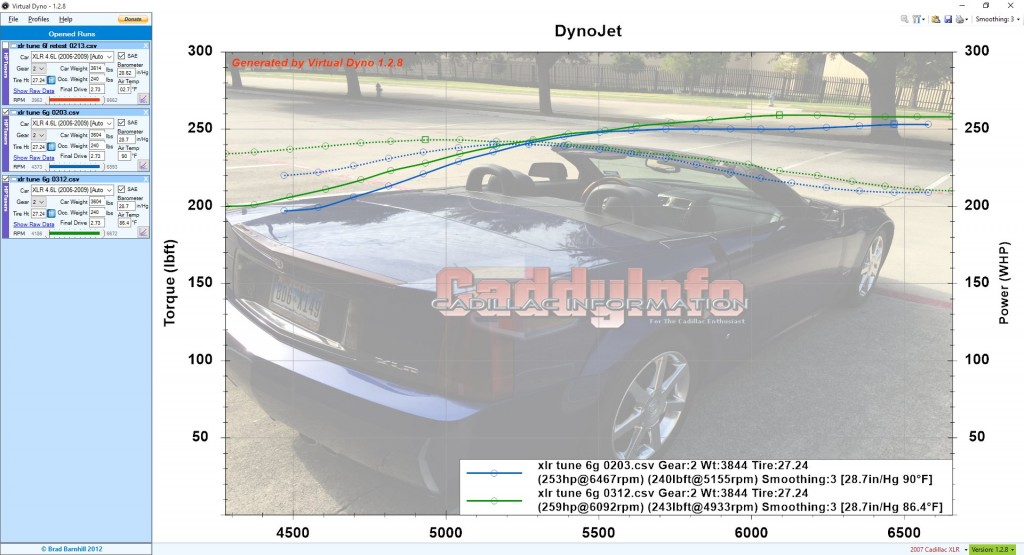
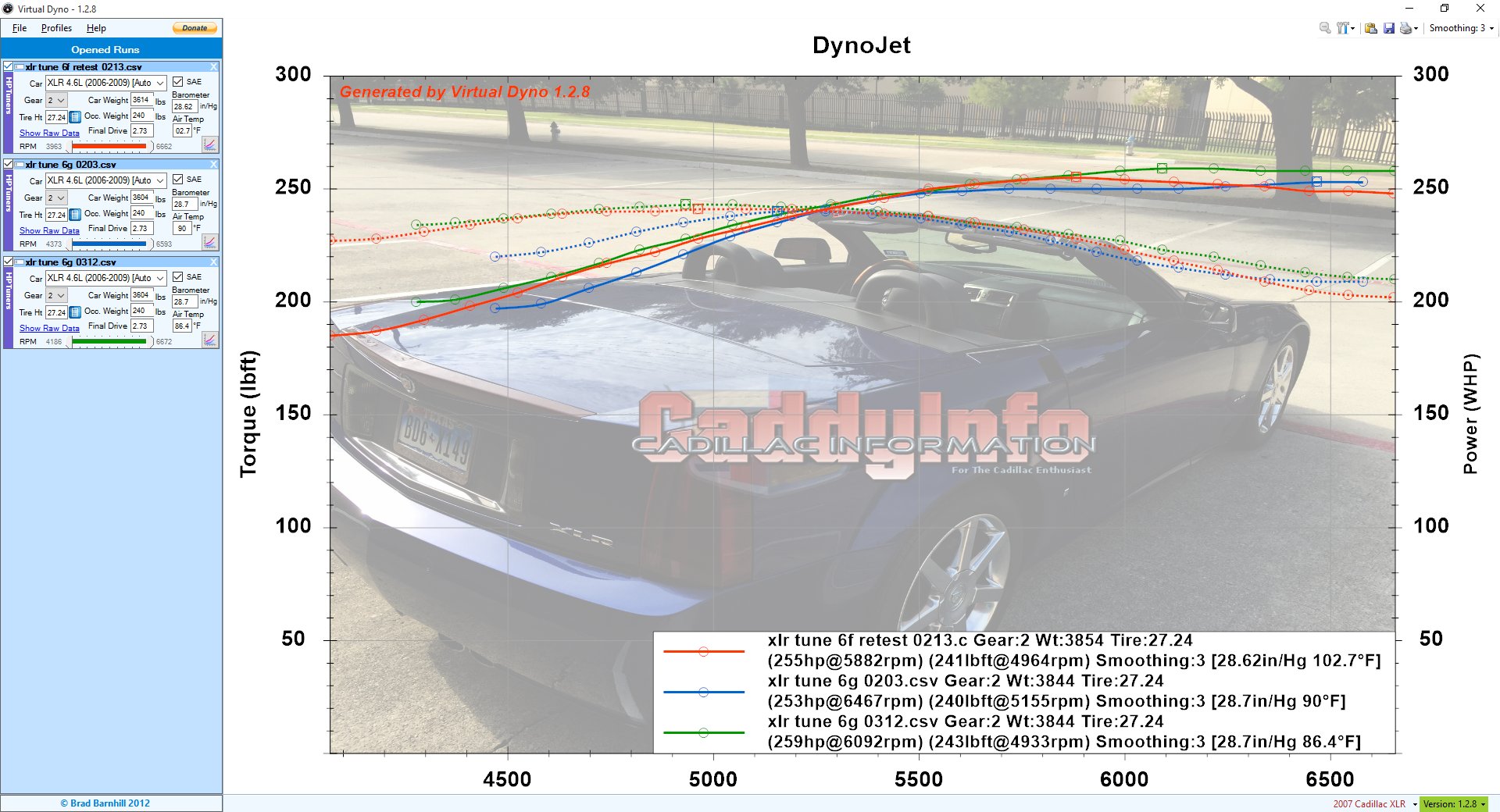
Run 1, named 6G-0203 for the timestamp, was worse than 6F-Retest, and Run 2, named 6G-0312, which was better. In fact, 6G-0312 was the best result to date, at 259 whp. Average intake air was slightly cooler for 6G-0312 due to more air through the system.
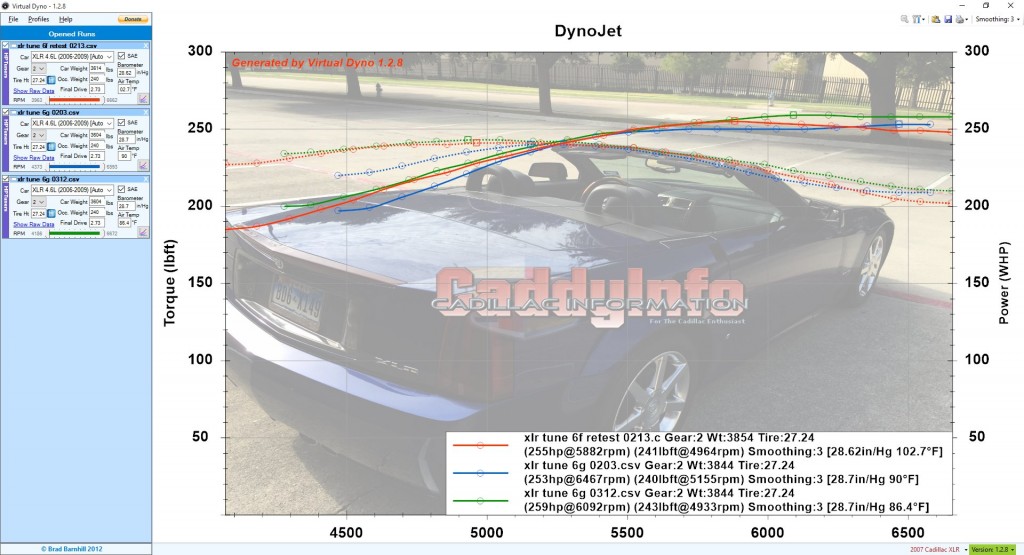
Today’s runs compared to 6F-Retest
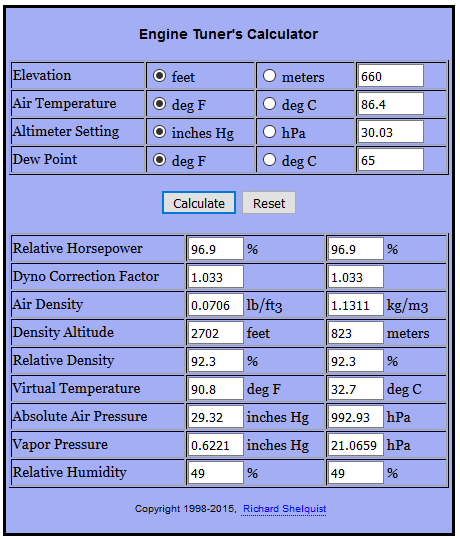
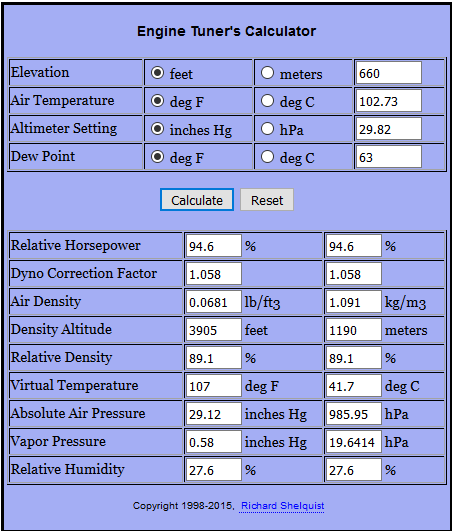
The weather adjustment for today & dyno correction factor.
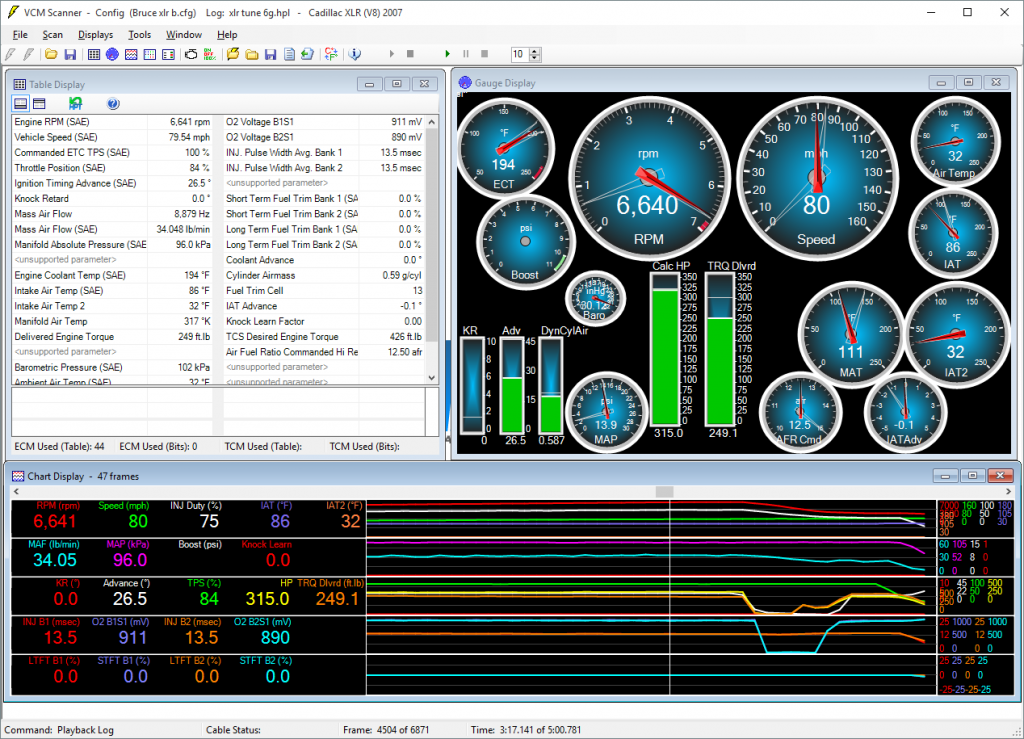
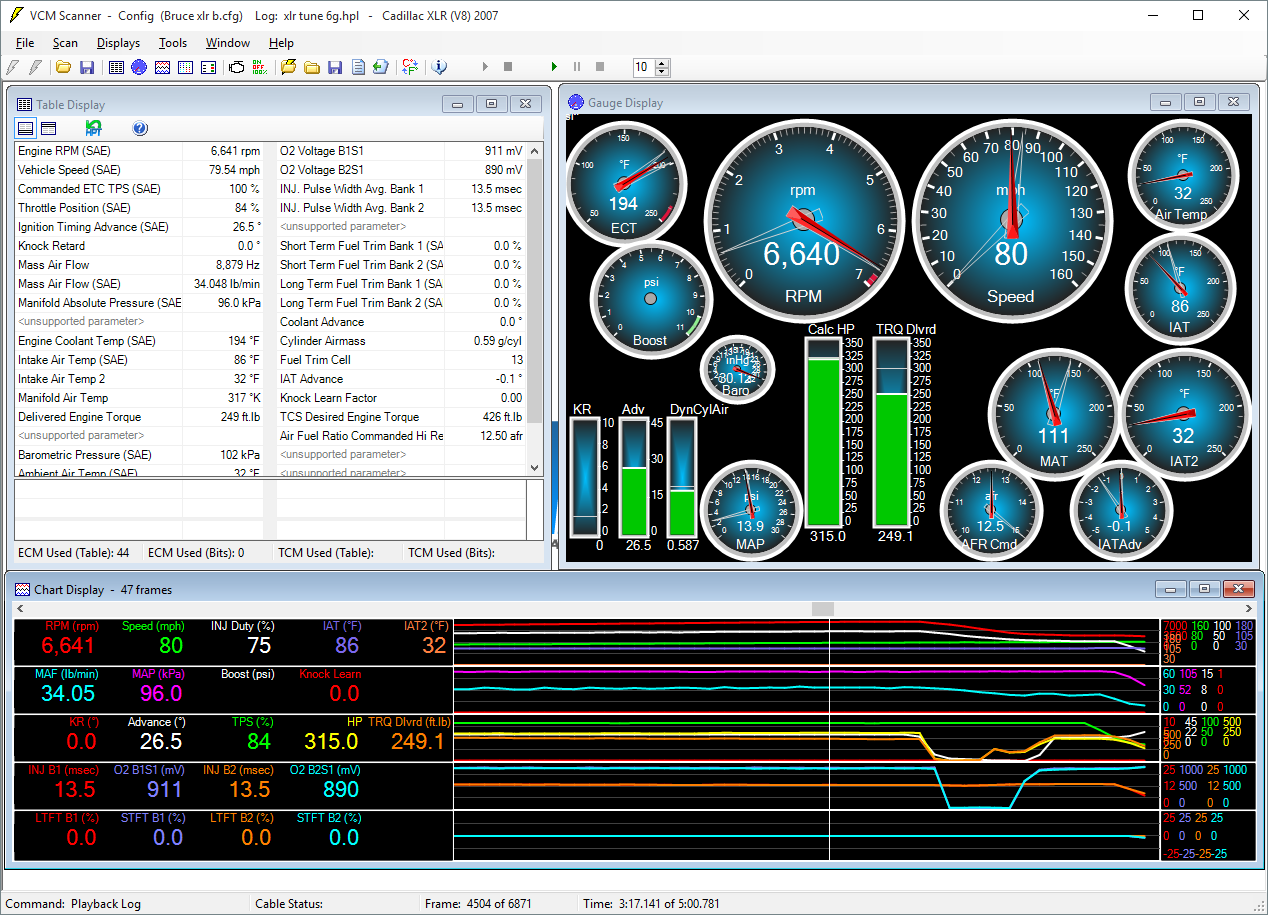
The 6G-0312 HPtuners at max HP uncorrected of 315 hp unsmoothed, uncorrected. Corrected for that run would be 326 hp in 2nd gear. The 6G-0203 peaked at 317.4 hp uncorrected at 6646 rpm (corrected 327.9 hp in 2nd gear).
For this test I stopped for gas after the test so the weight calc should be right on — I knew how much weight to subtract from full for the test result.
The battery on the laptop is spotty, and I have ordered a new one. Amazon refunded the cost of the existing battery (Go Amazon!) Hopefully that will improve the scanner freezing issue, although the laptop is not freezing — the scanner simply stops reporting results, which is more likely some XLR to scanner issue. Next will be more baseline runs for 6G to resolve today’s variance from test to test.
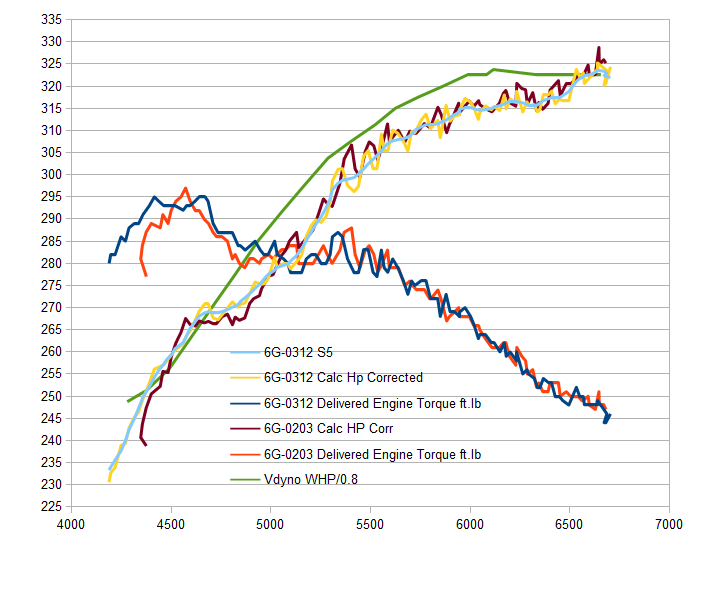
This is a comparison of the corrected calculated HP compared to the Virtual Dyno WHP / 0.8 (automatic). The light blue line is a smoothed version of the 6G-0312 calculated corrected HP using average smoothing applied 5 times. Compare that to the Green line for fit. The Virtual Dyno / 08 is 2.5% above the calculated corrected HP curve along the run of the curve 5250-6500 rpm, which is a pretty close fit.
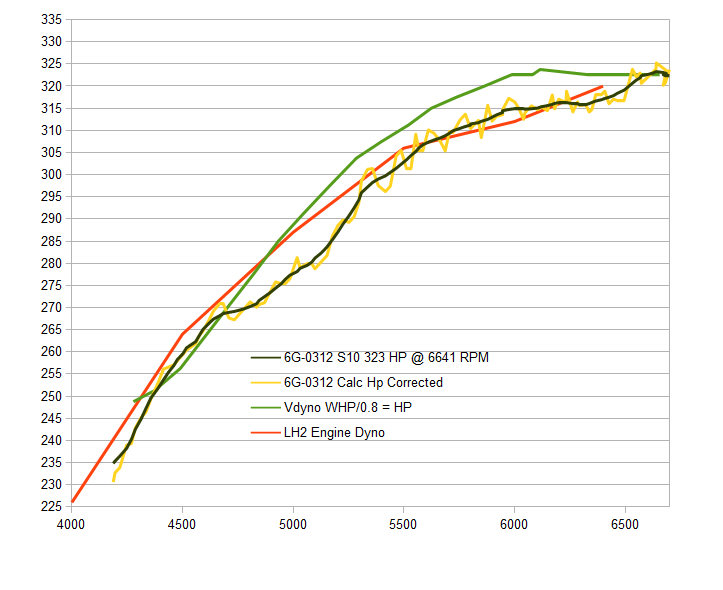
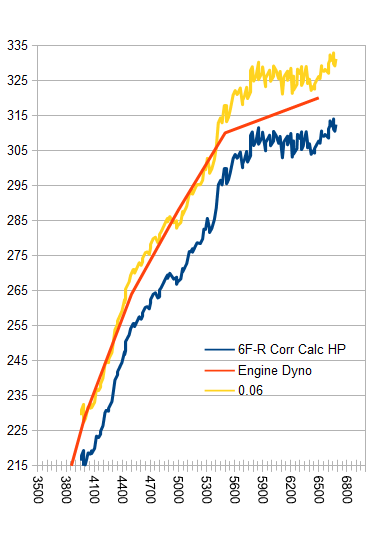
This graph shows a comparison between the 6G-0312 calculated and corrected hp, raw and smoothed, the Virtual Dyno 2nd gear whp converted to engine hp, and Cadillac’s engine dyno for an LH2. My conclusion is the various sources of data are tying out well. There is a dip in the calculated not in the virtual dyno between 4600-5200 rpm. I believe that same dip was there in the OEM tune.
I still don’t know how to correct for 2nd gear versus 4th gear, which is closer to 1:1 for the Virtual Dyno result. My supposition is that a chassis dyno would be higher in 4th gear than 2nd due to lower gear losses.