Intercooler Cooling: Corvette ZR-1 LS9, Cadillac CTS-V LSA, & STS-V LC3

The Chevrolet Corvette ZR-1 has a supercharged 6.2L OHV V8 engine.  It uses a TVS2300 supercharger with an integrated fin-type intercooler.  I am interested in the other end of the equation for this discussion, the heat exchanger.  Let’s look at how the Corvette design differs from my 2008 STS-V, and the 2009 CTS-V.

From our previous discussion, here is the intercooler cooling system for the 2008 STS-V:
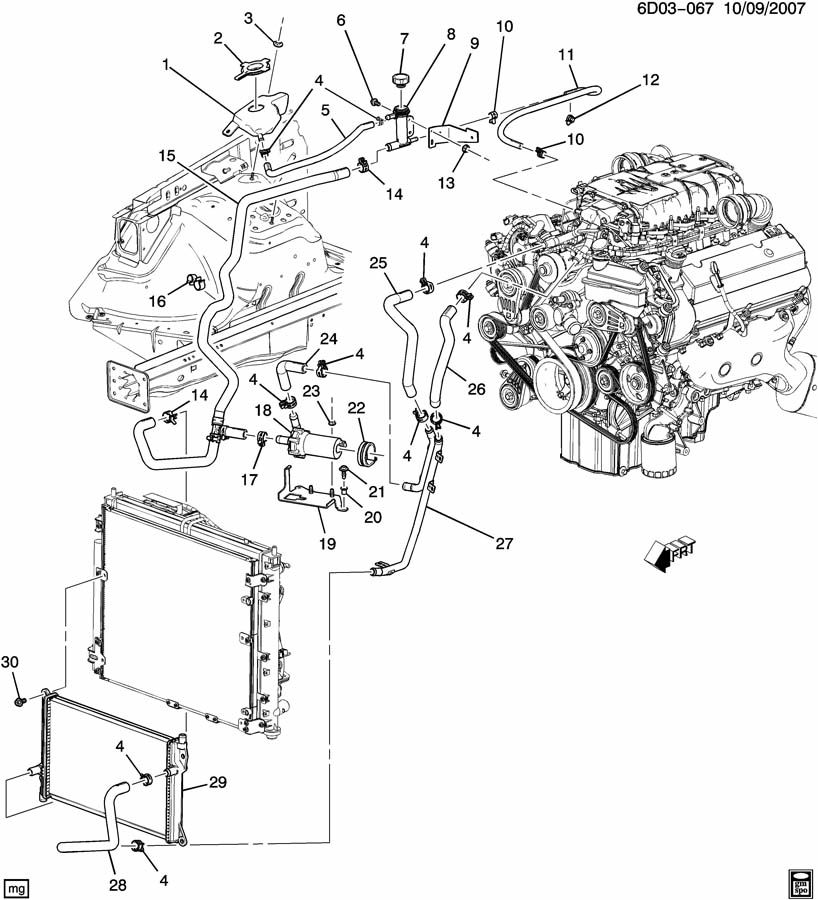
STS-V LC3 Intercooler Flow path & Parts

Coolant flows from the output of the intercooler at the top of the engine through 26 and 27 to the front mounted heat exchanger 29.  After a pass across the heat exchanger, it flows to the intercooler pump 18 and then up via 25 to the intercooler at the top of the engine again.  There is a T along the way between 14 & 17 that allows for an up-pipe leading to a small reservoir and used for filling of the system.

It is not clear to me for the STS-V front-mounted heat exchanger how many ‘passes’ it contains.  Fluid enters at the top right and leaves at the bottom left, and may snake a few times across the fins of the heat exchanger on the way.  The GM p/n is 25770419 for the STS-V heat exchanger.  The heat exchanger on the car is not clearly visible for investigation.

We find a similar system on the 2009 CTS-V LSA engine.  The LSA is a supercharged 6.2L OHV V8 similar to the ZR-1’s LS-9 engine, except that it uses a TVS1900 Supercharger and has different internals.  As we will see, it also uses a different intercooler cooling strategy:
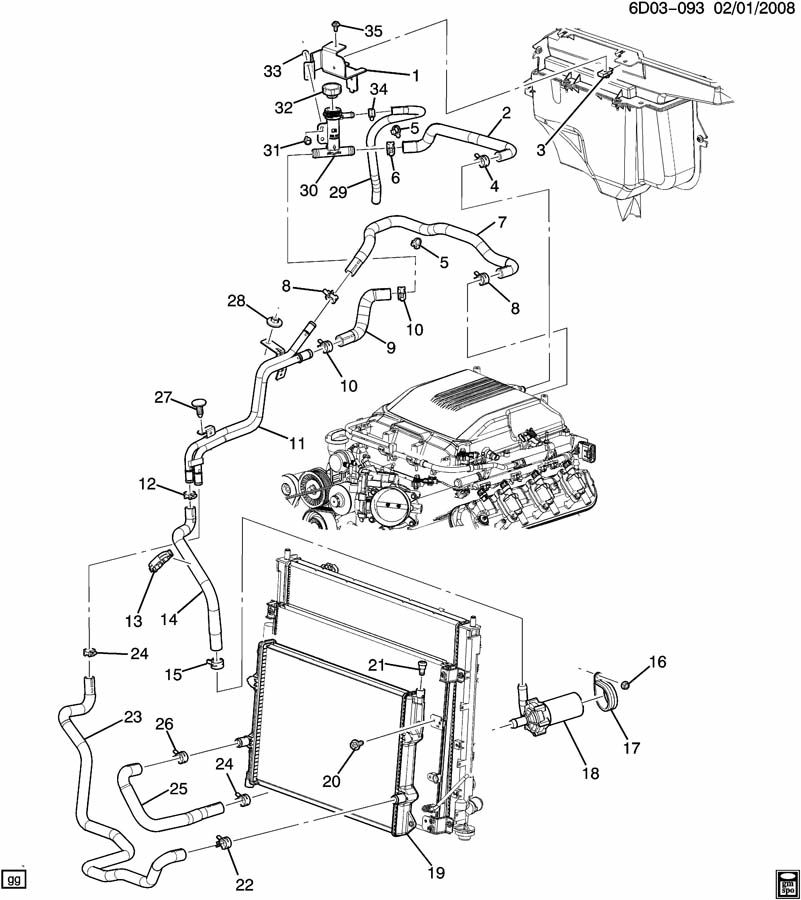
CTS-V LSA Supercharged V8 Intercooler cooling system

Here we see coolant flows from the intercooler at the top of the engine through 2 and 9 into the right or bottom side in our view of 11, then into 23 to reach the front-mounted heat exchanger 19.  After one pass across the heat exchanger, the cooler coolant flows out through 25 to the coolant pump 18, and via 14 back through the other side of 11, and along 7 back to the intercooler at the top of the engine.  Like the STS-V system, a T in the line at 30 just in from 2 allows fluid flow from the small reservoir and filling of the system.

The GM p/n is 25876663 for the CTS-V Coupe heat exchanger.

Mods: when modifying the CTS-V heat exchanger, D3 and Lingenfelter replace the stock one with a larger example.  Wait4me adds a second heat exchanger in front of the stock heat exchanger.

Now let’s look at the Corvette ZR-1’s LS-9 V8 system solution:
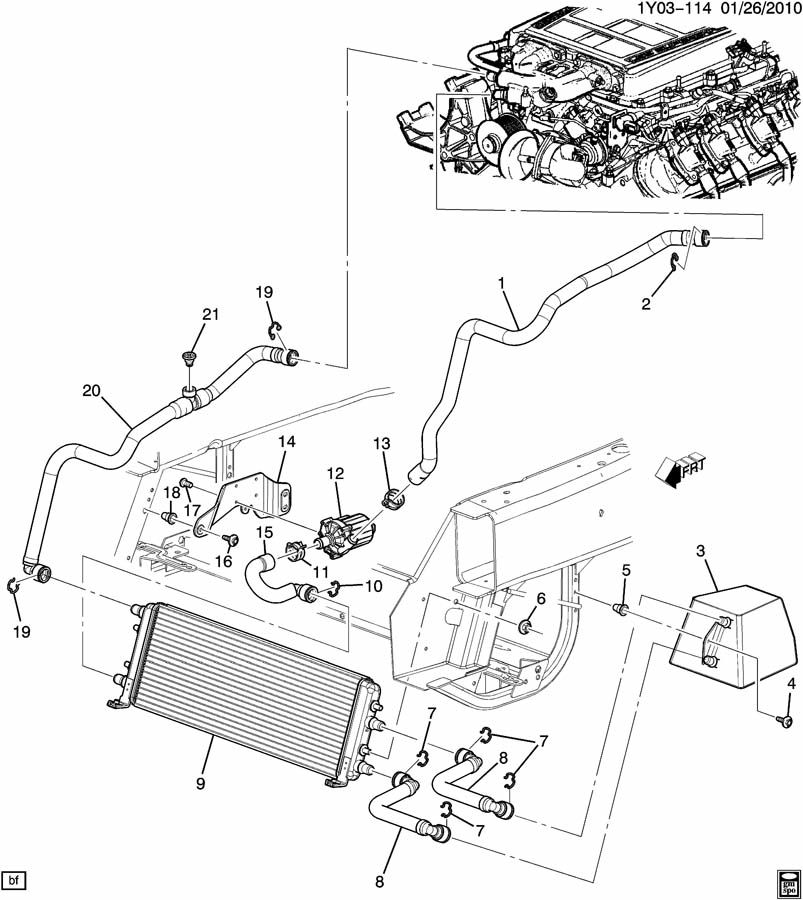
ZR-1 Intercooler System flow

Here we see the intercooling coolant flow into the front mounted heat exchanger.  Note that the front mounted heat exchanger is a 2-path heat exchanger.

Hot coolant flows from the intercooler at the top of the engine to the top row of the front mounted heat exchanger, and across the heat exchanger and into a inline reservoir.  From the inline reservoir cooler coolant flows back into the front mounted heat exchanger, then to the intercooler pump.  From the pump the cool coolant heads to the intercooler at the top of the engine.

The front mounted heat exchanger is p/n 20759871.  Yes, these three applications use 3 different front mounted heat exchangers.  Although there may be inherent benefits to the Corvette approach, it is also possible that due to packaging limitations in the Corvette there was simply less room available to use the larger area heat exchangers in the Cadillacs.

The STS-V system holds 2.6 quarts (2.5L) of coolant; the CTS-V holds 3.2 quarts (3.0L) the Corvette system holds 5.2 quarts (4.9L) of coolant.  Additional coolant in the system acts as a time buffer for changes in temperature of the system.  So when the coolant is heating up like wide open throttle from idle, then it takes longer to heat up.  However, when the coolant is cooling down like when high speed is pushing cold fresh air across the heat exchanger, it would take longer to cool down.

The pump in the Corvette is apparently different also; that’s a $1K pump where the one in the STS-V is under half that.

Ideas for Discussion:

Could the Corvette’s 2-pass heat exchanger and reservoir be easily adapted for use in the STS-V? Should it be? Only adding the reservoir might be an option, to boost the STS-V coolant capacity to near the ZR-1’s.

Does the STS-V NEED more intercooler coolant capacity?  I appreciate that it helps for back to back dyno runs, but on an actual drive there is high speed wind over the intercooler heat exchanger to compensate for the higher temps, and being able to quickly cool the intercooler coolant might be an advantage on the street.

Adding a second heat exchanger for the STS-V in front of the current heat exchanger would add fluid capacity and something less than twice the cooling, and be relatively easy to plumb.  However, it would require more experimental design to capture temps going in and out of the current heat exchanger under a variety of conditions, then in and out of the doubled heat exchanger in a variety of conditions.  The net effort might be less than worthwhile for the net benefit.

Remove Beauty, Free the Beast: @Cadillac STS-V LC3 Thoughts

For my upcoming Spectre Intake install the beauty cover on the LC3 4.4L DOHC VVT V8 in my 2008 STS-V will need to go.  Technically, it can stay with less underpadding, but good excuse to remove it.

The top of the engine — the intercooler on top of the supercharger on top of the engine — is capped with this nice Cadillac beauty cover.

In my opinion, a beauty cover misses the point.  I get that it cleans up the engine compartment nicely and all.  But the beauty part should be the engine, not a molded cover hiding the engine.

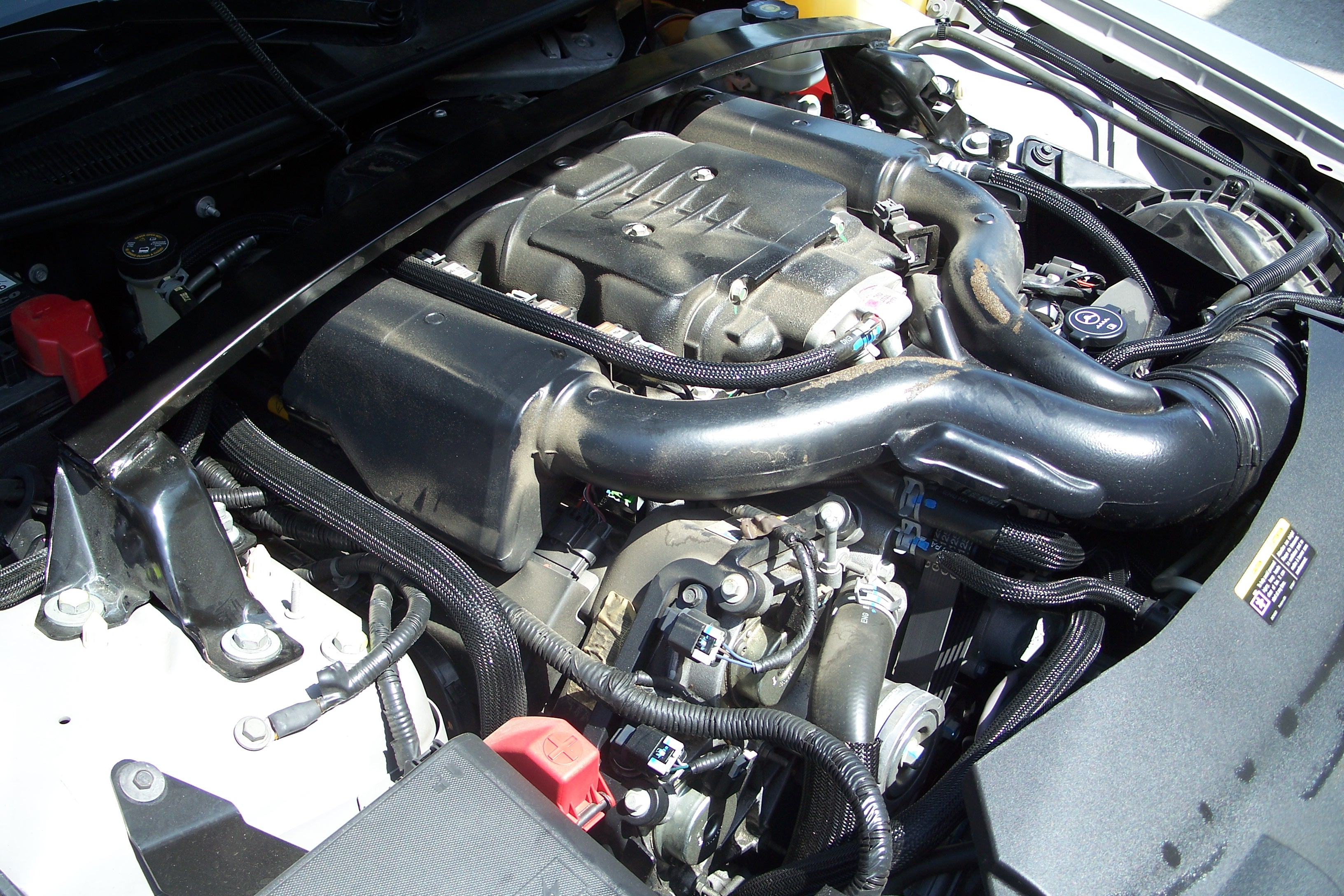
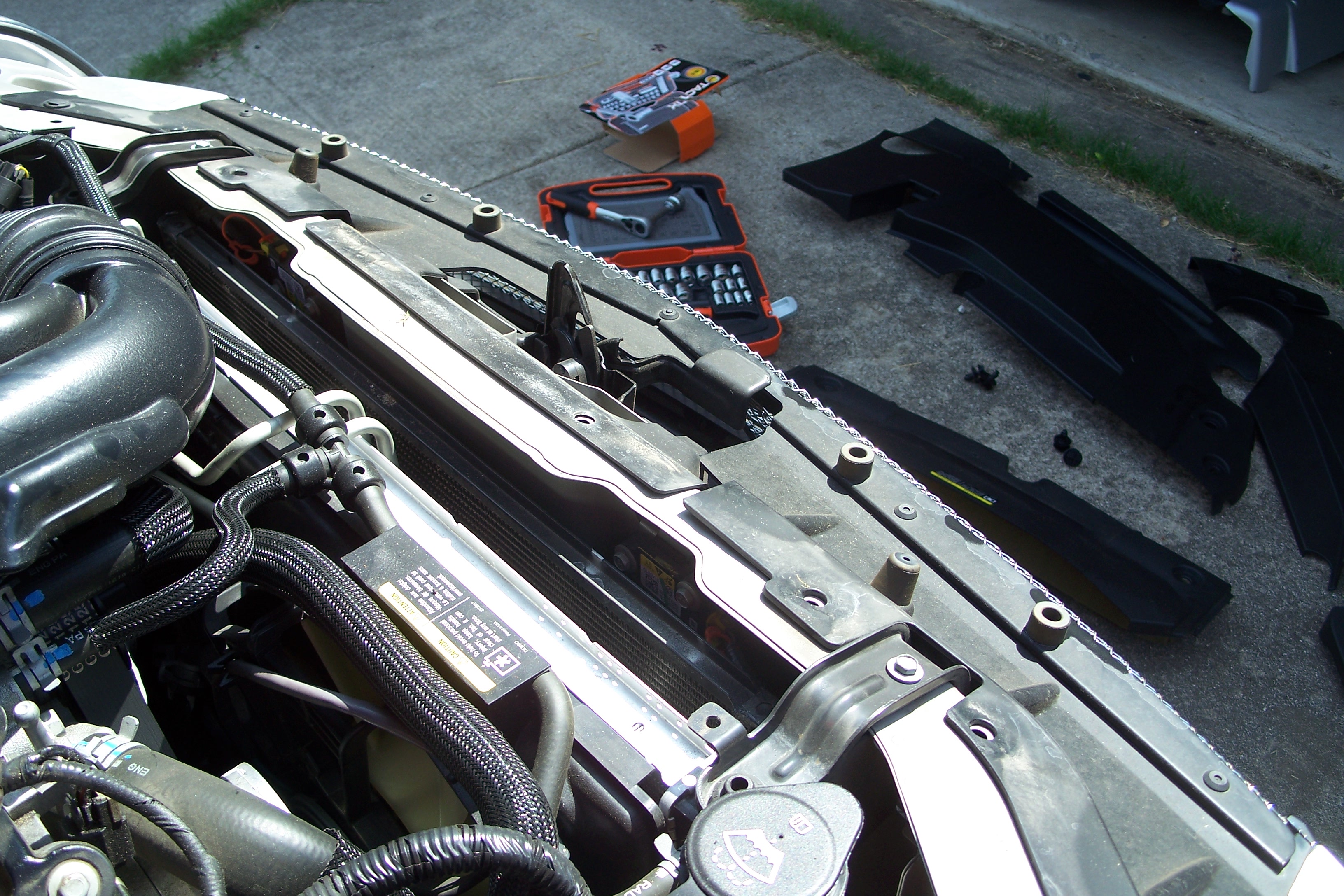
Here’s what it looks like with the covers removed: (click on images for larger versions)

STS-V Engine with Covers Removed

With dirt, part of the underside of the foam from the beauty cover, et al.

This actually is MUCH more interesting to me, and you can see the air intake piping, the intercooler and cooling lines, and even down to the right the belt drive for the supercharger.

Cadillac STS-V intercooler coolant reservoir

This is a close-up shot of the intercooler coolant reservoir.  Yes, it looks like it is just a filler neck because that is what it is.  The fill cold line is near or at the top of the tube.  You can just see the actual coolant in the tube just at the bottom of the tube before the insulated covering.

The tube coming out of the top of the reservoir is a vent drain to an empty spot in front of the battery.

It strikes me that replacing this small tube with a larger but sized to fit in the space reservoir would add more fluid capacity to the system and if selected appropriately bolt in.

It is very hard to photograph the front heat exchangers, but here is a shot and bear with me because we’ll switch to diagrams after the photo:

STS-V heat exchangers engine shot

There are three different heat exchangers in view at the front of the STS-V.

STS-V LC3 Engine Coolers; Radiator, A/C Condenser, Intercooler

The are in order from back to front, 22 the radiator, 21 the transmission oil cooler, 19 the A/C condenser (CONDENSER,A/C ACDelco #15-63240), and 17 the intercooler front-mounted heat exchanger (FMHE), (RADIATOR,CHRG AIR CLR, 25770419).

STS-V LC3 Intercooler Heat Exchanger

So looking at that, this view looking forward in the engine compartment probably shows the item 19 (black); the intercooler heat exhanger is a smaller item ahead of that and not visible.

This diagram shows just the intercooler flow paths and parts:

STS-V LC3 Intercooler Flow path & Parts

This gives me pause — the assembly diagram shows a reservoir (1) and the line from the tube running to that reservoir.  My STS-V does not have this item (1) at all, so I’ll have to check with other owners to see what they have.

The intercooler pump part number and info is

018 22718756 PUMP. Turbocharger/Supercharger Cooling.
PUMP,CHRG AIR CLR COOL(LESS CLAMP). Required: 01For: DX 4.4D(LC3) (2006-2009) (2006 – 2008).

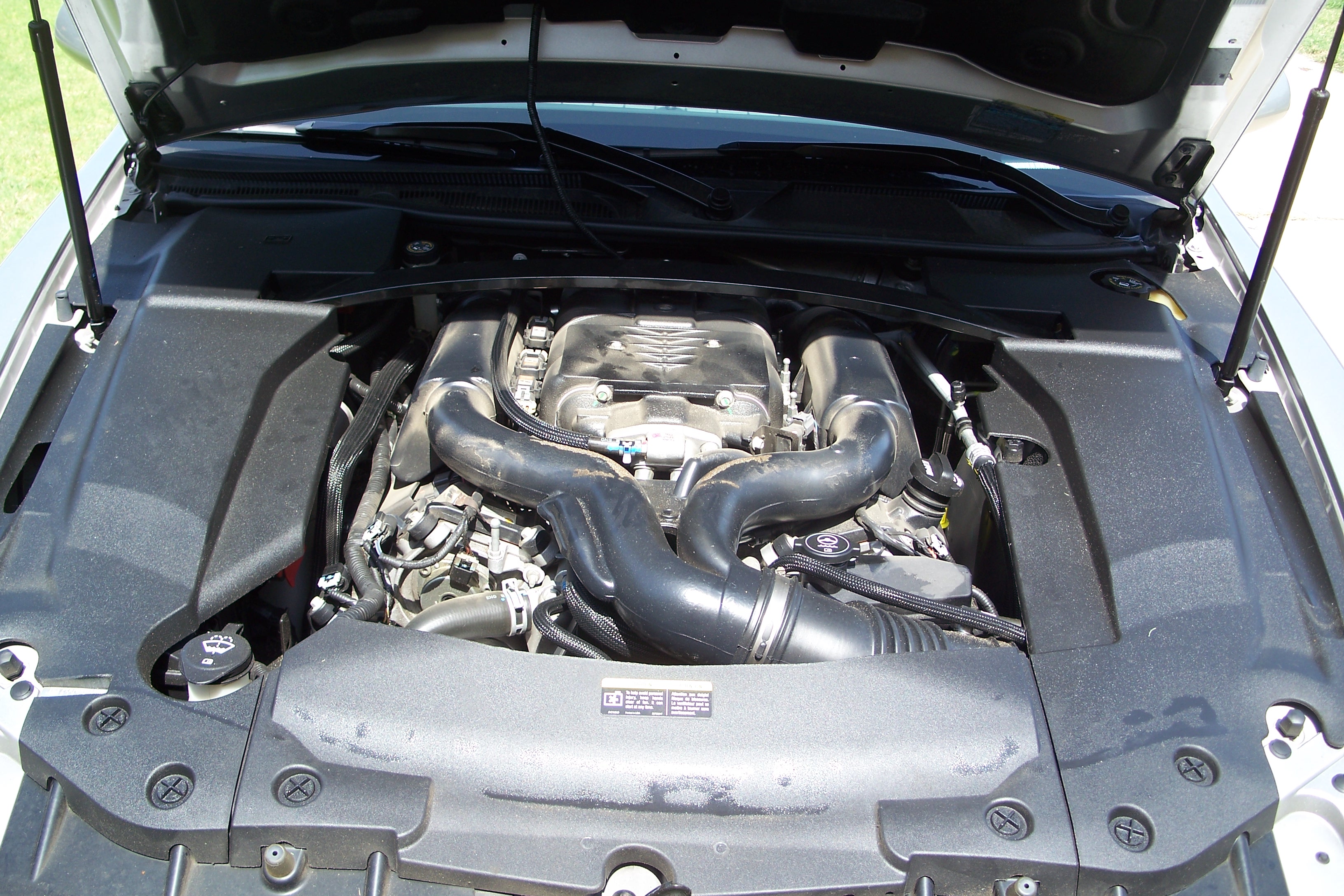
STS-V LC3 Engine Compartment with side covers and front cover on


The front center cover over the heat exchangers strikes me as perhaps functional, and used as a shroud to keep air flowing through the radiator.  I put that one and the side covers back on for every day use.

Questions to ponder:

Is there an easy way to expand the intercooler coolant reservoir at the overflow and so add more coolant to the system for heat buffering?

The standard front mounted heat exchanger for the intercooler appears to be large and very functional.  Is this really a weak spot and needing to be changed, or is the issue really the amount of fluid in the system?

Next Project: Get out there and clean up the engine compartment!

@Cadillac STS-V Supercharger & Intercooler Ideas #Motorama

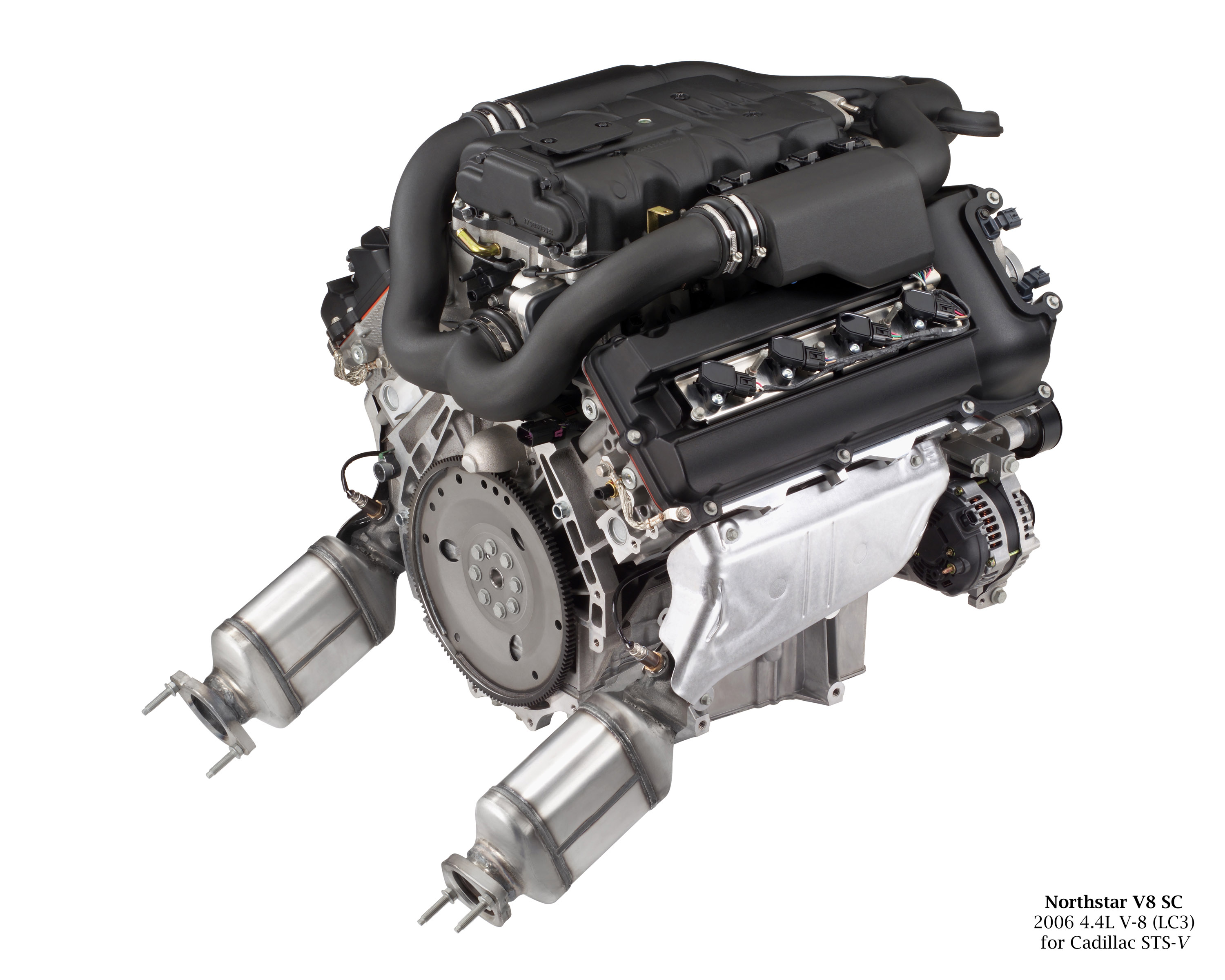
The Cadillac STS-V (2006-2009) featured the 4.4L DOHC VVT LC3 V8 with a custom Eaton M122 Supercharger and integrated intercooler.

This photo shows the Cadillac LC3 engine without the ‘beauty cover’, looking from the rear of the engine — so the front of the Cadillac would be right and away.

Air flows in the black tubes at the top of the engine to the ‘back’ of the engine, and into the supercharger.  Note the noise baffles in the intake tubing intended to isolate the whine of the supercharger.

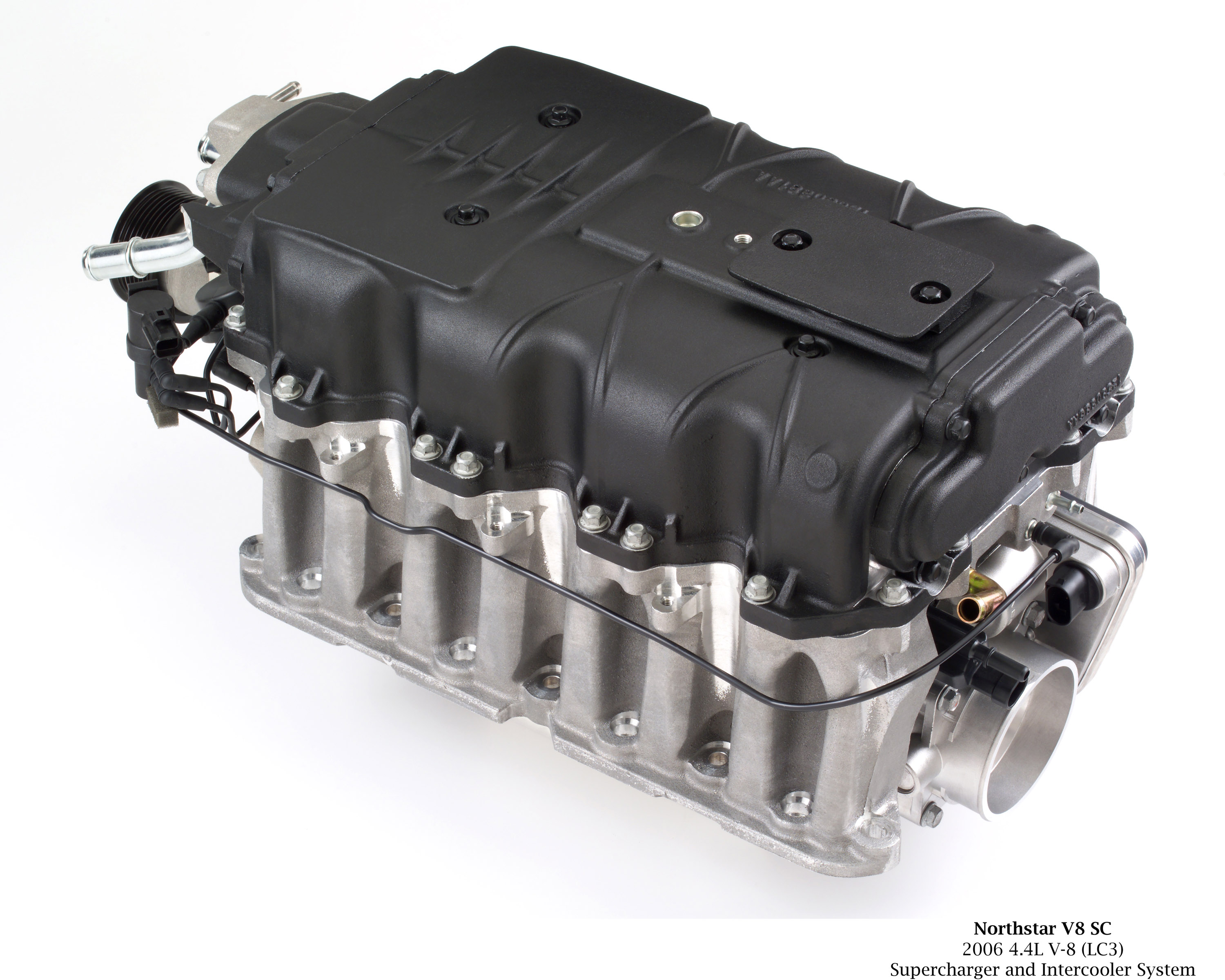
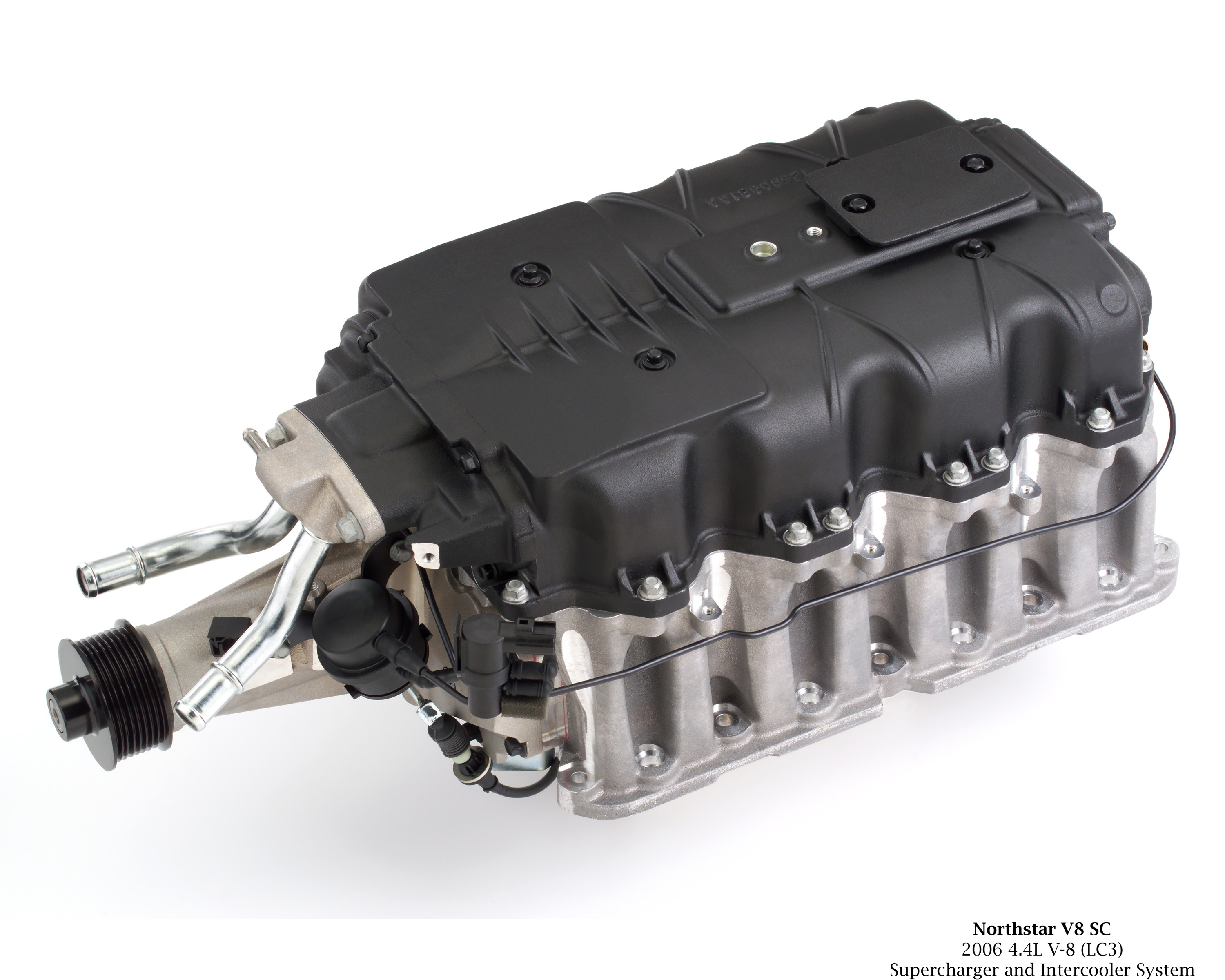
This view is of the supercharger+intercooler from the back:


and the next view is the reverse angle or ‘front facing’ shot of the coolant in/out tubes flowing to the intercooler (black part).  The ‘snout’ is the drive for the supercharger.  A belt runs from a pulley below to turn the Supercharger, pressurizing the incoming air.

Once you open and separate the supercharger and intercooler they look like this — note the intercooler is flipped upside down here, as if you simply removed it by ‘opening it up’:

STS-V Intercooler removed from Supercharger

The intercooler is an air to water system, and features Laminova laminar flow heat exchange tubes.

The air flows into the back of the supercharger through the long intake.  Then it is pumped up from the center of the supercharger through the intercooler past the Laminova tubes, and then it flows down the sides of the intercooler casing and the supercharger casing and into the engine.

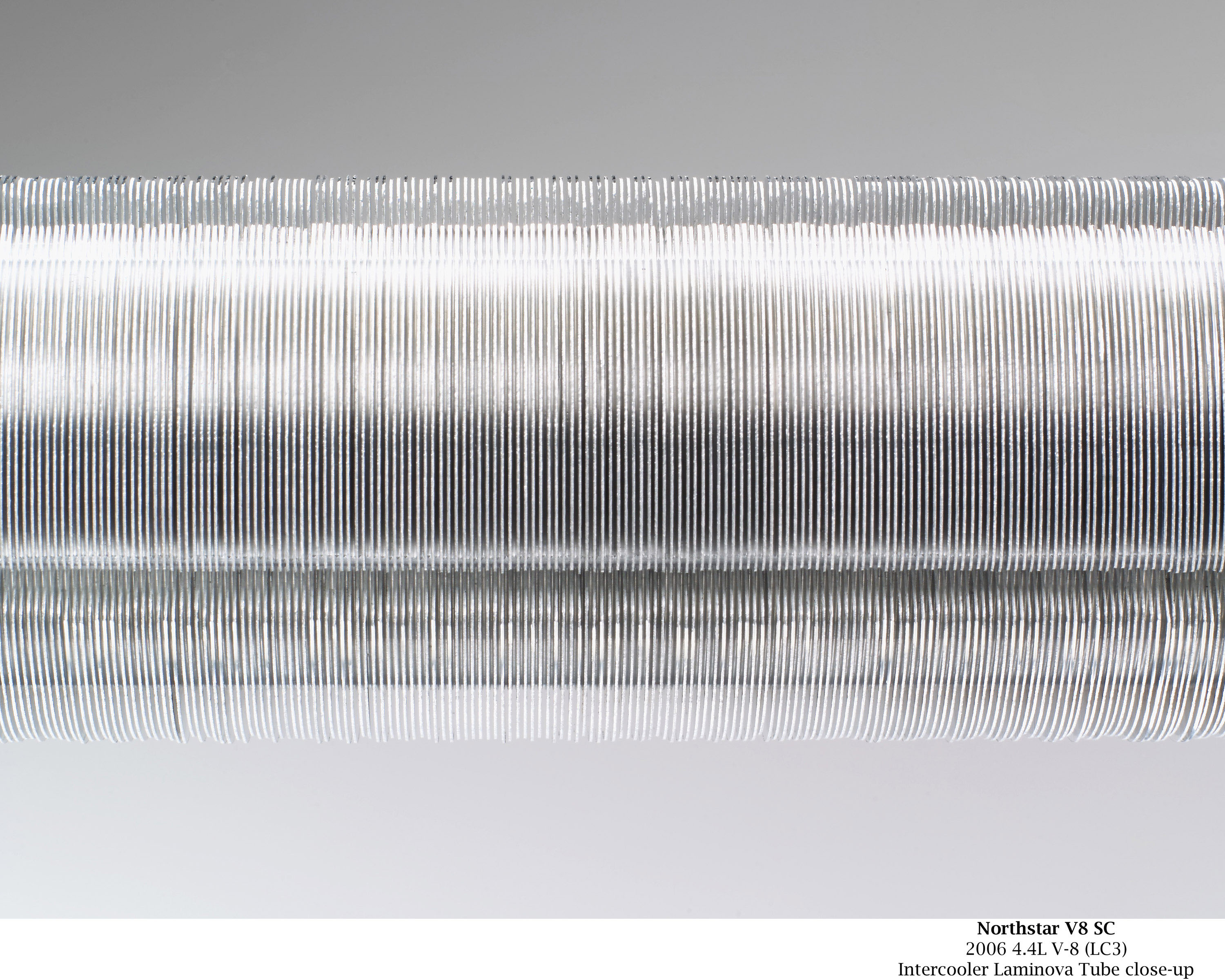
Each of the four Laminova tubes look like this up close:

Laminova STS-V Intercooler Tubes

The science of the Laminova design is to create huge surface area with minimal air flow restriction.  The very thin fins, 0.2 mm each, along each Laminova tube collect the heat from the air passing through the 0.3 mm gaps between the fins.  The surface area presented to the air flow is approximately 5 times greater than a conventional plate-style intercooler according to Laminova, as well as reducing noise and pulsation.

The heat is conducted to channels surrounding the solid core of each Laminova tube, where liquid coolant is passing through to remove it.

It appears that the coolant flows into the intercooler, circulates through all 4 Laminova intercooler tubes, and then flows back to the intercooler heat exchanger.  The heat exchanger is like a small radiator.  The intercooler coolant system is completely separate from the engine cooling system/radiator.

The advantage of the Laminova design is that they have a very good efficiency with low pressure disruption and light weight.   A disadvantage is cost.

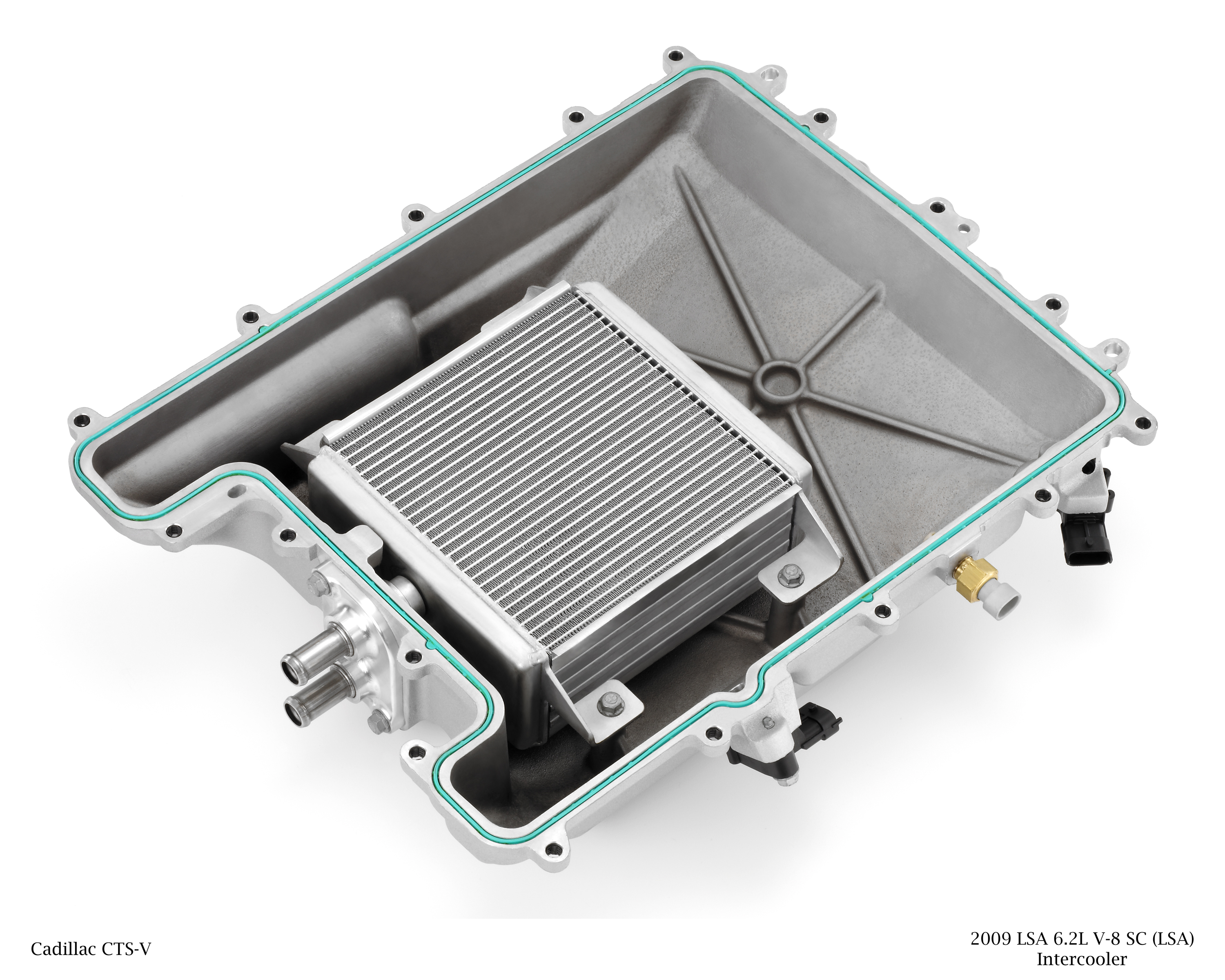
The CTS-V LSA engine uses a finned box air to water intercooler:

This shot shows the CTS-V LSA intercooler upside down.

How can the STS-V intercooler be improved?

An interesting ‘science project’ for the STS-V intercooler would be to replace the intercooler endcaps that direct coolant flow through one Laminova core after another with a custom endcap that directed coolant flow in parallel with all 4 Laminova cores and out after one pass.

One expert mentions that it is helpful to ‘index’ the 4 Laminova cores, so that the large fins are facing the air flow.  I am not clear looking at the images what is intended, as the Laminova cores appear to be uniform and symmetrical, unless the intent is to rotate the ‘sleeves’ the cores are contained in?

Owners are also experimenting with larger heat exchangers at the other end of the system, larger fluid reservoirs to allow more fluid to circulate and absorb heat, and higher capacity intercooler coolant pumps to circulate fluid.

On the slots that allow flow across the Laminova tubes, are the cross-pieces structurally needed?  If removed, so that the slots were just continuous single slots — flow would be increased.

Do you see other avenues to explore?